

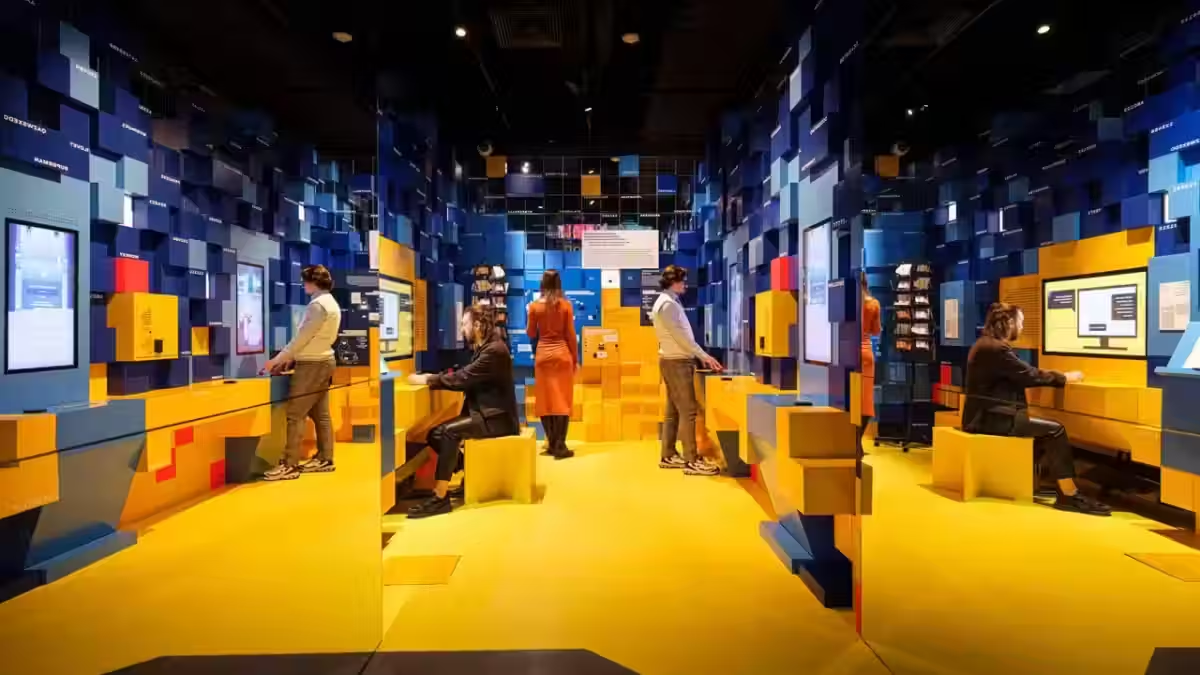
The Museum of Cryptography in Moscow will open its doors with free admission for engineers on March 4, offering a rare, specialist-focused look at the tools and stories behind secure communication. This matters to an international tech audience because cryptography is not just an academic subject or a line in software libraries – it’s a living engineering discipline with hardware, human stories, and institutional history that shape how systems are built and trusted. Visiting a museum dedicated to the field gives engineers context for design decisions, exposes them to legacy hardware that still influences modern implementations, and highlights how political and industrial forces have steered cryptographic research. For engineers working on everything from secure messaging to embedded systems and post-quantum prototypes, seeing physical cipher machines, archival documents, and curated exhibits can spark insights you won’t get from papers or code repositories. The March 4 event is a practical reminder that technical literacy benefits from historical perspective, and that cross-border curiosity about cryptographic heritage strengthens global engineering culture.
What’s happening
On March 4, the Museum of Cryptography in Moscow offers free entry specifically for engineers. The museum presents the history of cryptography and related engineering achievements, providing exhibits that trace the development of cipher methods and secure communication tools over time.
Context for readers outside Russia
For Russian readers, institutions like the Museum of Cryptography are familiar places that collect and display technical artifacts from both civilian and military history. For readers abroad: these museums often hold machines, documents, and interactive exhibits that make abstract cryptographic concepts tangible. Russia’s technical museums frequently include material from the Soviet era that shaped local engineering education and industrial practice. Public events and themed open days are a common way for companies and cultural institutions to encourage professional communities to engage with history and education.
Why engineers should care
Engineers tend to think forward, but many design choices trace back to older constraints – physical rotary machines, electrical signaling limits, bureaucratic workflows around secrecy – and those histories can still inform modern trade-offs in security, performance, and usability. A curated museum visit surfaces those connections, helping engineers better understand why certain protocols evolved the way they did and how institutional and political forces affected technological trajectories.
Conclusion and analysis
Opening free admission for engineers on March 4 is more than a one-day perk: it’s a low-barrier invitation to reframe cryptography as an engineered discipline with cultural and historical depth. For the international tech community, visits like this can broaden perspective, fostering empathy for different engineering traditions and highlighting areas where assumptions differ. If you work on security, embedded systems, or privacy-preserving tech, squeezing in a trip to a cryptography museum can reveal latent constraints and design patterns you might otherwise overlook. Museums also play a role in preserving hardware knowledge that risks being lost as older equipment is decommissioned – an important consideration for anyone dealing with legacy systems or long-term data security. Consider March 4 an opportunity to swap abstractions for artifacts and to bring a richer historical vocabulary back to the codebase.