

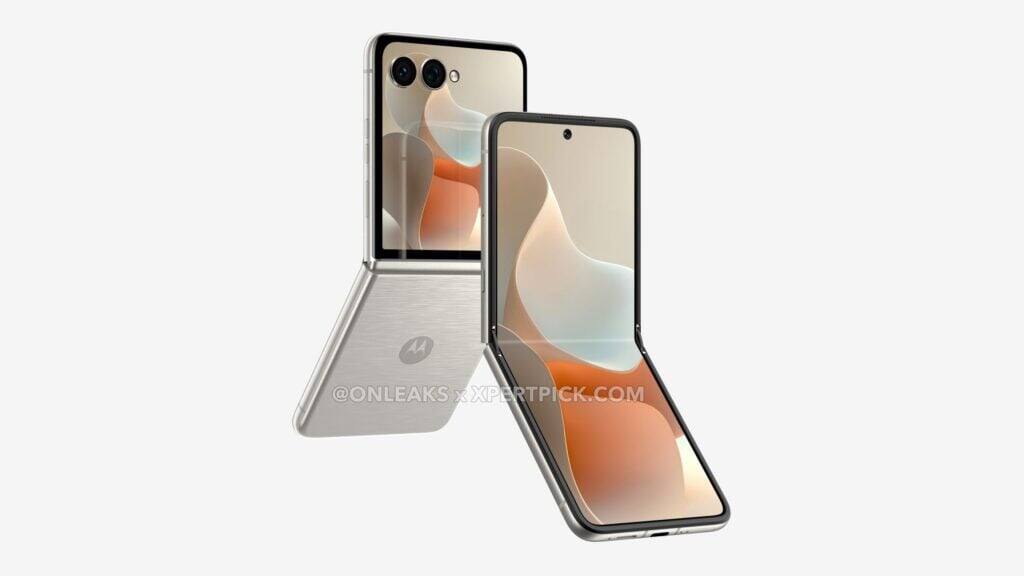
Motorola’s next foldable, the Razr 70 Ultra, has leaked in CAD images and a hands-on 360-degree video, showing a device that looks like an evolution rather than a reinvention. The phone keeps its signature clamshell design but grows slightly thicker, likely to accommodate a bigger battery or improved camera parts.
The Razr 70 Ultra measures 171.3 x 74.1 x 7.8 mm when unfolded and 88.0 x 74.1 x 15.8 mm folded. Including the camera bump, the thickness increases to 9.6 mm unfolded and 17.63 mm folded. These numbers are up from the Razr 60 Ultra’s 7.2 mm unfolded and 15.7 mm folded thickness, confirming internal tweaks.
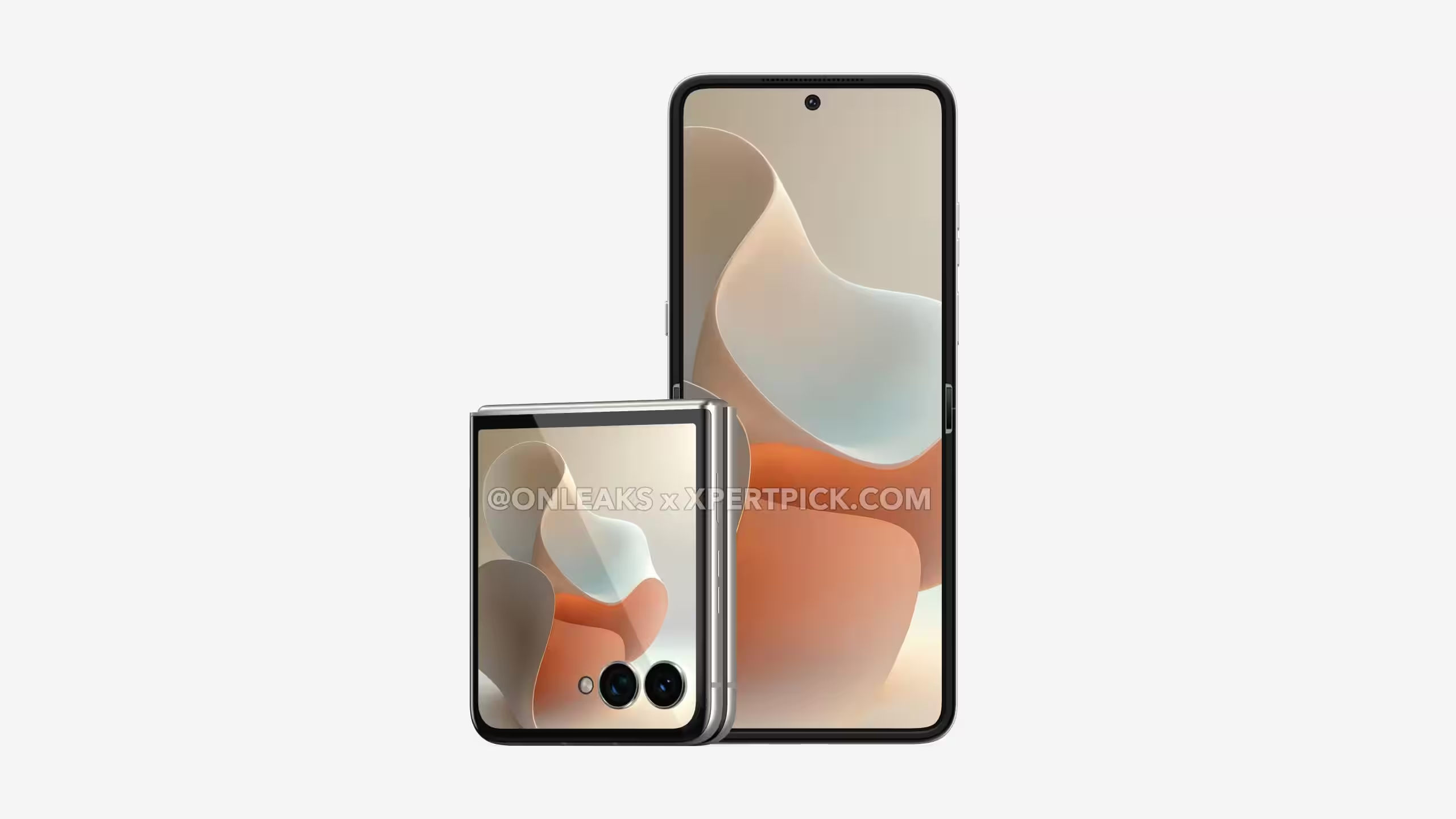
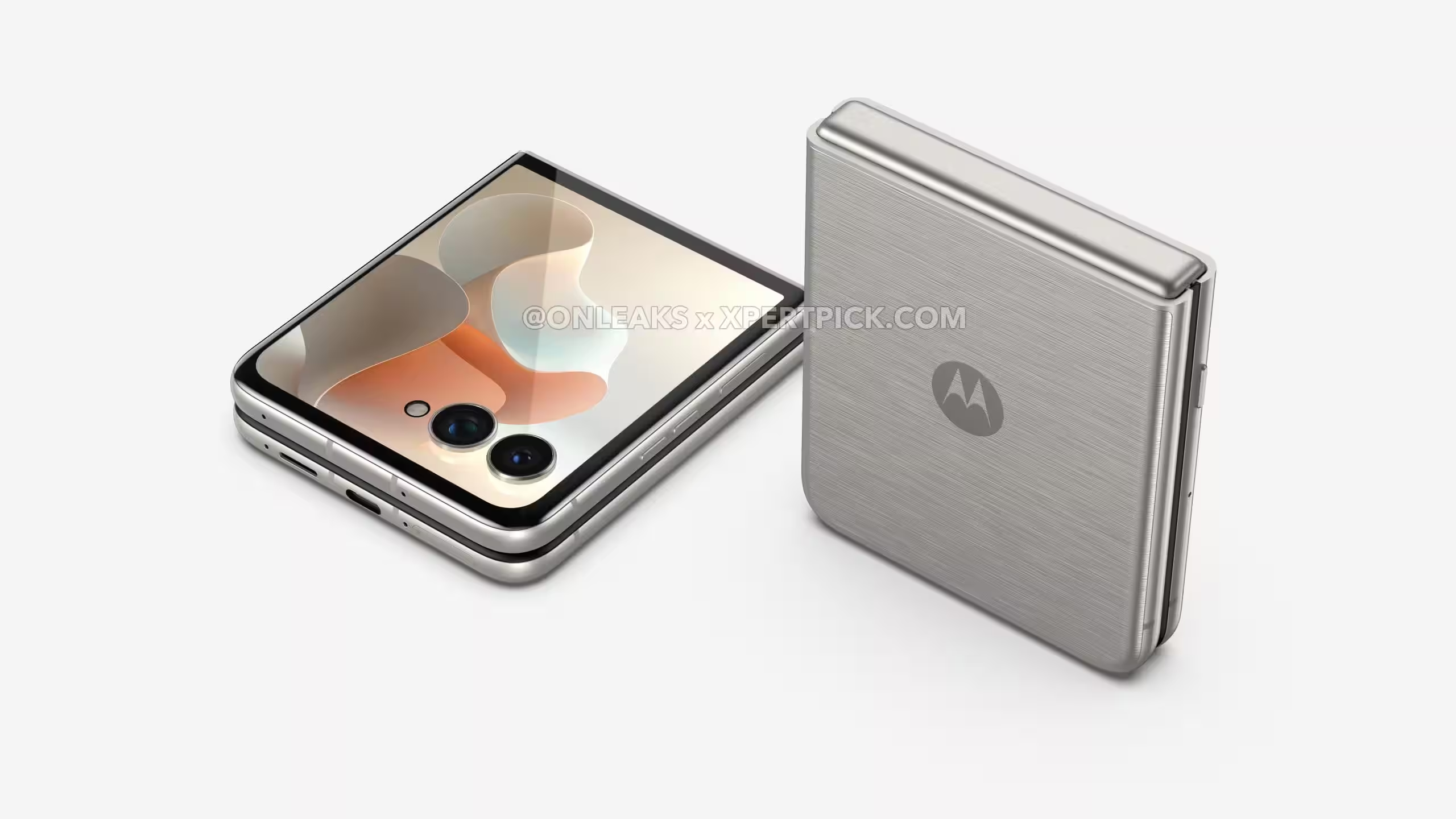
Display features remain unchanged: a 7-inch internal foldable screen and a 4-inch cover display, both carried over from the previous generation. The layout sees only slight refinements, including a new dedicated button for Moto AI on the left edge, while power and volume controls persist on the right.
The bottom edge hosts a USB-C port, speaker, microphone, and SIM slot, with a secondary microphone at the top. Compared to the Razr 60 Ultra, which sports a 7-inch FlexView pOLED panel (1224 x 2992 pixels) with a refresh rate up to 165 Hz and peak brightness of 4000 nits, along with a 4-inch QuickView external screen, the Razr 70 Ultra seems set to maintain these high-quality displays.
The Razr 60 Ultra runs on the Snapdragon 8 Gen Elite chipset, paired with 16 GB LPDDR5X RAM and 512 GB UFS 4.1 storage. Its camera setup includes a triple 50 MP sensor array-main lens with OIS, ultra-wide, and a selfie camera. It supports 5G connectivity, Wi-Fi 6E, Bluetooth 5.4, and NFC. The battery capacity is 4700 mAh, with fast charging at 68W wired and 30W wireless.
Early listings of the standard Razr 70 on China’s TENAA database suggest that Motorola is preparing for a close launch window of both the Ultra and base models. The slight increase in size and weight hints that the Ultra could address battery life or camera improvements-areas where foldables often struggle-allowing Motorola to sharpen its foldable offering without radical redesigns.