

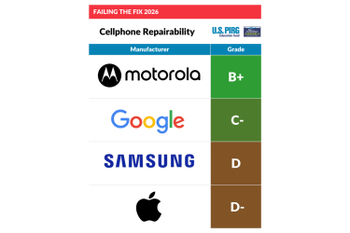
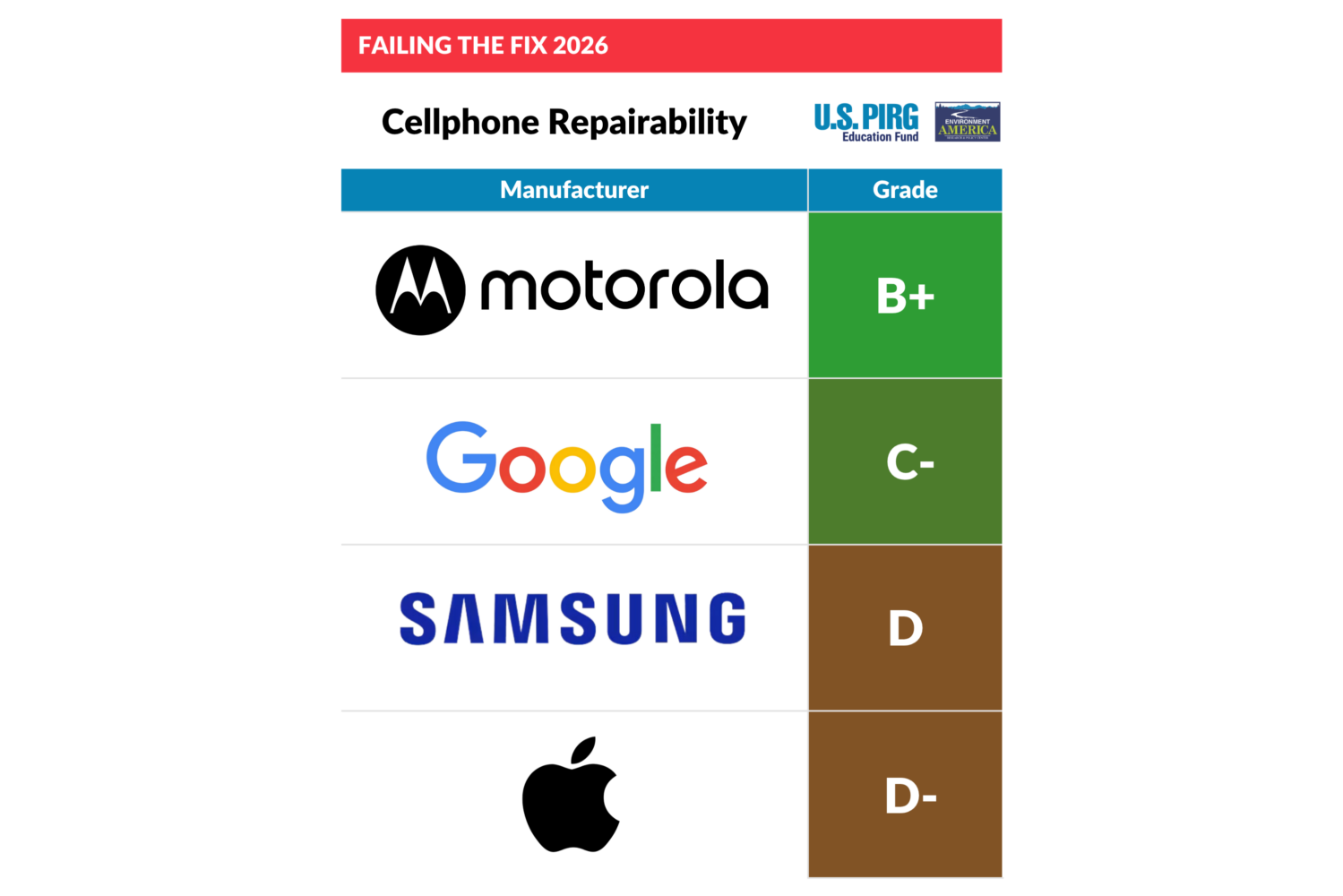
Motorola has done something rare in smartphone land: it beat Samsung and Apple at the thing people discover only after a cracked screen, a dead battery, or a charging port that’s decided to retire early. In a new US PIRG Education Fund repairability scorecard, Motorola came out on top with a B+, while Apple landed dead last with a D-, and Samsung finished near the bottom with a D.
The rankings use the European Union’s EPREL repairability system, which leans harder than the older French index on how easy a phone is to open and disassemble. That is the part that matters when a repair shop actually gets its hands on the device, and it is also the part many premium phones seem happiest to complicate.
Motorola leads the latest phone repairability scorecard
Google was the next best of the big names with a C-. Samsung and Apple, meanwhile, were dragged down by software support declarations that look stingier on paper than the support they provide in practice. Both companies offer well over five years of updates, but in the EPREL database they only declared the bare minimum of five years, which tanks their score in that category.
Software support declarations hurt the biggest brands
The report also punishes companies that belong to trade groups such as TechNet and the Consumer Technology Association, which have opposed Right to Repair legislation. Apple and Samsung did not get credit for backing repair-friendly laws, while Google and Microsoft did receive points for supporting a Right to Repair bill in Washington state.
There is another wrinkle here: Samsung was judged on just five models because some of its phones were not yet listed in EPREL. Apple and Motorola were scored on 10 models, so the comparison is not perfectly even. Still, uneven sample or not, finishing behind Motorola is not the kind of headline either company wants stitched to its premium image.
The repair system still misses spare parts pricing
EPREL also leaves out the cost of spare parts, which is a pretty glaring omission. A phone can be theoretically repairable and still be economically absurd to fix, which is why many people replace a device instead of reviving it. US PIRG’s authors want that gap closed in future versions of the system.
That missing piece matters because the biggest smartphone brands sell the most devices and shape the market norms everyone else follows. If the volume leaders keep treating repairability as a side quest, smaller brands will keep getting to look like the responsible adults in the room. The next round of scoring will show whether that embarrassment changes behavior, or just generates another round of polished statements and zero design compromise.