

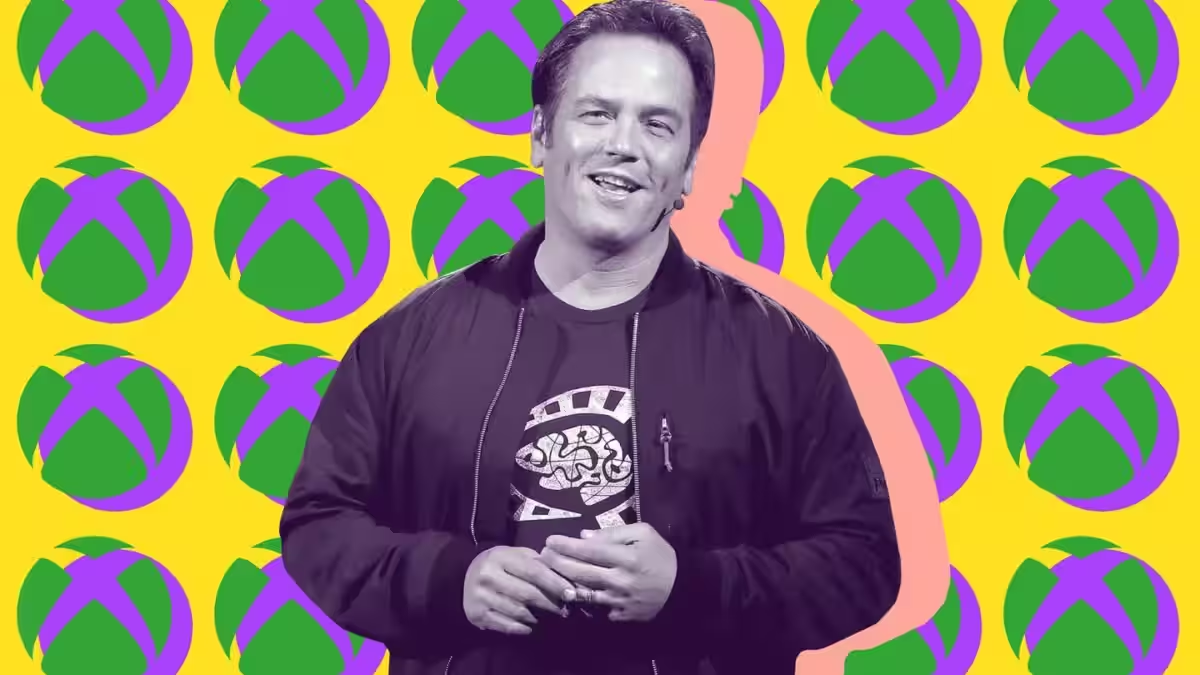
When a company swaps its long-time gaming czar for an executive whose recent work centers on AI, it’s not just a change of personnel. It’s a signal about priorities.
The headline: a handover, not a pause
Phil Spencer, who joined Microsoft as an intern in June of 1988 and spent more than 38 years at the company, is leaving the company after a storied run that included 12 years leading Gaming. Microsoft CEO Satya Nadella announced Spencer’s retirement and named Asha Sharma, currently president of CoreAI product, as the new chief executive of Microsoft Gaming. Spencer will remain in an advisory role through the summer to help with the transition. Xbox president Sarah Bond is also leaving Microsoft, and Matt Booty has been promoted to EVP and chief content officer.
What this change really means
On paper the move is tidy: a long-serving leader steps down after steering Xbox through consoles, cloud gaming, and massive studio deals, and a senior platform executive steps in. But the balance of experience matters. Spencer built Xbox into a services-first business, pursued aggressive studio acquisitions, and positioned Game Pass as Microsoft’s consumer-facing lever. Sharma’s résumé – which includes a recent return to Microsoft in 2024 after senior product and operations roles at Meta and Instacart and a stint inside Microsoft’s CoreAI product team – points to a different focus: platform scale, AI, and monetization across massive consumer bases rather than a purely pedigree-driven, developer-facing leadership style.
That pivot raises two obvious questions: will Xbox double down on the subscription and platform play it has been building, and how will the company reassure the base of core console players and developers who value hardware commitment and first-party studio support?
Context: why Xbox is at this crossroads
The last decade of Xbox strategy has been about widening the funnel: expensive console cycles paired with a subscription business designed to lock in lifetime value. Under Spencer, Microsoft completed major acquisitions – Mojang (2014), ZeniMax Media (2021), and Activision Blizzard (2023) – and pushed Game Pass as the central distribution model for first-party and partner content. Those moves increased Microsoft’s leverage but also raised costs and regulatory scrutiny, and they shifted the company away from being known only for hardware.
Other platform owners have made similar bets. Sony has remained fiercely protective of first-party exclusives while expanding services around PlayStation Plus; Nintendo continues to treat hardware as the brand anchor. Microsoft’s choice to bring in an AI and platform executive suggests it wants to bring gaming closer to the company’s broader cloud and AI ambitions rather than treat it as a standalone consumer arm.
Who wins, who risks losing
Winners: Microsoft’s broader platform teams. Someone who has run CoreAI products knows how to stitch infrastructure, developer tooling, and monetization together. That background should help Microsoft explore features that blend AI, cloud gaming, and subscription experiences – things like personalized content discovery, intelligent matchmaking, or new creator tools that run on cloud backends.
At risk: core Xbox fans and some developers. The console community values hardware signals, franchise stewardship, and long-term commitments to first-party studios. A leader whose public career has leaned heavily on platform product management will need to be deliberate in demonstrating that a renewed focus on ”the return of Xbox” includes concrete investments in console hardware, marquee exclusives, and studio autonomy.
What Phil Spencer’s departure closes – and what it leaves open
Spencer’s tenure was transformational by any measure: turning Xbox into an integrated hardware-plus-services business and shepherding acquisitions that bulked up Microsoft’s content library. His departure closes the chapter of a leader who could credibly operate across studios, platform and consumer messaging. What it leaves open is the question of orientation: will Microsoft prioritize platform-level synergies with Azure and AI, or will it revert to a gaming-first posture with heavy investments in console and exclusive titles?
The company’s public notes emphasize a ”renewed commitment to Xbox starting with console,” but words will only matter if they are followed by budgets, release roadmaps from first-party studios, and hardware timelines that satisfy players who see consoles as the beating heart of the brand.
Three things to watch next
1) Budget allocations and hiring: Will Microsoft divert more R&D toward AI-in-gaming experiments, or will it greenlight expensive console and studio projects? The answer will reveal where Sharma intends to place her bets.
2) Messaging to developers: First-party and partner studios will want clarity on creative autonomy, release windows, and revenue models. Concrete developer-facing commitments will calm nerves faster than corporate memos.
3) Product signals: Look for early signs in the roadmap – hardware launches, flagship exclusives, or new Game Pass features that explicitly leverage AI or cross-cloud platform integrations. Those product moves will show whether Microsoft treats gaming as a strategic consumer hook for its broader platform or as a distinct entertainment business.
Verdict
Microsoft is betting that platform skillsets will unlock growth where pure gaming pedigree cannot. That is a defensible strategy: games increasingly live in the cloud, rely on large-scale personalization, and intersect with broader AI-driven features. But the transition is delicate. If the new leadership does not visibly protect console investments and studio relationships, Microsoft risks alienating the core audience that made Xbox a credible challenger in the first place. The first 12 months under Asha Sharma will tell us whether this is a reorientation that strengthens Xbox or a dilution of what made the brand meaningful to players.