

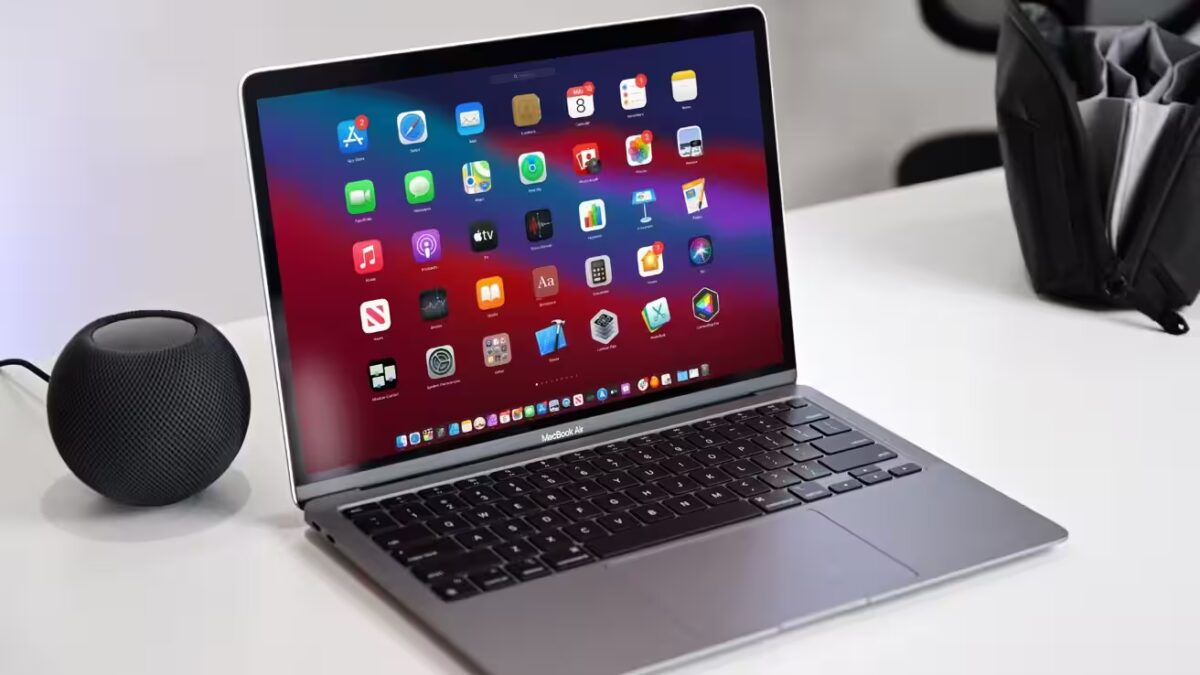
Apple just unveiled the MacBook Neo, a budget-friendly laptop powered by the A18 Pro chip, the same processor running in the iPhone 16 Pro. Starting at $599, it positions itself as a direct challenger to the original 2020 M1 MacBook Air, which debuted at $999. Though separated by different chip architectures and release years, both models deliver similar performance levels and share comparable design philosophies.
The MacBook Neo aims to replicate the M1 Air’s success, maintaining an aluminum body and compact footprint. However, the Neo sports a different shape: a flat rectangular chassis just 0.5 inches thick, unlike the Air’s signature wedge, which tapers from 0.16 to 0.63 inches thick. Interestingly, Neo is slightly lighter at 1.22 kg versus the Air’s 1.27 kg.
Display and design: simple but with a few twists
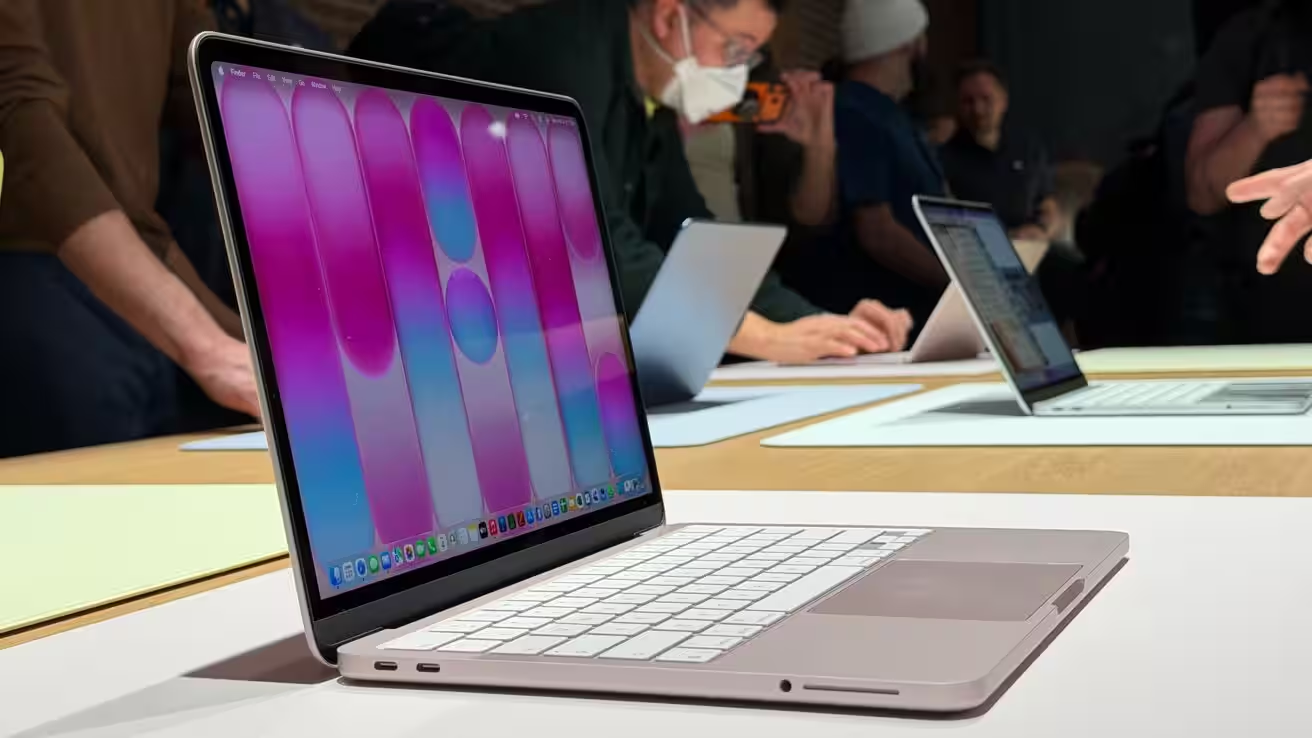
The MacBook Neo features a 13-inch Liquid Retina display with a resolution of 2408×1506 and brightness up to 500 nits-brighter than the 400-nit, 13.3-inch Retina screen on the MacBook Air, which boasts a slightly higher resolution of 2560×1600. Although Neo’s screen is a bit smaller and limited to the sRGB color gamut (compared to the Air’s Wide Color P3 and True Tone), its increased brightness makes a noticeable difference. Both models keep relatively thick bezels with no notches or ultra-thin borders, reflecting a design that’s arguably less modern but practical.
Performance: iPhone chip mostly takes the lead
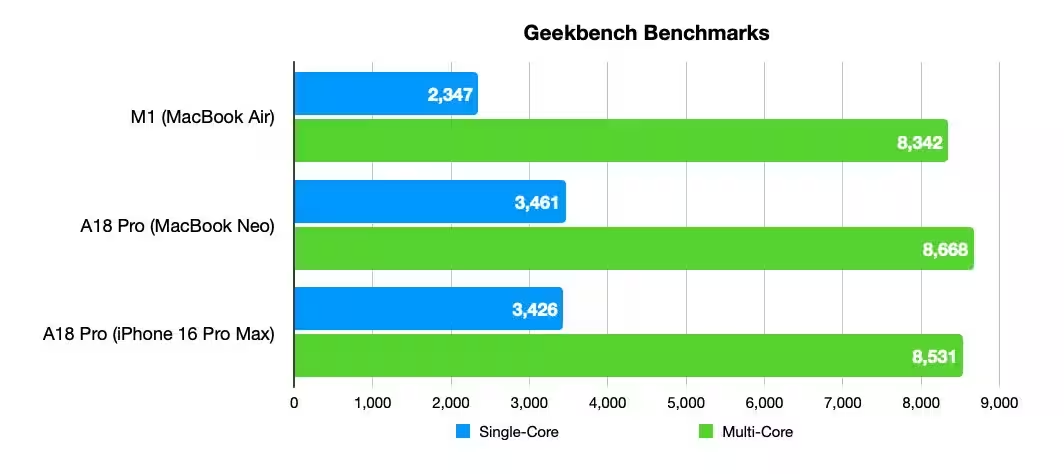
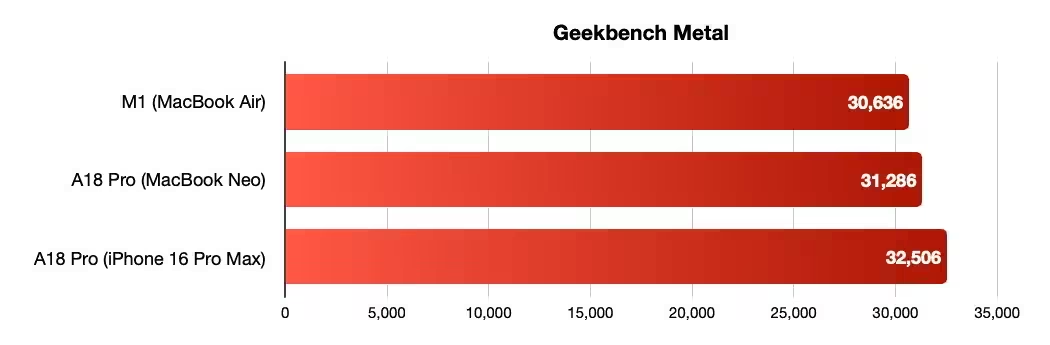
The key difference lies under the hood. The MacBook Air runs on the Apple M1 chip with an 8-core CPU and up to an 8-core GPU. MacBook Neo, on the other hand, uses the A18 Pro with a 6-core CPU (2 high-performance cores plus 4 efficiency cores) and a 5-core GPU. Yet, Geekbench benchmarks reveal that Neo posts a significantly higher single-core score (3461 vs. 2347 for M1) and comparable multi-core performance (around 8668 vs. 8342). Neo’s GPU edges close to the M1’s despite fewer cores, thanks to hardware-accelerated ray tracing and enhanced media engine support for ProRes and AV1 formats.
Storage, ports, and battery life
Unlike the MacBook Air, which offers a wide range of RAM (8 to 32 GB) and storage options (256 GB to 2 TB), the MacBook Neo keeps things straightforward with just 8 GB of RAM and two SSD choices-256 GB or 512 GB. Opting for the 512 GB model unlocks Touch ID functionality, which the base Neo lacks.
Port selection is pared down as well: Neo has two USB-C ports but of different standards-one USB 3.0 (10 Gbps) and one USB 2.0 (480 Mbps). The 2020 M1 Air features two Thunderbolt/USB 4 ports, each supporting speeds up to 40 Gbps. Both devices include a headphone jack.
The MacBook Neo claims 11 hours of web browsing and 16 hours of video playback, trailing the M1 Air’s 15 and 18-hour figures. This is due to Neo’s smaller battery capacity (36.5 Wh vs. Air’s 49.9 Wh). However, Neo benefits from newer connectivity tech like Wi-Fi 6E and Bluetooth 6, giving it a modern edge in wireless standards.

Price and what to keep an eye on
The MacBook Neo is an obvious pick for budget-conscious buyers wanting a fresh Mac with essential features: $599 for the 256 GB base model, and $699 for the 512 GB version with Touch ID. The M1 MacBook Air, now five years old, is generally only available through secondary markets or refurbished sales, priced around $679 and up.
If memory capacity, expandability, Thunderbolt ports, or battery life matter most, the M1 Air remains the better choice. But when considering price-to-performance ratio and ongoing macOS support, the MacBook Neo takes the crown with ease.
For those who don’t want to overspend yet still seek a new, compact laptop with solid performance, Neo fits the bill perfectly. If you already own an M1 Air, though, there’s little reason to upgrade just yet-Apple’s latest budget Mac offers an intriguing alternative rather than a sweeping replacement.

Why this matters internationally: The MacBook Neo highlights Apple’s move to extend its Silicon ecosystem into more affordable territory, blending mobile and laptop chip designs in a way the Western market hasn’t seen yet. For global consumers and tech enthusiasts, it raises questions about the future of laptop CPUs-whether integrating mobile-class silicon can genuinely challenge traditional notebook processors on performance and efficiency fronts. This also reflects Apple’s strategic pricing shift, targeting price-sensitive buyers worldwide, including regions where high-priced Macs have long been a barrier. Russian users will recognize Apple’s typical layering of product tiers, now shifting with Neo’s introduction, a trend previously seen with cheaper iPhone SE models. The Neo’s limited RAM and ports echo the Soviet-era idea of ”designing to essential function,” but with a 21st-century Silicon twist.
In summary, the MacBook Neo signals that Apple is exploring the boundaries of cost-cutting without fully compromising on performance or user experience. While it won’t replace the M1 Air outright for power users, Neo could capture a new segment of buyers who want fresh hardware and solid macOS support at a fraction of the usual price. Watch for how this hybrid chip approach impacts Apple’s broader laptop lineup and whether this design philosophy will spread to other product lines. For now, Neo stands out as a smart budget pick that challenges assumptions about what an affordable Mac can deliver.