


Apple just dropped the MacBook Neo, their cheapest laptop yet, priced at a wallet-friendly $500. It’s clearly targeting users who usually pick Chromebooks or budget Windows laptops. At first glance, the Neo impresses with its sleek aluminum chassis, lightweight 1.23 kg body, four vibrant colors, a 13-inch Liquid Retina display, Dolby Atmos stereo speakers, 1080p webcam, and up to 16 hours of battery life.
But beneath the shiny exterior and surprisingly low price tag lie some serious trade-offs that set the MacBook Neo apart from the more familiar MacBook Air and Pro lines. Apple cut corners on key components-some sacrifices may fly under the radar for casual users, but those looking for a full-fledged laptop experience will quickly notice Neo’s limits.
For the international tech crowd, this launch is noteworthy. Apple stepping down to directly challenge Chromebooks and budget Windows laptops signals a change in strategy-showing their willingness to loosen their premium grip to engage a wider, cost-conscious market. This comes with a distinct set of compromises rare for Apple, which usually prioritizes premium specs and user experience. Meanwhile, Russian readers may see this as a nod to the growing popularity of affordable laptops amid economic pressures and currency fluctuations affecting Apple’s typical price tiers.
Why MacBook Neo isn’t like other MacBooks
1. An iPhone chip instead of a laptop processor. All current MacBook Air and Pro models run on Apple’s M-series chips, custom-built for laptops with an emphasis on power efficiency and sustained performance. The Neo, however, uses a stripped-down Apple A18 Pro-a mobile chip from the iPhone 16 Pro. The Neo’s 6-core CPU pairs with a 5-core GPU, down one core from the iPhone variant. This chip handles light tasks fine, but under heavier workloads, the Neo lacks the thermal headroom and horsepower to keep up. The absence of a fan makes it whisper-quiet but throttles any real power.
2. 8GB of RAM with no upgrade option and half the bandwidth. While the latest MacBook Air starts at 16GB, the Neo limits you to 8GB of RAM, which cannot be increased later. The memory is unified between the CPU and GPU, so multitasking and working with large files reveal the difference. The Neo’s RAM bandwidth is 60GB/s, less than half the MacBook Air’s 133GB/s.
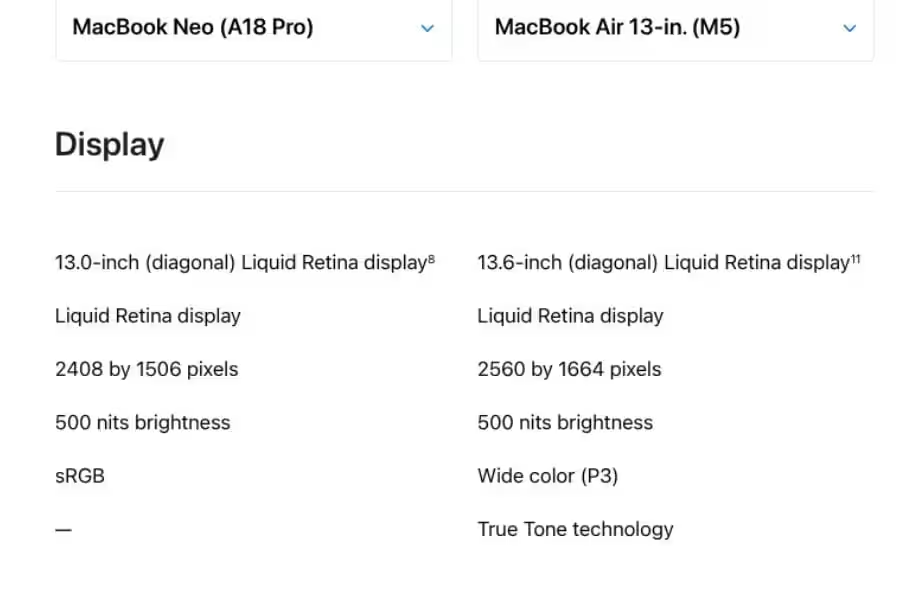
3. A display missing key premium features. The screen holds onto its 2408 x 1506 resolution and 500 nits brightness but covers only the basic sRGB color gamut, unlike the Air’s wide P3 coverage. It also lacks True Tone, Apple’s adaptive color temperature tech, and doesn’t have an ambient light sensor-meaning you’ll have to adjust brightness manually.

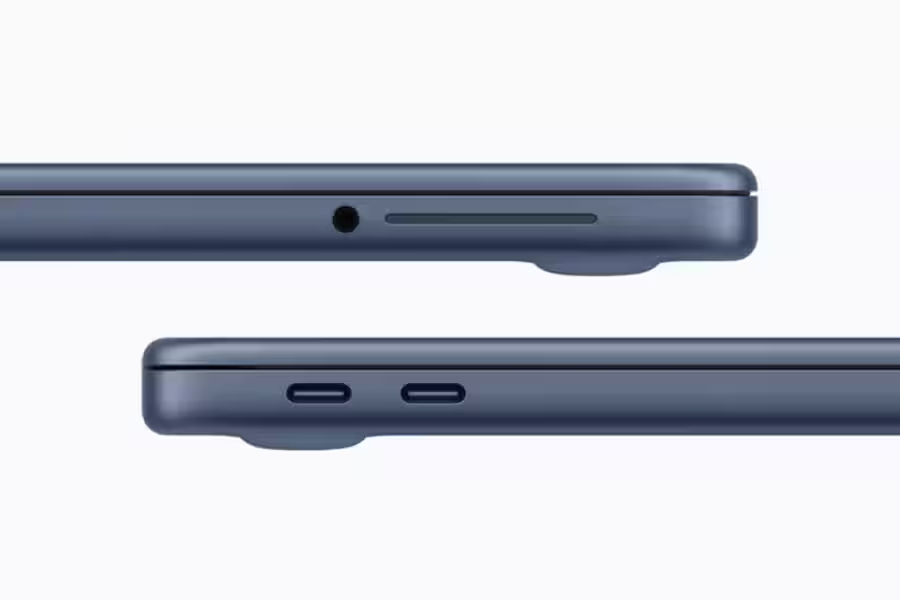
4. No MagSafe; charging only via USB-C. Apple removed its signature magnetic MagSafe charging port-a popular feature that protects your laptop and cable from accidental yanks. The Neo includes just two USB-C ports on the left side: one USB 3.2 port with 10 Gbps speeds, the other USB 2.0 at 480 Mbps. Skipping MagSafe is a clear cost-cutting move, even on convenience and safety.
5. A keyboard without backlighting and a simplified trackpad. At a time when MacBooks typically feature backlit keyboards and Force Touch trackpads, the Neo sticks to a basic mechanical keyboard without illumination. The trackpad doesn’t support Force Touch either, so no pressure sensitivity, force clicks, or drawing capabilities. Touch ID is only available on the $512 SSD model, missing entirely on the base version.
In contrast to other Apple laptops, the MacBook Neo is a bold, clearly budget-oriented move geared toward users who don’t mind compromising for a lower price. By equipping it with an iPhone chip and stripped-down specs, Apple is signaling its intent to play aggressively in the entry-level laptop market. But for professionals or anyone expecting high-end performance, the $500 MacBook Neo will likely fall short.
Looking ahead, the MacBook Neo could mark a turning point for Apple’s laptop strategy, opening the door to new demographics. However, the challenge will be maintaining the brand’s premium reputation while meeting the price-sensitive market’s expectations. It remains to be seen if this blend of mid-tier hardware and tight pricing will resonate globally or stay a niche offering in price-conscious regions.