

Rather than chasing parity in build and performance at Apple-like prices, the smarter strategy may be to lean into ChromeOS’s strengths: building on the Android merger, boosting software capabilities, and preserving price advantages in the $200 to $300 segment. Chromebooks will need to double down on software innovation to stay relevant against the Neo’s hardware-software synergy.
In essence, Chromebooks face a wake-up call. The MacBook Neo’s disruptive price and build quality challenge the Chromebook’s core value proposition. If Apple integrates even more powerful chips and boosts RAM in future Neo models-as anticipated-it could further widen the gap, forcing Google and its partners into strategic reinvention swiftly.
Chromebook makers are squeezed by Apple’s vertical integration: controlling hardware design, chip supply from millions of iPhone-grade processors, and proprietary software optimization lets Apple price the Neo aggressively while maintaining quality. This scale and synergy are tough for Chromebook vendors, reliant on third-party silicon and fragmented hardware partners, to match without slashing margins to razor-thin levels.
Rather than chasing parity in build and performance at Apple-like prices, the smarter strategy may be to lean into ChromeOS’s strengths: building on the Android merger, boosting software capabilities, and preserving price advantages in the $200 to $300 segment. Chromebooks will need to double down on software innovation to stay relevant against the Neo’s hardware-software synergy.
In essence, Chromebooks face a wake-up call. The MacBook Neo’s disruptive price and build quality challenge the Chromebook’s core value proposition. If Apple integrates even more powerful chips and boosts RAM in future Neo models-as anticipated-it could further widen the gap, forcing Google and its partners into strategic reinvention swiftly.
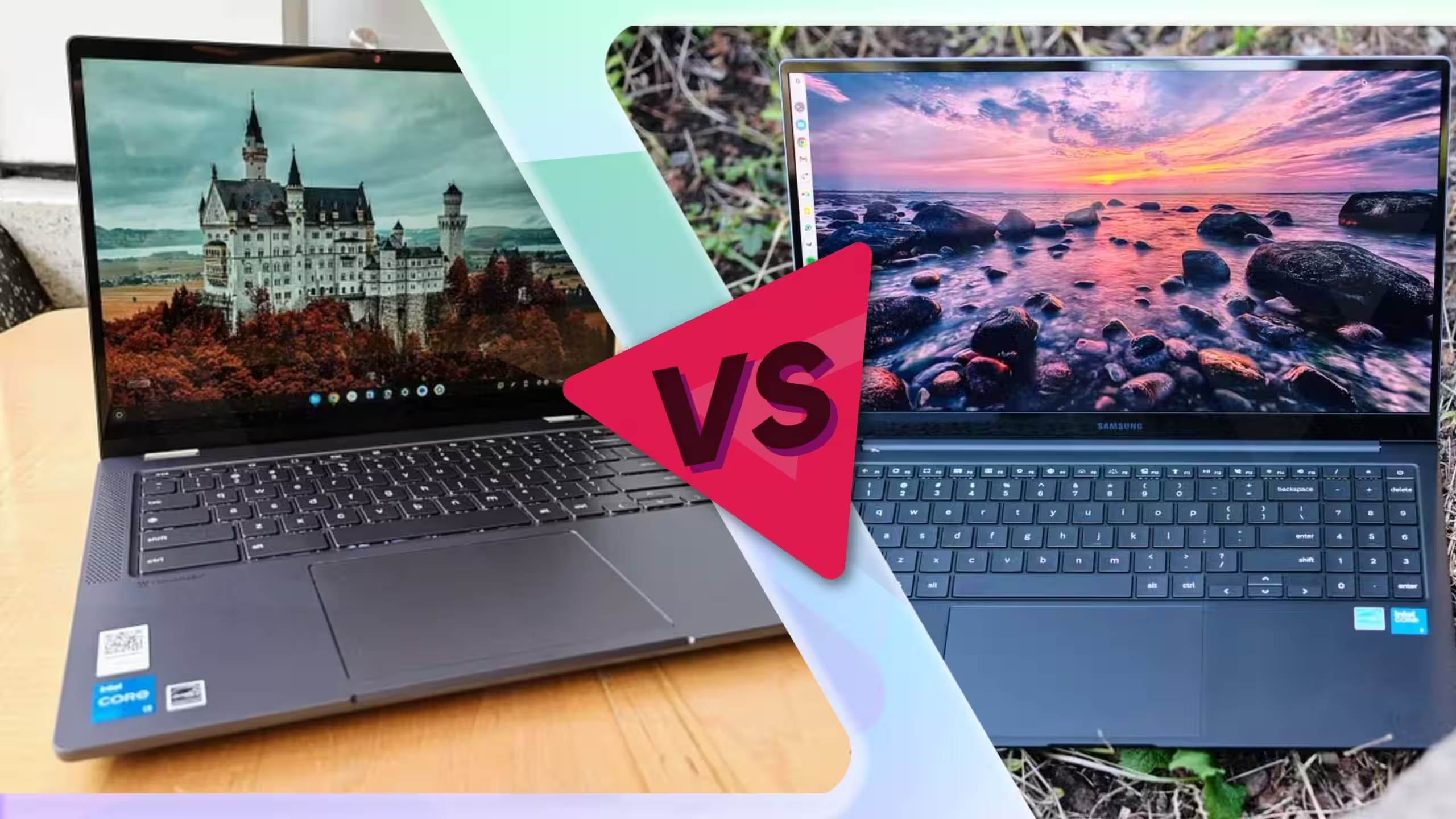
In a side-by-side choice, students and budget-conscious users might stretch their budgets for a $500 Neo instead of a mid-range Chromebook, especially given the Neo’s richer software environment. macOS is a far more mature ecosystem than ChromeOS, with access to a broader range of native applications. ChromeOS heavily relies on web apps or Android apps, which, despite Google’s Android integration efforts, still lag behind Apple’s ability to run iOS and iPadOS apps natively on Apple Silicon.
Windows laptops face their own complexities around software compatibility, but Chromebooks lack the legacy software support that Windows users enjoy, putting ChromeOS in a tight spot. Workarounds like Crossover or WINE for running Windows apps on Chromebooks are patchy and complex, tilting the advantage back to Apple’s platform.
Chromebook makers are squeezed by Apple’s vertical integration: controlling hardware design, chip supply from millions of iPhone-grade processors, and proprietary software optimization lets Apple price the Neo aggressively while maintaining quality. This scale and synergy are tough for Chromebook vendors, reliant on third-party silicon and fragmented hardware partners, to match without slashing margins to razor-thin levels.
Rather than chasing parity in build and performance at Apple-like prices, the smarter strategy may be to lean into ChromeOS’s strengths: building on the Android merger, boosting software capabilities, and preserving price advantages in the $200 to $300 segment. Chromebooks will need to double down on software innovation to stay relevant against the Neo’s hardware-software synergy.
In essence, Chromebooks face a wake-up call. The MacBook Neo’s disruptive price and build quality challenge the Chromebook’s core value proposition. If Apple integrates even more powerful chips and boosts RAM in future Neo models-as anticipated-it could further widen the gap, forcing Google and its partners into strategic reinvention swiftly.
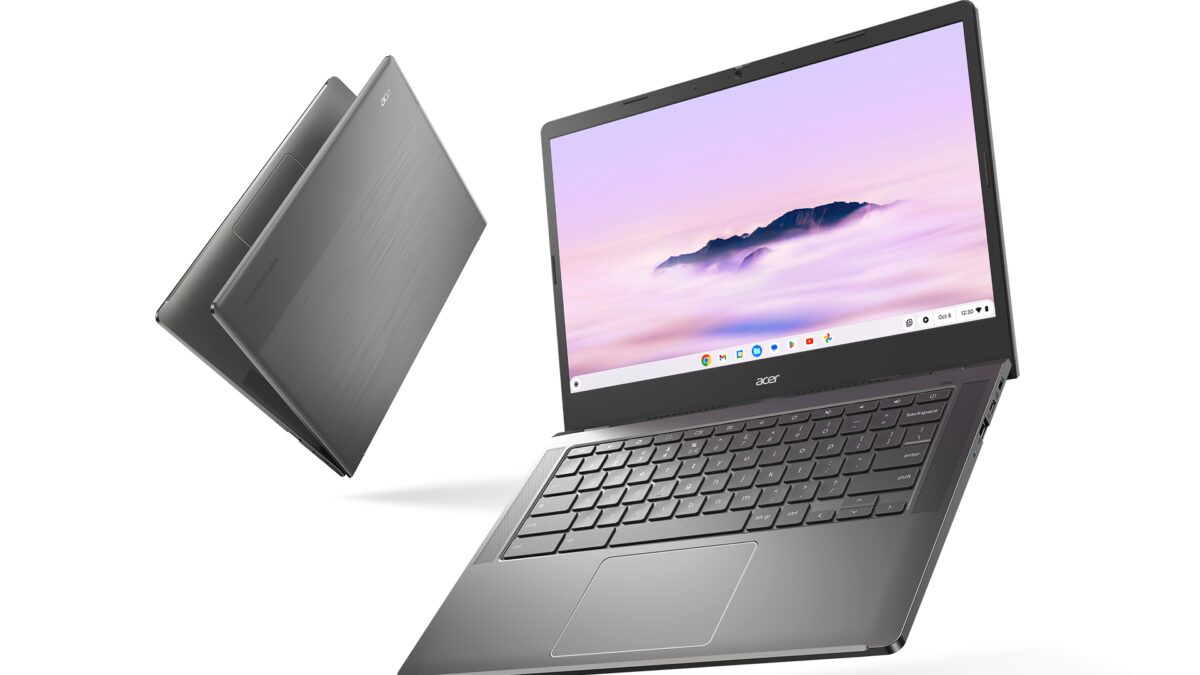
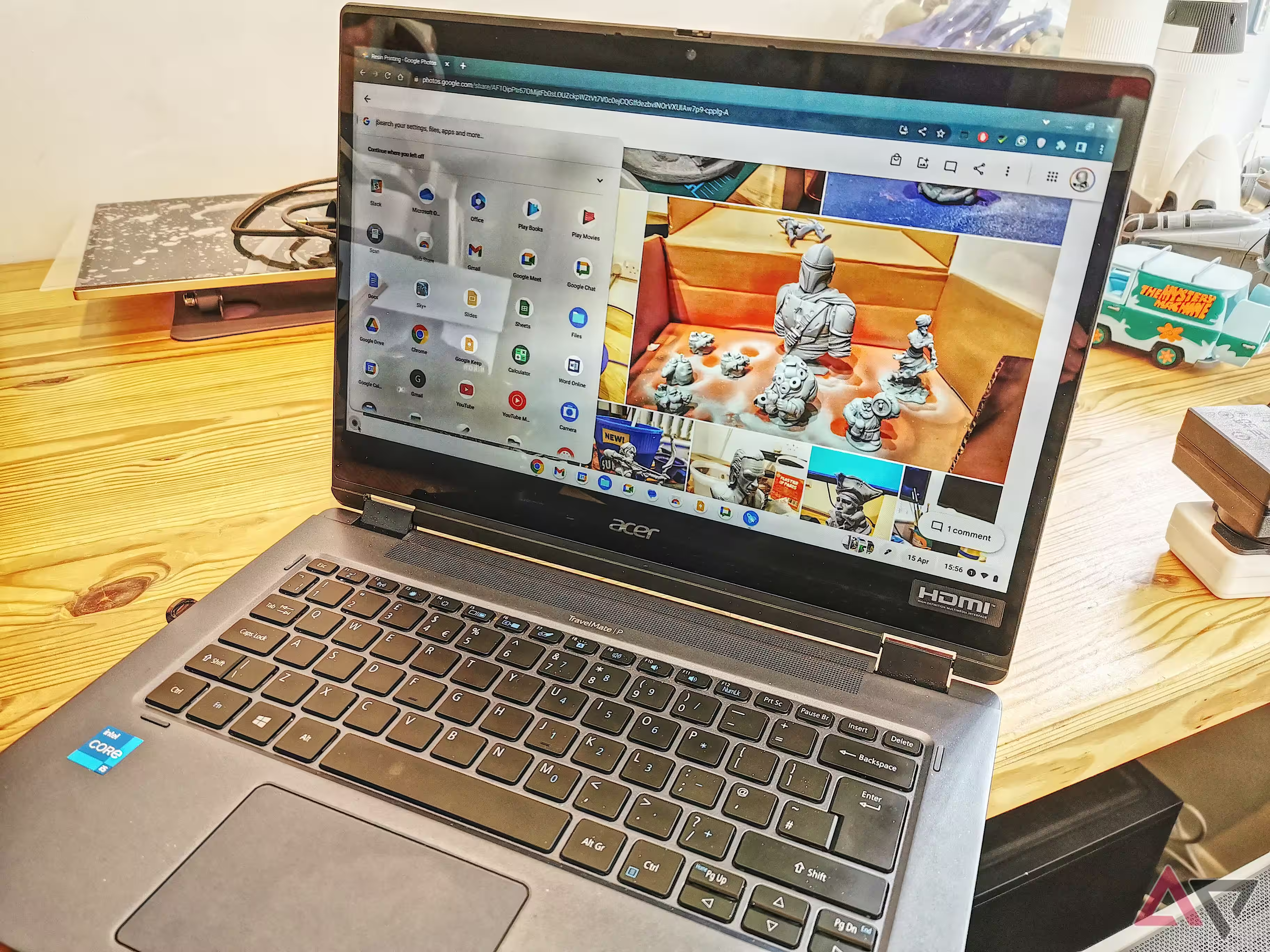
Take the Acer Chromebook Plus 514 as a benchmark. Typically priced between $300 and $400, this Chromebook sports a 14-inch 1200p display, Intel or AMD processors, integrated graphics, 8GB RAM, and 128GB storage-with options up to 512GB. The hardware feels solid for its segment but remains middling in terms of screen quality, trackpad responsiveness, speakers, and build, particularly when compared to Apple’s all-metal Neo.
In a side-by-side choice, students and budget-conscious users might stretch their budgets for a $500 Neo instead of a mid-range Chromebook, especially given the Neo’s richer software environment. macOS is a far more mature ecosystem than ChromeOS, with access to a broader range of native applications. ChromeOS heavily relies on web apps or Android apps, which, despite Google’s Android integration efforts, still lag behind Apple’s ability to run iOS and iPadOS apps natively on Apple Silicon.
Windows laptops face their own complexities around software compatibility, but Chromebooks lack the legacy software support that Windows users enjoy, putting ChromeOS in a tight spot. Workarounds like Crossover or WINE for running Windows apps on Chromebooks are patchy and complex, tilting the advantage back to Apple’s platform.
Chromebook makers are squeezed by Apple’s vertical integration: controlling hardware design, chip supply from millions of iPhone-grade processors, and proprietary software optimization lets Apple price the Neo aggressively while maintaining quality. This scale and synergy are tough for Chromebook vendors, reliant on third-party silicon and fragmented hardware partners, to match without slashing margins to razor-thin levels.
Rather than chasing parity in build and performance at Apple-like prices, the smarter strategy may be to lean into ChromeOS’s strengths: building on the Android merger, boosting software capabilities, and preserving price advantages in the $200 to $300 segment. Chromebooks will need to double down on software innovation to stay relevant against the Neo’s hardware-software synergy.
In essence, Chromebooks face a wake-up call. The MacBook Neo’s disruptive price and build quality challenge the Chromebook’s core value proposition. If Apple integrates even more powerful chips and boosts RAM in future Neo models-as anticipated-it could further widen the gap, forcing Google and its partners into strategic reinvention swiftly.
Apple’s MacBook Neo arrives with a startling $500 price tag, redefining expectations for entry-level laptops-and putting Chromebooks squarely in the crosshairs. While affordable Chromebooks have carved out a niche by offering decent hardware at low prices, the Neo’s aluminum build, mature macOS experience, and Apple Silicon’s efficiency represent an assault on multiple fronts that manufacturers of ChromeOS devices have yet to prepare for.
Take the Acer Chromebook Plus 514 as a benchmark. Typically priced between $300 and $400, this Chromebook sports a 14-inch 1200p display, Intel or AMD processors, integrated graphics, 8GB RAM, and 128GB storage-with options up to 512GB. The hardware feels solid for its segment but remains middling in terms of screen quality, trackpad responsiveness, speakers, and build, particularly when compared to Apple’s all-metal Neo.
In a side-by-side choice, students and budget-conscious users might stretch their budgets for a $500 Neo instead of a mid-range Chromebook, especially given the Neo’s richer software environment. macOS is a far more mature ecosystem than ChromeOS, with access to a broader range of native applications. ChromeOS heavily relies on web apps or Android apps, which, despite Google’s Android integration efforts, still lag behind Apple’s ability to run iOS and iPadOS apps natively on Apple Silicon.
Windows laptops face their own complexities around software compatibility, but Chromebooks lack the legacy software support that Windows users enjoy, putting ChromeOS in a tight spot. Workarounds like Crossover or WINE for running Windows apps on Chromebooks are patchy and complex, tilting the advantage back to Apple’s platform.
Chromebook makers are squeezed by Apple’s vertical integration: controlling hardware design, chip supply from millions of iPhone-grade processors, and proprietary software optimization lets Apple price the Neo aggressively while maintaining quality. This scale and synergy are tough for Chromebook vendors, reliant on third-party silicon and fragmented hardware partners, to match without slashing margins to razor-thin levels.
Rather than chasing parity in build and performance at Apple-like prices, the smarter strategy may be to lean into ChromeOS’s strengths: building on the Android merger, boosting software capabilities, and preserving price advantages in the $200 to $300 segment. Chromebooks will need to double down on software innovation to stay relevant against the Neo’s hardware-software synergy.
In essence, Chromebooks face a wake-up call. The MacBook Neo’s disruptive price and build quality challenge the Chromebook’s core value proposition. If Apple integrates even more powerful chips and boosts RAM in future Neo models-as anticipated-it could further widen the gap, forcing Google and its partners into strategic reinvention swiftly.
Apple’s MacBook Neo arrives with a startling $500 price tag, redefining expectations for entry-level laptops-and putting Chromebooks squarely in the crosshairs. While affordable Chromebooks have carved out a niche by offering decent hardware at low prices, the Neo’s aluminum build, mature macOS experience, and Apple Silicon’s efficiency represent an assault on multiple fronts that manufacturers of ChromeOS devices have yet to prepare for.
Take the Acer Chromebook Plus 514 as a benchmark. Typically priced between $300 and $400, this Chromebook sports a 14-inch 1200p display, Intel or AMD processors, integrated graphics, 8GB RAM, and 128GB storage-with options up to 512GB. The hardware feels solid for its segment but remains middling in terms of screen quality, trackpad responsiveness, speakers, and build, particularly when compared to Apple’s all-metal Neo.
In a side-by-side choice, students and budget-conscious users might stretch their budgets for a $500 Neo instead of a mid-range Chromebook, especially given the Neo’s richer software environment. macOS is a far more mature ecosystem than ChromeOS, with access to a broader range of native applications. ChromeOS heavily relies on web apps or Android apps, which, despite Google’s Android integration efforts, still lag behind Apple’s ability to run iOS and iPadOS apps natively on Apple Silicon.
Windows laptops face their own complexities around software compatibility, but Chromebooks lack the legacy software support that Windows users enjoy, putting ChromeOS in a tight spot. Workarounds like Crossover or WINE for running Windows apps on Chromebooks are patchy and complex, tilting the advantage back to Apple’s platform.
Chromebook makers are squeezed by Apple’s vertical integration: controlling hardware design, chip supply from millions of iPhone-grade processors, and proprietary software optimization lets Apple price the Neo aggressively while maintaining quality. This scale and synergy are tough for Chromebook vendors, reliant on third-party silicon and fragmented hardware partners, to match without slashing margins to razor-thin levels.
Rather than chasing parity in build and performance at Apple-like prices, the smarter strategy may be to lean into ChromeOS’s strengths: building on the Android merger, boosting software capabilities, and preserving price advantages in the $200 to $300 segment. Chromebooks will need to double down on software innovation to stay relevant against the Neo’s hardware-software synergy.
In essence, Chromebooks face a wake-up call. The MacBook Neo’s disruptive price and build quality challenge the Chromebook’s core value proposition. If Apple integrates even more powerful chips and boosts RAM in future Neo models-as anticipated-it could further widen the gap, forcing Google and its partners into strategic reinvention swiftly.
Apple’s MacBook Neo arrives with a startling $500 price tag, redefining expectations for entry-level laptops-and putting Chromebooks squarely in the crosshairs. While affordable Chromebooks have carved out a niche by offering decent hardware at low prices, the Neo’s aluminum build, mature macOS experience, and Apple Silicon’s efficiency represent an assault on multiple fronts that manufacturers of ChromeOS devices have yet to prepare for.
Take the Acer Chromebook Plus 514 as a benchmark. Typically priced between $300 and $400, this Chromebook sports a 14-inch 1200p display, Intel or AMD processors, integrated graphics, 8GB RAM, and 128GB storage-with options up to 512GB. The hardware feels solid for its segment but remains middling in terms of screen quality, trackpad responsiveness, speakers, and build, particularly when compared to Apple’s all-metal Neo.
In a side-by-side choice, students and budget-conscious users might stretch their budgets for a $500 Neo instead of a mid-range Chromebook, especially given the Neo’s richer software environment. macOS is a far more mature ecosystem than ChromeOS, with access to a broader range of native applications. ChromeOS heavily relies on web apps or Android apps, which, despite Google’s Android integration efforts, still lag behind Apple’s ability to run iOS and iPadOS apps natively on Apple Silicon.
Windows laptops face their own complexities around software compatibility, but Chromebooks lack the legacy software support that Windows users enjoy, putting ChromeOS in a tight spot. Workarounds like Crossover or WINE for running Windows apps on Chromebooks are patchy and complex, tilting the advantage back to Apple’s platform.
Chromebook makers are squeezed by Apple’s vertical integration: controlling hardware design, chip supply from millions of iPhone-grade processors, and proprietary software optimization lets Apple price the Neo aggressively while maintaining quality. This scale and synergy are tough for Chromebook vendors, reliant on third-party silicon and fragmented hardware partners, to match without slashing margins to razor-thin levels.
Rather than chasing parity in build and performance at Apple-like prices, the smarter strategy may be to lean into ChromeOS’s strengths: building on the Android merger, boosting software capabilities, and preserving price advantages in the $200 to $300 segment. Chromebooks will need to double down on software innovation to stay relevant against the Neo’s hardware-software synergy.
In essence, Chromebooks face a wake-up call. The MacBook Neo’s disruptive price and build quality challenge the Chromebook’s core value proposition. If Apple integrates even more powerful chips and boosts RAM in future Neo models-as anticipated-it could further widen the gap, forcing Google and its partners into strategic reinvention swiftly.