

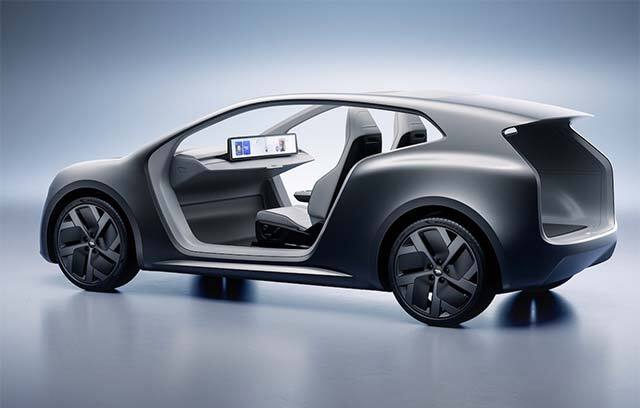
Lucid Group has taken a major step toward scaling its electric vehicle business with the launch of a new midsize EV platform, the Atlas electric drive unit, and a futuristic robotaxi concept called Lunar. These updates aim to broaden Lucid’s reach beyond its luxury niche, making premium EV technology more accessible while pushing the company toward profitability and higher production volumes.
At its investor day in New York, Lucid outlined a comprehensive strategy focused on expanding its global footprint and software capabilities, including a new in-car AI assistant and an autonomy roadmap. Central to this vision is the Atlas drive unit powering the midsize platform, designed with parts commonality and a lighter, more compact layout to reduce manufacturing complexity and costs. This is critical as battery prices still make up nearly a third to 40% of total EV costs, so improving vehicle efficiency remains Lucid’s key edge.
The new platform will support several upcoming models, notably the Cosmos and Earth SUVs, which are positioned below $50,000 to attract a wider audience without compromising Lucid’s hallmark efficiency and driving dynamics. A third model is also in the pipeline, promising further expansion in the midsize premium EV space.
Lucid’s midsize EV platform supports new Cosmos and Earth SUVs
The midsize EV platform is the foundation for Lucid’s upcoming Cosmos and Earth SUVs, targeting prices below $50,000. This strategic pricing aims to broaden Lucid’s market and increase production volumes while maintaining the brand’s focus on efficiency and driving performance.
Robotaxi ambitions deepen with Uber partnership
Lucid reinforced its robotaxi ambitions, unveiling the Lunar concept-a two-seat vehicle optimized for commercial autonomous ride services with ultra-high utilization and low operational costs. Collaborating closely with Uber, Lucid plans to deploy midsize platform-based vehicles in autonomous fleets, aiming to match or exceed the scale of its existing Gravity robotaxi program. This partnership highlights Lucid’s strategy to diversify revenue streams beyond direct vehicle sales by leveraging software, robotaxi operations, and platform licensing.
Production scale and cost efficiency drive Lucid’s profitability
Lucid’s near-term focus is clear. In 2026, the company will ramp up production of the Gravity SUV, expand global commercial operations, grow its software service portfolio, and aggressively cut manufacturing and material costs. Simplified design choices such as eliminating beltline moldings, using identical front and rear drive unit parts, and integrated systems engineering all support this goal. These efforts are aimed at unlocking economies of scale without sacrificing the premium feel or efficiency that differentiate Lucid’s cars.
Lucid’s push into a more affordable premium segment is a strategic pivot that mirrors moves by competitors like Tesla and Polestar, who have shown that tapping the mid-tier market can dramatically increase volumes and brand reach. Yet Lucid’s insistence on high efficiency and software-enabled features positions it as a serious contender in a crowded field.