

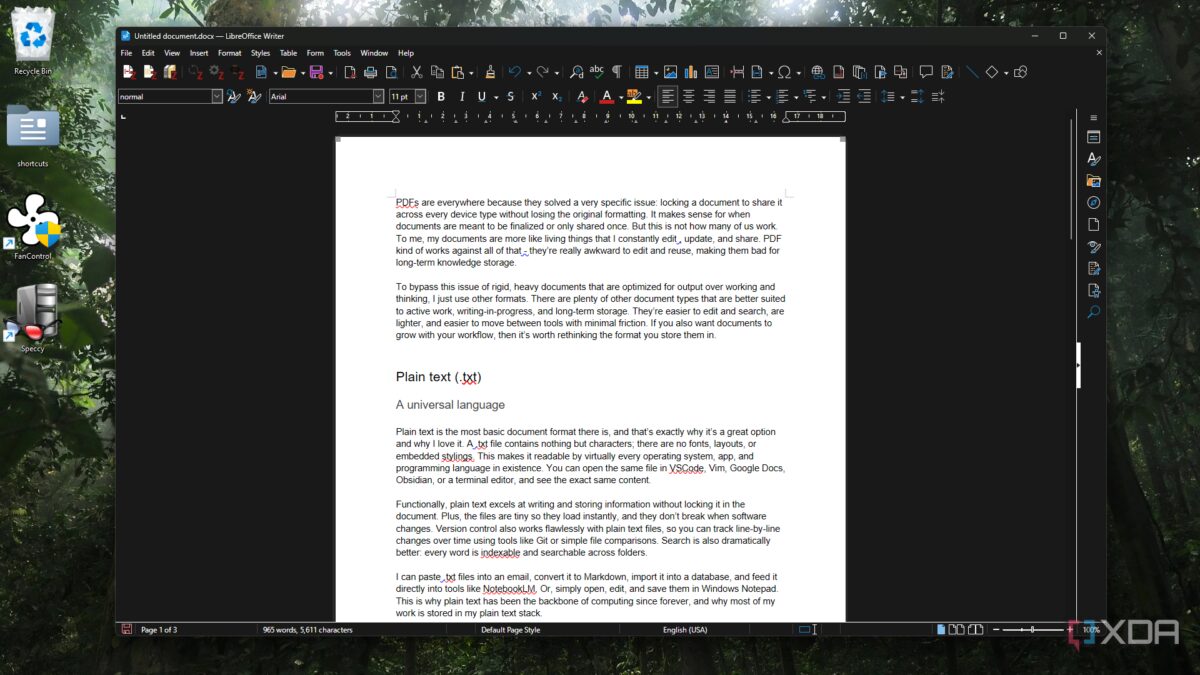
Cloud computing promised convenience by moving data away from local devices, but a growing number of users are pushing back, seeking to reclaim ownership of their personal and business files. LibreOffice Online’s recent revival, after a hiatus, reflects this shift toward self-hosted cloud solutions that bypass the big tech giants.
LibreOffice Online, once shelved due to conflicts with overlapping projects like Collabora Online, has returned with a new approach that empowers users to deploy their own cloud infrastructure rather than relying on a centralized LibreOffice server. This move taps into a wider trend of individuals and organizations eager to govern their own data privacy without sacrificing the accessibility and collaboration benefits of cloud software.
Why self-hosted clouds are gaining traction
The allure of cloud storage once lay in handing off file management and syncing to reliable corporations, but users have gradually realized that entrusting their data to third parties carries risks: potential data breaches, censorship, and loss of control. Privacy advocates have long warned about these vulnerabilities, and now more people are exploring local or privately managed clouds as viable alternatives. From hobbyists running a cloud on a Raspberry Pi at home to enterprises deploying private Nextcloud servers, self-hosted clouds offer a blend of privacy and convenience.

LibreOffice’s decision to distribute a toolkit allowing users and organizations to set up their own cloud infrastructure with the Online suite plays directly into this growing demand. Rather than a hosted service controlled by the LibreOffice project, the responsibility-and power-returns to users themselves.
Regulatory pressures boost EU interest in digital sovereignty
Beyond individual privacy concerns, businesses and governments-particularly in the European Union-face political and regulatory pressures to reduce reliance on American tech giants like Microsoft and Google. Finnish MEP Aura Salla’s grim warning that ”The US could turn us off inside one hour” underscores fears about dependency on foreign cloud platforms. Coupled with moves such as France migrating over half a million government workstations to LibreOffice, there is a clear drive for digital sovereignty fueling the resurgence of self-hosted productivity solutions.

Although primarily concentrated in the EU right now, this momentum could influence global attitudes toward cloud usage. If community-supported open-source projects like LibreOffice Online prove to be viable alternatives to corporate cloud offerings, more users may eschew subscription-based services in favor of owning and managing their own data infrastructure.
The future of cloud productivity tools
Microsoft and Google currently dominate cloud productivity with polished, tightly integrated services, making it difficult for open-source and self-hosted alternatives to compete on ease of use. However, as privacy concerns mount and regulatory environments evolve, the demand for open, user-controlled cloud solutions is increasing. LibreOffice Online’s comeback suggests open-source projects are ready to meet that demand, offering a level of control and sovereignty that corporate clouds struggle to provide.
The shift toward self-hosting isn’t just a niche movement: it points to increasing skepticism of handing over data to a handful of multinational providers. In the near future, the balance between convenience, cost, and control will determine whether cloud computing remains in the hands of the few or becomes a distributed, community-governed service.