

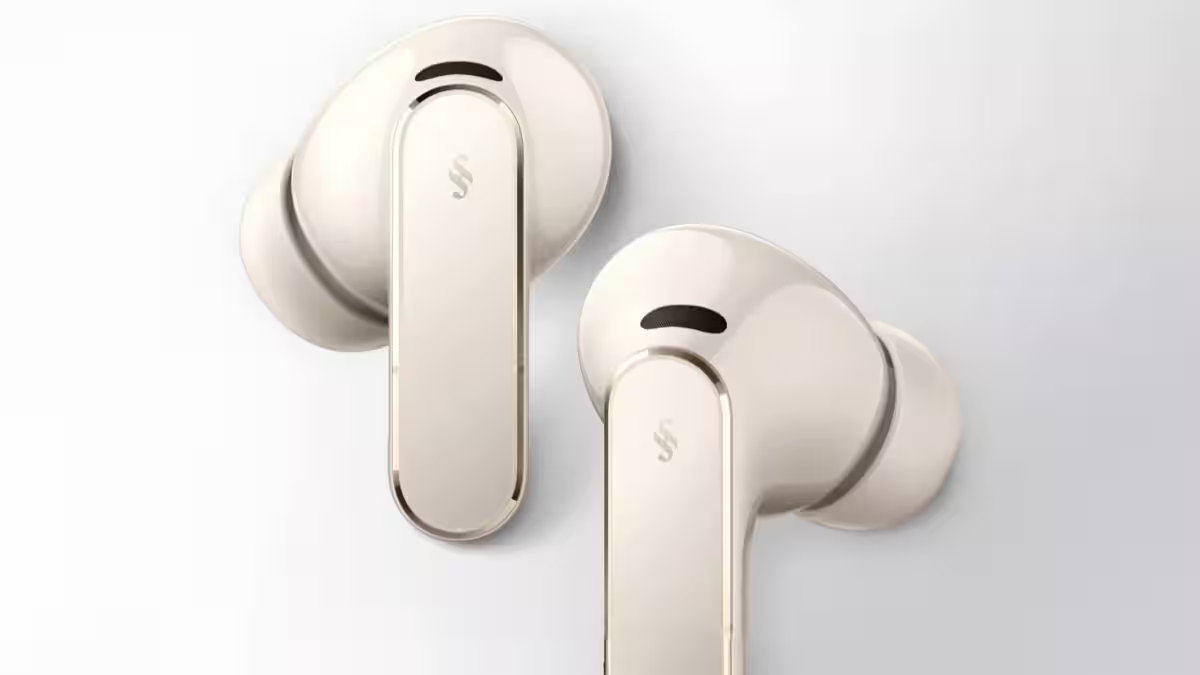
The premium true wireless market is full of near-identical choices: excellent noise cancellation, similar battery runtimes, and incremental sound refinements. Huawei’s new FreeBuds Pro 5 tries to break that sameness by combining a dual-driver audio stack and a tougher-than-usual IP67 rating – a play that says Huawei is targeting audiophiles who still want durability, not just office commuters who favor brand convenience.
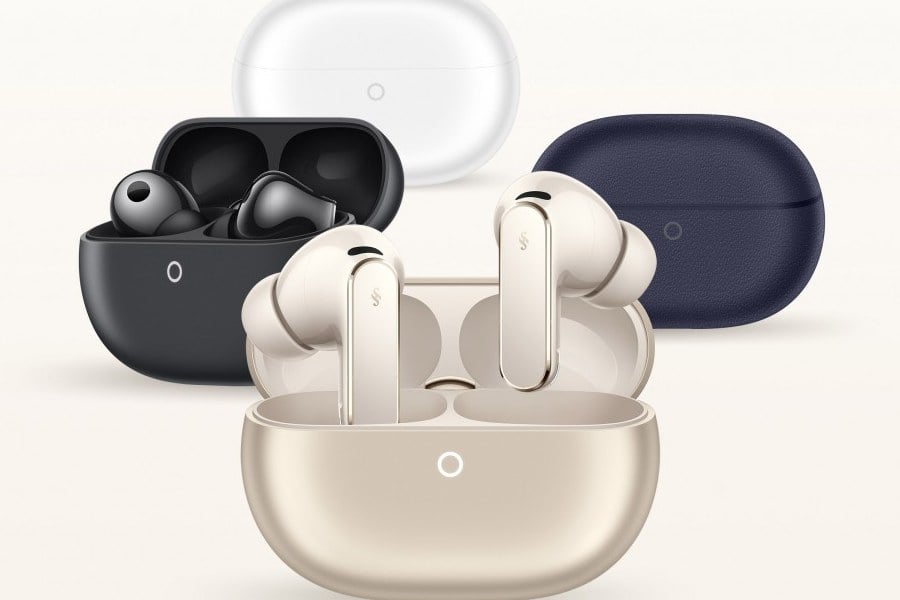
Officially announced today, the FreeBuds Pro 5 dresses up the standard stem-style in-ear mold with a star-ring diamond-cut finish, a gold ring on the stem, and HUAWEI SOUND branding. Each bud weighs 5.5 grams and measures 29.1 x 21.8 x 23.7 mm. The charging case is 43 grams and measures 65.50 x 46.70 x 22.98 mm. Color options are Snowy White, Frost Silver, Azure Sky, and Earth Gold.
What’s new – and what actually matters
The headline hardware changes are twofold. First, Huawei uses a dual-driver system: an ultra-linear dual-magnetic circuit bass unit plus an ultra-thin micro-planar tweeter. Huawei says the bass driver reaches down to 10 Hz while the tweeter goes up to 48 kHz. Second, the earbuds include a dual-unit, dual-channel active noise cancellation system that Huawei claims performs up to three times better than the previous generation.
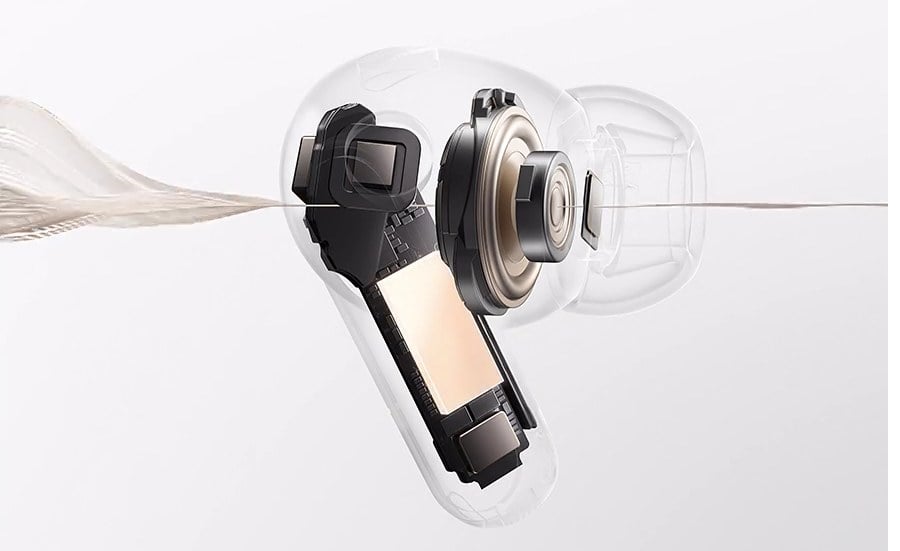
On the silicon side, the Kirin A3 chipset handles environmental processing and noise reduction, supported by upgraded microphones. Huawei says call clarity stays stable even in noisy environments up to 100 dB, and in winds up to 10 m/s. There’s also an Alert Mode to let important sounds through when you don’t want full isolation.
Codecs, battery and durability
The FreeBuds Pro 5 support AAC, SBC, LDAC, and L2HC, plus Huawei’s NearLink technology, which the company says can enable lossless transmission speeds up to 4.6 Mbps under supported conditions. Each earbud packs a 60 mAh cell and the charging case holds a 537 mAh cell. Huawei quotes up to nine hours of playback without ANC and about six hours with ANC enabled. The earbuds carry an IP67 rating for dust and water resistance.
Pricing is set at €199/£180, with a limited-period discount of €30/£30 through Huawei’s online store.
Why this direction matters
There are two clear moves here. First, Huawei is leaning into measurable audio hardware differences – a planar tweeter plus a dedicated bass driver – rather than just tuning software. Planar elements in true wireless earbuds are still uncommon among mainstream options at this price, so Huawei is offering a tangible feature for listeners who care about frequency extension and driver behavior.
Second, IP67 is a blunt instrument for differentiation. Premium rivals – flagship models from Apple and Sony, for example – use IPX4 water resistance rather than full dust ingress protection. IP67 makes the FreeBuds Pro 5 more attractive to people who want workouts, commuting in bad weather, or travel without treating their buds as fragile luxury items.
What Huawei gains – and what it risks
Gains: Audiophiles on a budget and owners of Huawei phones who value tight ecosystem features (like NearLink) should find a lot to like. The codec list, including LDAC and L2HC, is broader than Apple’s AAC-only approach and gives Android listeners better options for high-resolution sources.
Risks: Two of them. First, proprietary transmission systems like NearLink only deliver their full benefit when phones and apps support them, which limits the feature set for users on other devices. Second, claiming a threefold ANC improvement is a good marketing line, but real-world performance depends on fit, seals, and software tuning – areas where competitors have already invested years of refinement.
Where this sits in the market
At €199/£180, the FreeBuds Pro 5 undercuts many flagship earbuds while packing uncommon hardware choices and solid durability. That price point puts them in direct competition with older or discounted flagship models from Sony and Apple, which remain strong choices for users prioritizing ANC or ecosystem convenience. Huawei’s edge will likely be with buyers who prioritize sound spec and robustness over seamless cross-device handoff.
Expect Huawei to lean on these strengths in regions where its devices are popular. In markets where the brand faces regulatory or ecosystem headwinds, convincing mainstream buyers to switch may still be an uphill task – but for people who prize battery life, IP67 and a dual-driver approach, these earbuds make a credible argument.
Verdict (short)
The FreeBuds Pro 5 aren’t trying to be a clone of someone else’s bestseller. They’re a pragmatic remap of priorities: bring better raw audio hardware and real-world durability at a mid-flagship price. That’s smart positioning if Huawei can get NearLink adopted widely enough to be more than a feature that only works at home.