

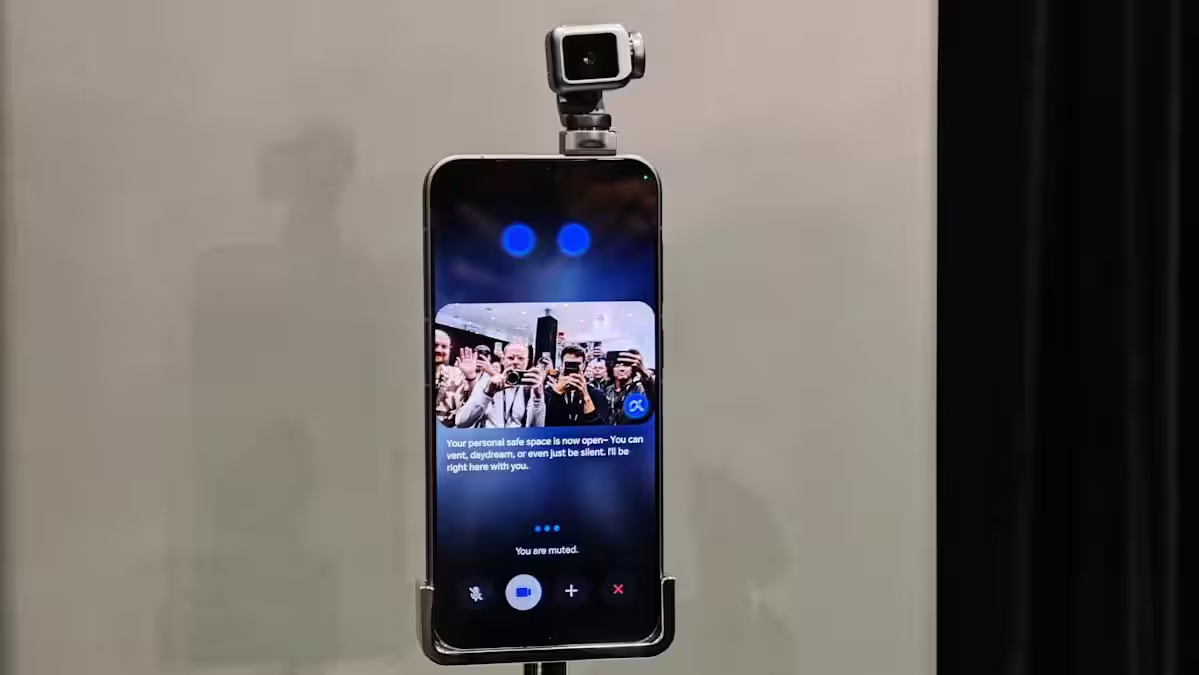
Smartphone makers have been chasing mechanical camera gimmicks for years, often ending in clunky failures or fragile designs. Honor’s latest attempt, the Robot Phone, unveiled at MWC 2026, tries to rewrite that narrative with a fold-out camera housed in a tiny gimbal that promises mobility, cinematic flair, and a surprisingly personable touch.
What sets Honor’s Robot Phone apart isn’t just the high megapixel count (a hefty 200MP sensor) but how the camera module moves. Unlike earlier smartphones with pop-up or rotating cameras that focused solely on novelty, this phone’s micro gimbal can tilt, nod like a ”head,” rotate a full 360 degrees, and even ”dance” to a handful of programmed songs – an unusual blend of function and personality.
Yet the real challenge lies in durability. Mechanized camera parts have a notorious track record for dust issues and mechanical failure, notably in phones with simpler motorized modules. Honor claims to leverage insights from the foldable phone market to use tougher materials and precision simulation in miniaturizing this gimbal. The core motor is reportedly 70% smaller than competitors’, though how that translates to everyday use remains to be seen.
All this hardware supports a 4-degree-of-freedom gimbal stabilization system, integrating three-axis optical image stabilization to smooth out handheld shots. The phone also offers more traditional fixed cameras behind a fold-away panel, letting users skip the gimbal if they prefer faster, simpler shots.
The Robot Phone packs AI-powered camera modes designed to maximize its unique hardware. Super Steady Video promises stabilized footage even when swinging the phone around, while AI Object Tracking should follow subjects intelligently. AI SpinShot adds programmed rotational camera moves, previously only seen in pricey handheld gimbals or action cams, raising the bar for smartphone cinematic tools.
Honor has also partnered with ARRI Image Science, a company famous in the cinematic world for pioneering color fidelity and image quality. This collaboration aims to inject Hollywood-grade color science and dynamic range management into the phone’s video output – an unusual but welcome crossover between mobile tech and film industry standards.
Adding to the spectacle, Honor introduced a humanoid robot companion at their MWC event. The robot performed dances and interacted playfully with the phone and company CEO. While mostly symbolic for now, Honor is positioning this robot as a cornerstone for its vision of an AI-powered future spanning domestic to industrial roles.
Honor’s Robot Phone taps into ongoing trends: smart devices gaining mechanical complexity and AI-enhanced imaging. Yet, there’s a fine line between innovation and gimmick. Past attempts at moving camera parts often fell short due to susceptibility to damage or just failing to justify added bulk. Does the Robot Phone’s advanced gimbal and AI toolkit offer a practical leap, or is it another flashy feature overshadowed by durability concerns?
Other brands like Samsung and Vivo have dabbled with motorized or pop-up cameras, but none have committed to such intricate gimbal mechanics alongside AI cinematic integration. If Honor’s engineering holds up under real-world use, this phone could set a new standard for mobile videography. Its success hinges on whether consumers value mechanical versatility and AI creativity over the sleek, sealed designs dominating the market.
The Robot Phone is expected to hit shelves later this year, giving tech enthusiasts and smartphone photographers something truly different to look forward to. Whether it reshapes expectations or becomes a niche curiosity will come down to how well Honor balances mechanical innovation with everyday usability in a fiercely competitive smartphone market.