

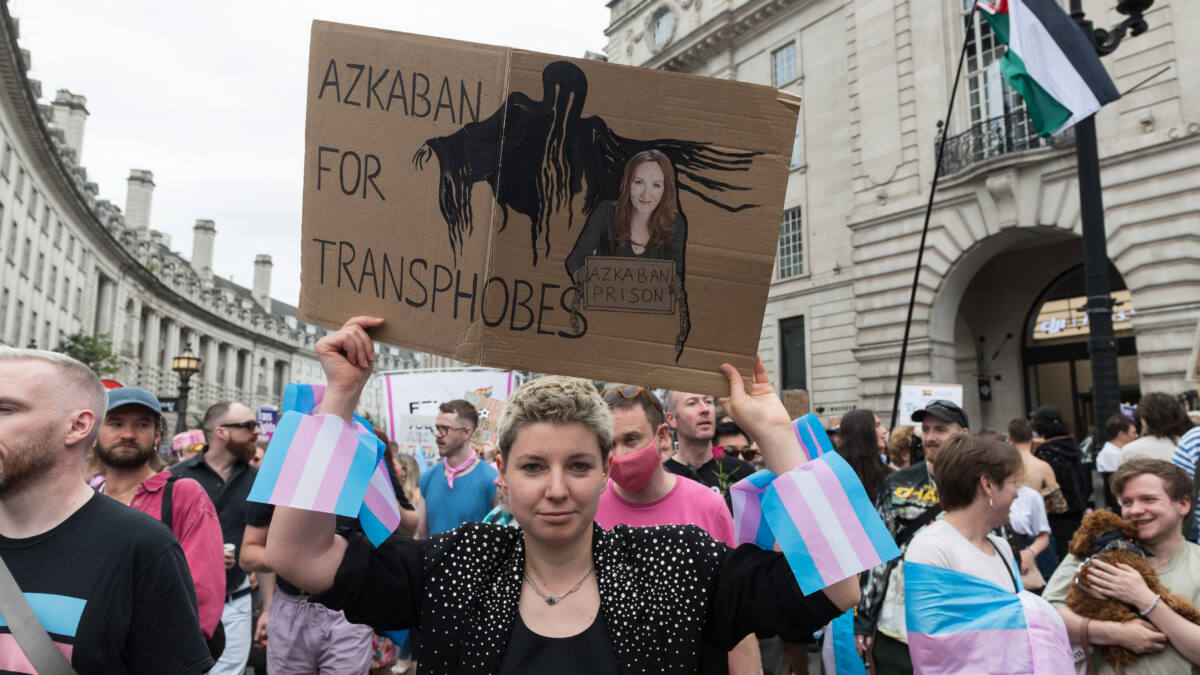
HBO’s upcoming Harry Potter series aims to captivate a new generation by adapting J.K. Rowling’s seven original novels. However, the show is deeply entangled with Rowling herself, whose outspoken anti-transgender activism has sparked widespread controversy. HBO’s partnership with Rowling means viewers supporting the show indirectly bolster her campaign against trans rights, raising ethical concerns for fans of the franchise.
Rowling’s public stance against transgender rights escalated notably after 2019, when she backed Maya Forstater in a legal battle over ”gender-critical” beliefs in the UK. This ruling, which favored Forstater’s interpretation of the Equality Act, emboldened a wave of trans-exclusionary rhetoric and legal challenges. Rowling’s influence and wealth have provided critical support to groups opposing transgender legal recognition, including a £70,000 donation to For Women Scotland, an organization that challenged inclusive gender definitions in public policy.
In 2025, Rowling founded The J.K. Rowling Women’s Fund to finance cisgender women’s lawsuits aimed at preserving what it calls ”sex-based rights,” a phrase critics argue masks efforts to restrict transgender rights. The fund highlights the For Women Scotland case as a landmark victory, underscoring how Rowling’s financial power bolsters trans-exclusionary legal battles.
While Rowling’s billionaire status already allows her to influence society through revenue generated by the Harry Potter franchise, HBO’s forthcoming series is set to inject fresh capital into her endeavors. The network’s strategy to energize Potter fandom could inadvertently empower Rowling’s controversial activism. HBO’s leadership seems unfazed by these implications, focusing on commercial success rather than the ethical ramifications of platforming a figure whose ideology has been linked to increased transphobic sentiment and violence.
For fans considering tuning in, this presents a dilemma: supporting a beloved fantasy world inevitably aids an author whose activism actively harms a marginalized community. Meanwhile, alternative magical fiction exists that sidesteps such entanglements. As the series’ launch approaches, it invites reflection on whether ethical consumption of cultural content remains possible when creators wield influence beyond entertainment, shaping real-world social conflicts.