

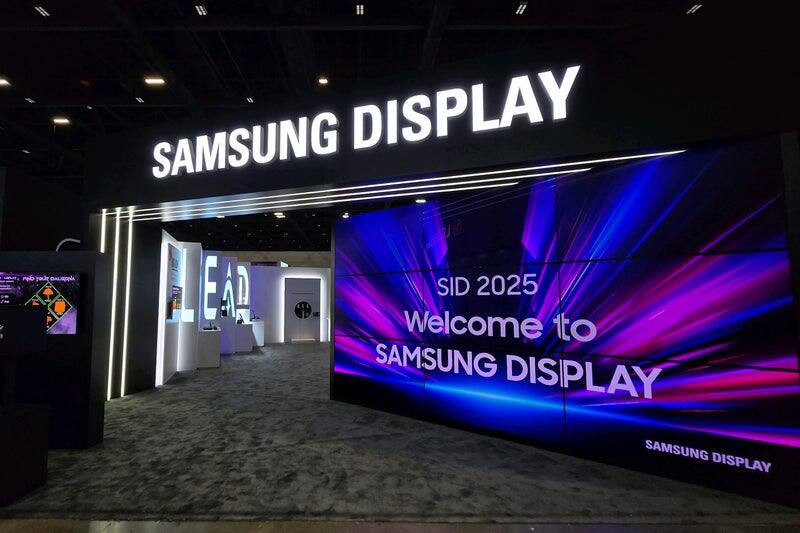
Apple’s first foldable iPhone looks less like a moonshot and more like a carefully fenced experiment. A new report says Samsung Display will supply every foldable OLED panel Apple needs under a three-year exclusivity deal, while initial production is pegged at around 3 million units – far below earlier estimates of roughly 10 million. That is a very Apple way to enter a new category: late, cautious, and with a giant safety net.
The arrangement also underlines an awkward truth for Apple. Samsung is still its fiercest smartphone rival, but for foldable displays it is the only supplier with the right mix of durability, yield, and experience. BOE reportedly still cannot match Samsung on those fundamentals, and LG Display has no track record at all in foldable smartphone panels. Sometimes the market for ”choice” is just one company and a very long check.
Samsung Display gets three years of exclusivity
According to the report, Samsung Display itself proposed the exclusive deal and then had to justify why it was handing its best foldable tech to a direct competitor. Apple accepted because, for now, there really was nowhere else to go. That kind of dependency is not new in semiconductors and displays, but it still looks odd when the rival building your screen is also the rival selling millions of phones against you.
The bigger signal is that Apple is not trying to solve every engineering problem at once. Samsung has spent years ironing out foldable panel quirks, while Apple is arriving with a first-generation product and a clear preference for the proven path. In a category where one bad crease or hinge issue can haunt a launch, that conservatism may be the whole point.
Apple’s foldable iPhone starts with 3 million units
Samsung Display is set to begin mass production this quarter, but the first wave is reportedly around 3 million panels. That is a sharp drop from the earlier 10 million figure, and it reads like Apple is bracing for a niche launch rather than a category-defining splash. After the Vision Pro’s expensive stumble and the market’s cool reaction to a $3,499 headset, caution looks less like prudence and more like scar tissue.
- Supplier: Samsung Display
- Deal length: three years
- Initial production: around 3 million units
- Earlier estimate: roughly 10 million
The panel itself is not supposed to be a science project either. The foldable screens will use CoE, or Color filter on Encapsulation, which removes the polarizer layer and helps reduce cracking at the fold point. The OLED material is also expected to be the same M14 set used in the iPhone 17 Pro Max, not some brand-new material that sounds great in a keynote and is miserable in manufacturing.
Apple is betting on stability over spectacle
That choice says a lot about where Apple thinks the foldable market is right now. Samsung, Huawei, and others have already done the messy work of normalizing foldables, so Apple does not need to win the technical race; it needs to show up with a product that feels less fragile, less experimental, and less like a prototype with a logo on it. The company has often entered established categories only after the rough edges were sanded down, and this looks like the same playbook.
The open question is whether Apple is being smart or timid. A limited run can be a disciplined way to test demand, but it can also signal a company that is not fully convinced its first foldable deserves a massive launch. If the device arrives later this year as expected, the real story will not just be the fold – it will be whether Apple has finally found a foldable formula worth scaling.