

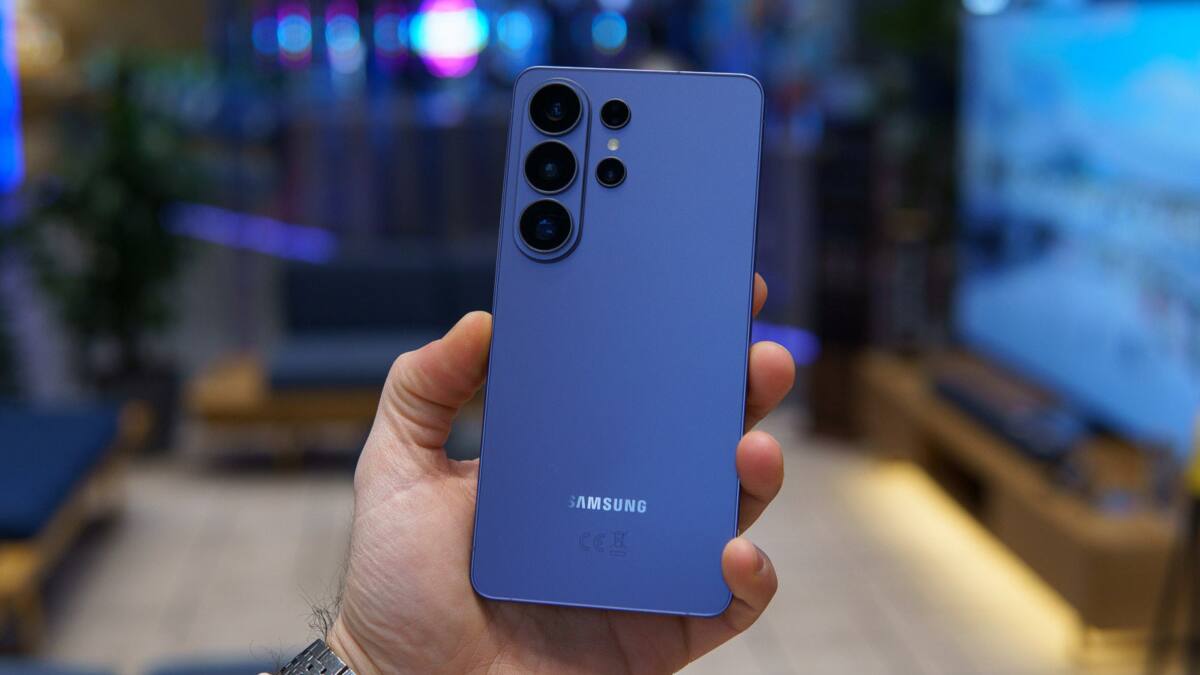
Samsung’s Exynos 2700 benchmark leak suggests the company is still on track for the Galaxy S27 family, with a Geekbench result on Android 16, 12 GB of RAM, and a deca-core setup that looks very much like an engineering sample rather than a finished product.
The scores are modest on paper – 2,603 in single-core and 10,350 in multi-core – but that’s not really the point yet. What matters is that Samsung has moved the chip far enough along for it to surface in a real benchmark, which is usually where vaporware goes to die.
What the Exynos 2700 benchmark shows
The leaked test lists the Exynos 2700 with one prime core at 2.78GHz, four performance cores at 2.88GHz, one low-power core at 2.30GHz, and four efficiency cores at 2.40GHz, plus an Xclipse 970 GPU. There’s also an ERD identifier attached to the chip name, which points to an engineering board, not consumer hardware.
That detail matters because early silicon is usually tuned for stability, not bragging rights. By the time Samsung ships the final version, the clocks should be higher and the CPU should be much faster, especially if the company’s usual pattern holds and the last stretch of validation brings the biggest gains.
Samsung’s 2nm play for the Galaxy S27
Samsung is expected to make the Exynos 2700 on an improved 2nm process node, following the Exynos 2600. The company’s own guidance for that move points to a 12% performance boost and a 25% drop in power consumption compared with this year’s silicon, which is the kind of math Samsung desperately needs after years of Exynos skepticism.
There’s also pressure on the graphics side. Samsung is said to be developing the Xclipse 970 without AMD assistance, which would mark a cleaner break from its previous approach. If that works, it would be a practical win, not just a branding exercise, because Samsung has spent enough time explaining why its chips are almost good enough.
- Single-core score: 2,603
- Multi-core score: 10,350
- CPU configuration: 1 prime core, 4 performance cores, 1 low-power core, 4 efficiency cores
- GPU: Xclipse 970
The bigger question is whether Samsung can turn all this into broad adoption. The Galaxy S26 Ultra is still expected to stick with Qualcomm, and that says plenty: even after better-than-expected Exynos 2600 results, Samsung hasn’t fully convinced buyers or, apparently, itself. Meanwhile, Qualcomm’s Snapdragon 8 Elite Gen 6 and Apple’s A20 Pro are on the horizon, so Samsung is benchmarking against chips that already have a habit of showing it up.
If the Exynos 2700 keeps improving, Samsung could finally get closer to a world where its best phones don’t need an asterisk by the processor line. The open question is whether the Galaxy S27 will be the first flagship cycle where Exynos earns wider trust – or just another round of ”almost there” with a faster GPU and a nicer graph.