

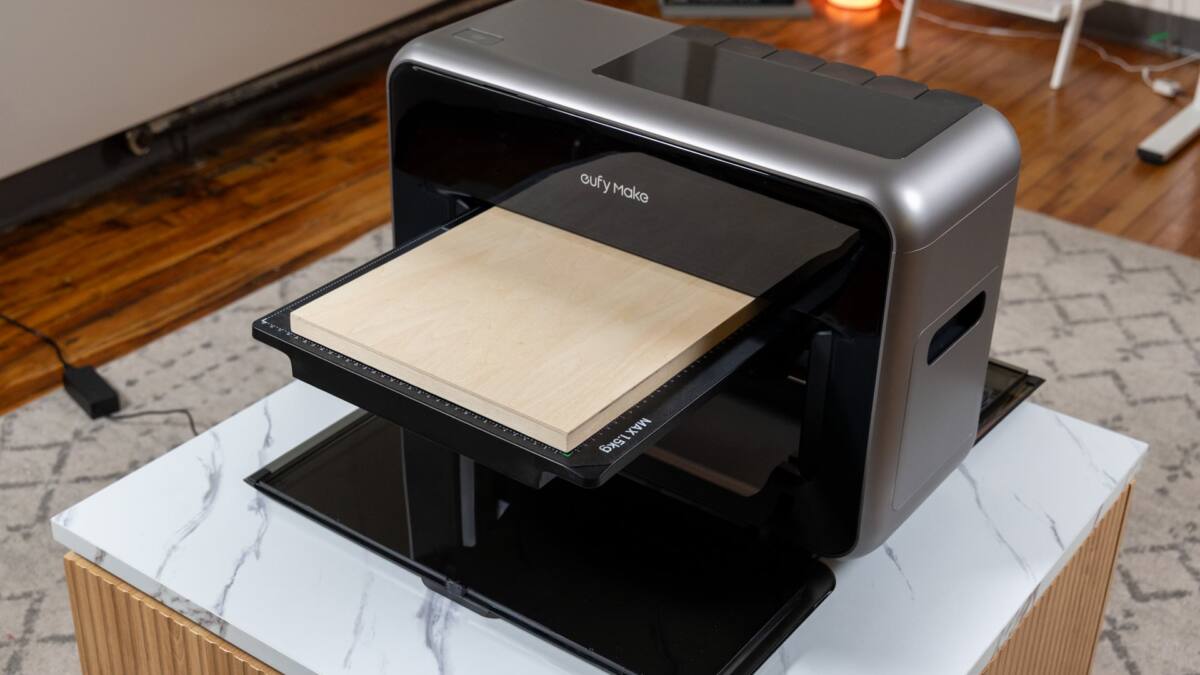
Most printers are still stuck in the same old trap: expensive ink, fussy software, and paper jams that feel personal. Anker’s EufyMake E1 UV printer takes a different route. This $2,300 UV printer is built to put images on wood, canvas, plastic, metal, ceramics, mugs, and even cylindrical bottles – and it does that with far more ambition than the average home-office box ever bothers to attempt.
That ambition comes with a catch, of course. The E1 is slow, bulky, and very good at turning a desk into a small production line. But it also lands at a moment when makers, Etsy sellers, and small studios are spending more on personalization tools than on traditional printers, and Anker is clearly betting that ”prints on almost anything” is a stronger pitch than ”prints on paper, eventually.”
What the EufyMake E1 can print on
The EufyMake E1 uses UV ink that cures almost immediately under ultraviolet light, which is why paper is basically the wrong target. Flat materials do much better, and so do awkward objects that regular printers would laugh at: coasters, hardboards, metal sheets, mugs, water bottles, and other surfaces that usually require a separate shop visit or a lot of patience.
Print quality is the headline feature. The machine tops out at 1,440 DPI and can build a faux-3D embossed finish up to 5 mm high. That gives it a look closer to craft-shop merch or textured wall art than office printing, which is exactly the point. The catch is that the underlying material matters a lot, and the printer can be surprisingly picky about how those colors and textures land.
- Max resolution: 1,440 DPI
- Maximum embossed height: 5 mm
- Printing surface area: around 13 x 16.5 inches
- Weight: nearly 44 pounds
Price, bundles, and the ink tax
Anker originally sold the E1 as a Kickstarter project, and it has now moved into preorder territory with the base bundle priced at $2,300 and an expected launch date on May 6. The basic package includes the ink cartridges, plus a mini flatbed and a larger standard flatbed, but the rotary attachment for mugs and bottles and the UV DTF laminating machine each cost an extra $400. The full ”Deluxe” bundle is priced at $2,900.
- Base bundle: $2,300
- Rotary attachment: $400
- UV DTF laminating machine: $400
- Deluxe bundle: $2,900
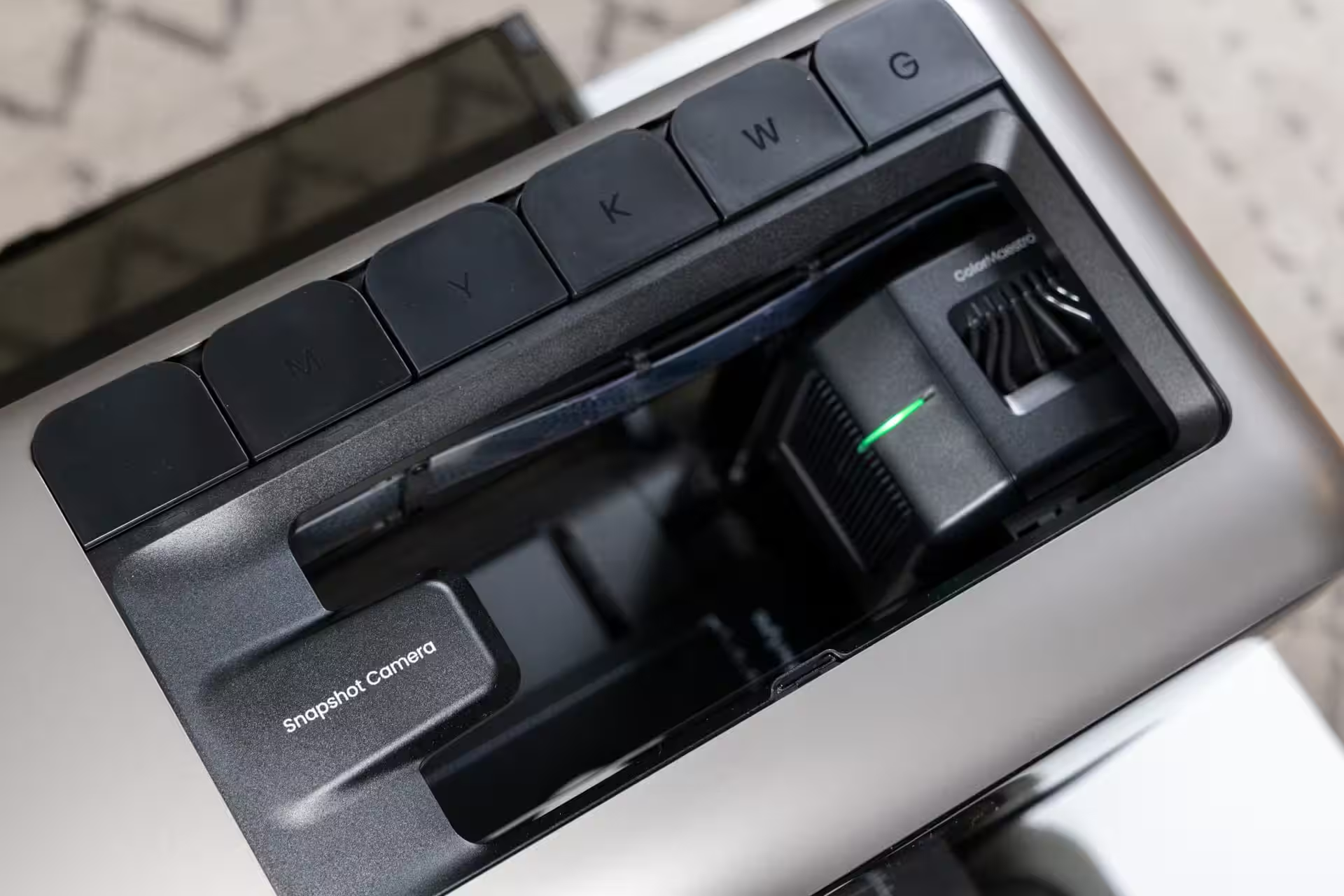
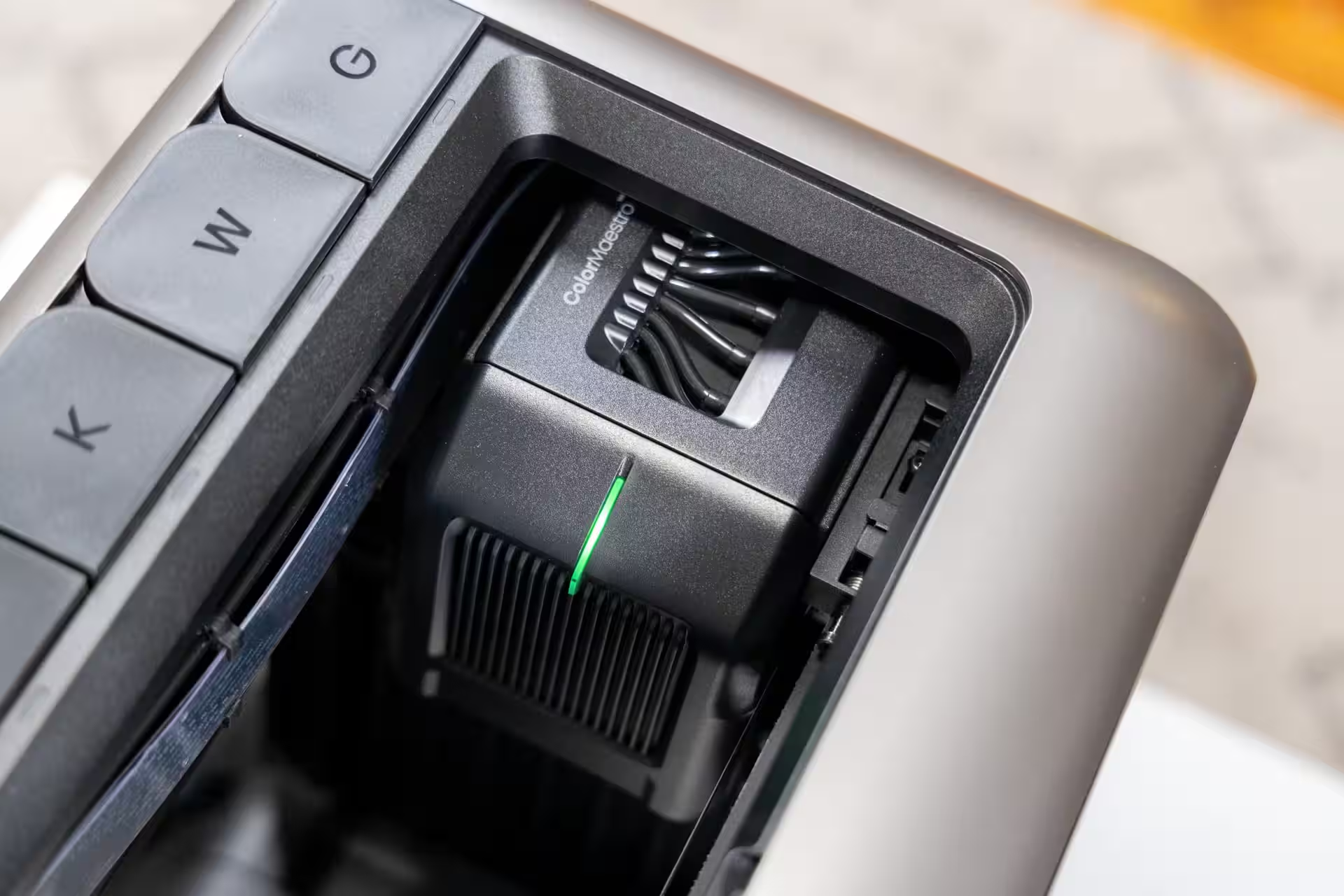
Then there’s the ink, which is where the printer starts behaving like a printer. The full CMYKWG kit costs $300, a single white UV cartridge adds $43, and the white and gray ink used for textured effects can burn through hundreds more. Anker will happily sell you materials too, but the review’s most useful reminder is that you do not need to buy every blank coaster or canvas from the same brand for the machine to work.
The software is better than the setup
The EufyMake Studio app is relatively friendly, but the rest of the experience asks for patience. Each cartridge arrives in its own little fortress of foam and plastic, and setup means unboxing everything one by one before the printer even starts doing useful work. Once powered on, the machine spends several minutes injecting ink and cleaning itself before you can print a thing.
For flat objects, the printer takes a ”snapshot” of the surface and uses a laser array plus an 8-megapixel downward camera to map the item before printing. That process can take between three and seven minutes, and the automatic alignment is not always as smart as it sounds. If you want cleaner results, manual cropping and resizing are safer than trusting the software to guess perfectly.
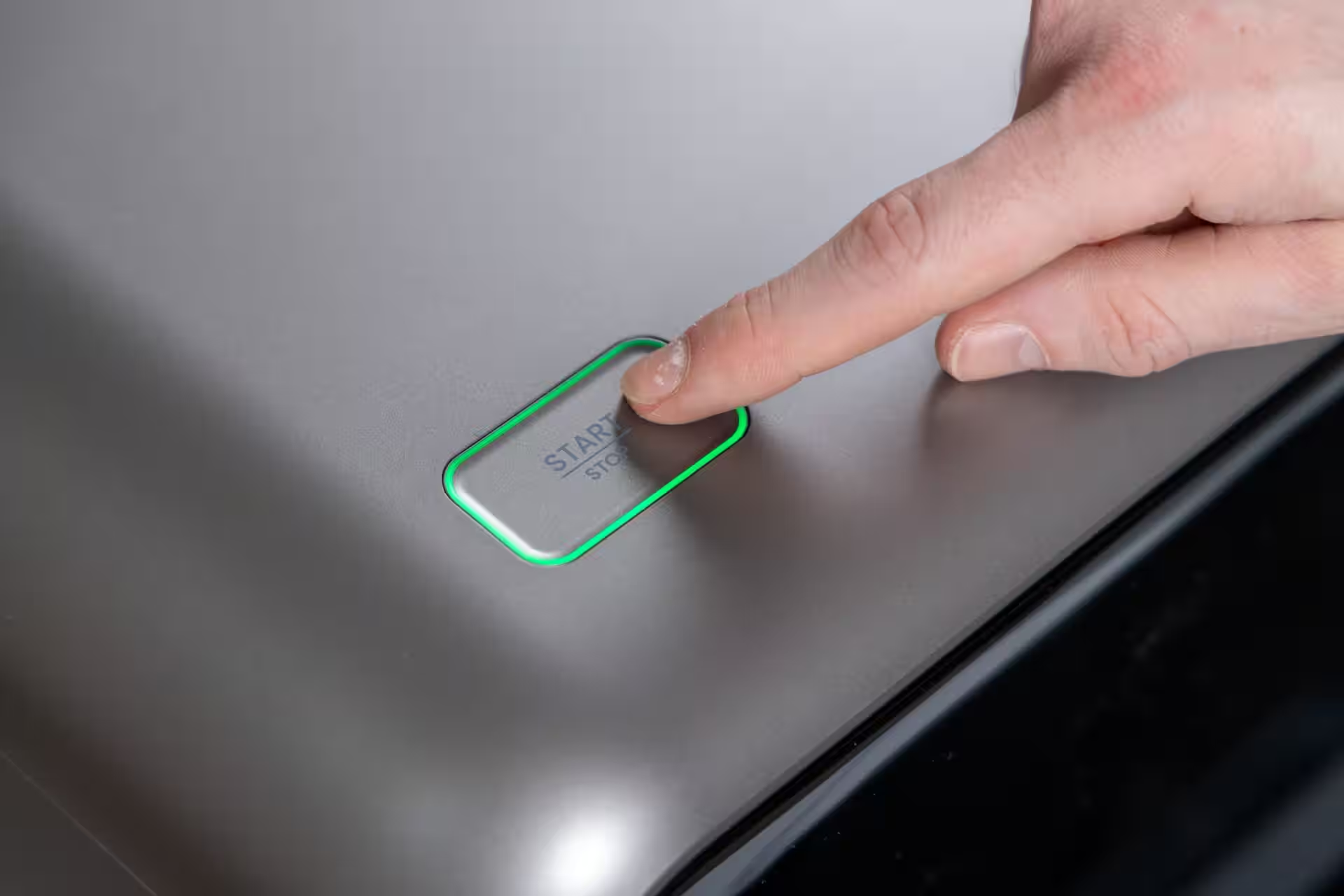
That slowness is the real divide here. A few coasters can take 10 to 15 minutes. A 12 x 16-inch canvas can take more than 30 minutes. Add the 3D effect and a single print can stretch to 5.5 hours, which is either maddening or perfect depending on how badly you want custom merch.
Who this printer is actually for
The E1 makes the most sense for people who want to produce small-batch art, gifts, or merchandise from a desk rather than a workshop. It is not a cheap toy, and it is definitely not a family printer. But for creators who need control over materials and texture, it offers something inkjet printers rarely do: the ability to turn a random object into a finished product without a separate production chain.
The bigger question is whether this class of printer stays niche or starts dragging prices down the way consumer 3D printers eventually did. Right now, the EufyMake E1 feels like an early, expensive answer to a demand that was always going to exist: people want custom goods, not just documents. If Anker can keep pushing the category forward, the next version may be less of a luxury curiosity and more of a machine normal humans can justify.