

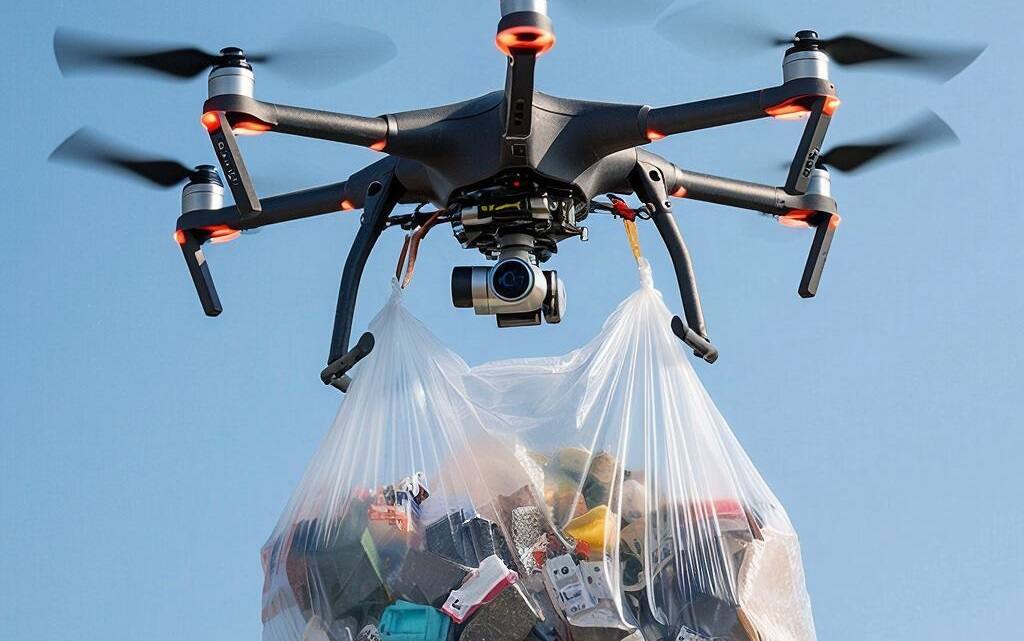
A group of young programmers has equipped drones with an artificial intelligence system capable of identifying and classifying waste for recycling purposes. This development, revealed by Dmitry Gachko, founder of IT Park Rus, marks a step toward automating one of the most labor-intensive stages of waste management.
To enable this new functionality, developers assembled specialized datasets for a neural network tasked with distinguishing waste items from non-waste and categorizing them accurately. These datasets were integrated into the Wheelies platform, a centralized control system for drone management.
The drones underwent testing on a simulated recycling site, proving their ability to perform sorting operations autonomously. This technology hints at a future where drones could dramatically reduce human exposure to hazardous waste sorting environments and increase efficiency in recycling facilities.
Gachko also shared plans to evolve the platform into a versatile management system covering aerial, aquatic, and ground drones alike. Beyond waste sorting, potential applications include agricultural irrigation, cargo delivery, pipeline surveillance, illegal logging detection, and wildfire monitoring-signaling a broadening of drone roles across industries.
Automation meets environmental challenges
The integration of AI-powered drones into recycling could address chronic workforce shortages and operational inefficiencies that recycling centers face globally. As waste volumes rise and manual sorting remains costly and hazardous, automation is becoming indispensable. Similar initiatives elsewhere have shown that AI-enhanced robotic sorting can improve material recovery rates and reduce contamination.
However, this drone-based approach is a fresh twist compared to stationary robotic arms commonly found in sorting facilities. Mobility offers unique advantages, like accessing outdoor or hard-to-reach deposits of waste, potentially optimizing cleanup in public spaces or remote locations.
Despite the promise, challenges remain. Environmental conditions such as weather, debris clutter, and varying waste composition complicate visual recognition and manipulation for flying platforms. Successful deployment will require continued enhancements in AI accuracy and drone resilience.
Meanwhile, the scenario points to a larger trend: multimodal fleets of autonomous devices collaborating across ecosystems. From air to land and water, these drones might soon work collectively to monitor, maintain, and protect environments-reshaping not only recycling but also agriculture and resource management.
Will drones become the new frontline agents in environmental stewardship? The ticking clock of climate urgency and resource scarcity suggests the race to automate smarter solutions has only just begun.