

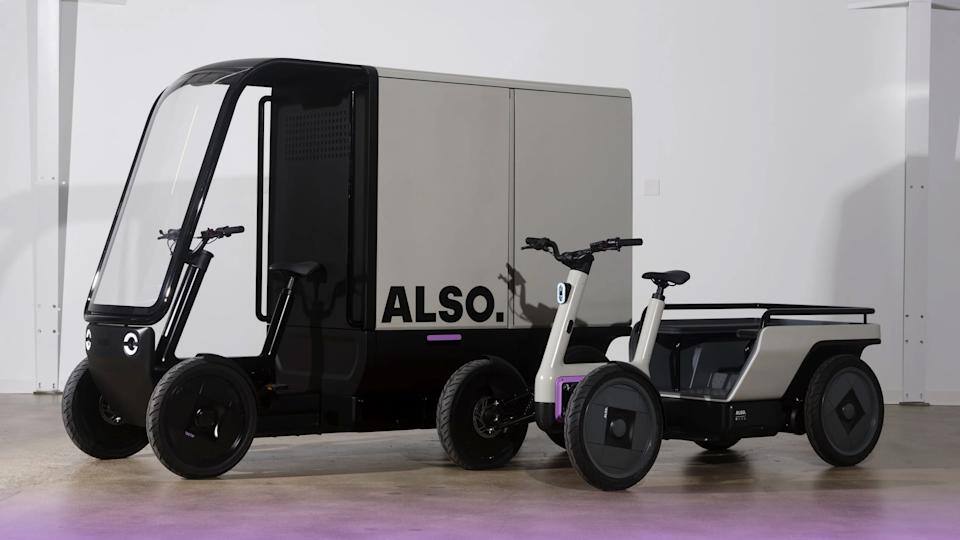
DoorDash is putting money behind a Rivian spinout to push autonomous delivery closer to real-world use. The company has struck a strategic partnership with Also, a micromobility startup that will help DoorDash develop and deploy delivery vehicles at scale, even if the exact hardware is still under wraps.
The deal points to where the industry is headed: not fully self-driving vans, but smaller electric vehicles built for the messy middle ground between roads, bike lanes, and curbside drop-offs. That is also where the economics get interesting. Big autonomous fleets are still expensive and heavily regulated; cargo e-bikes and compact EVs are a lot easier to thread through crowded cities and get into service faster.
What DoorDash and Also are building
The companies say they want to ”develop and accelerate deployment of autonomous delivery at scale.” They did not say which vehicles will be used, which leaves plenty of room for interpretation and a little corporate fog machine. Also’s current lineup includes the $3,500 TM-B e-bike with a virtual drivetrain, but the TM-Q looks more relevant here: a four-wheeled EV designed to carry cargo while still fitting in bike lanes.
That matters because the last mile is where delivery platforms live or die. A vehicle that can move orders quickly, fit into existing urban infrastructure, and avoid the worst of road congestion has a better shot at becoming more than a demo unit. Amazon seems to think so, too: in October, it agreed to buy thousands of TM-Q vehicles for last-mile deliveries.
Also’s TM-Q and DoorDash’s delivery bet
- Also was spun out of Rivian in 2025.
- Its first commercial product is the $3,500 TM-B e-bike.
- The TM-Q is a four-wheeled EV aimed at cargo transport in bike lanes.
- DoorDash co-founder Stanley Tang will become a board observer at Also.
- TechCrunch reports the partnership lifts Also’s valuation to above $1 billion.
Also co-founder and president Chris Yu said the partnership is aimed at areas ”not yet fully solved for,” including the junction of roadways, bike lanes, and road-adjacent spaces. That is a neat way of describing the urban delivery problem: too big for bikes, too small for trucks, and too awkward for the software stacks built around either one.
The bigger question is whether DoorDash wants a fleet it can control, or simply a testbed for the next generation of delivery hardware. If the TM-Q proves it can haul food efficiently without getting trapped in regulatory limbo, expect more platforms to follow. If not, the bike lane will remain full of ambition and the occasional traffic jam.