

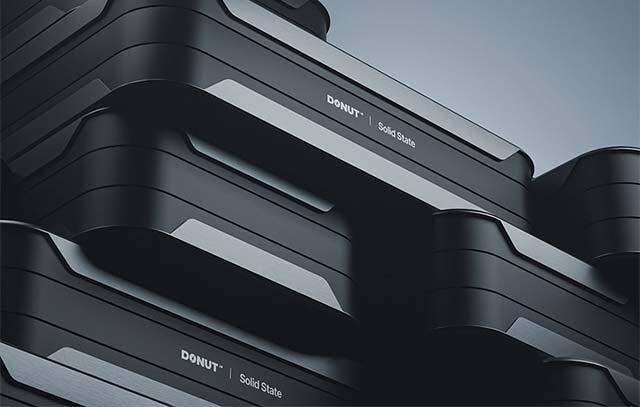
Donut Lab’s latest solid-state battery has proven its mettle by outperforming rigorous heat endurance and charge retention tests, challenging skepticism about its battery credentials. Independent assessments by Finland’s VTT Technical Research Centre confirm that the Donut Battery maintains stable capacity even at temperatures as high as 100°C and retains charge over long idle periods, distinguishing it clearly from supercapacitors.
Traditional lithium-ion batteries struggle with thermal management since their liquid electrolytes become unstable beyond roughly 60-70°C, leading to potential damage or dangerous thermal runaway. The Donut Battery sidesteps this issue entirely thanks to its solid-state design, which eliminates flammable liquids and allows operation at extreme temperatures without degradation. During testing, the battery delivered:
- 110% of its nominal capacity at 80°C
- 107% of its nominal capacity at 100°C
This rare feat indicates enhanced efficiency as internal resistance decreases with heat.
After exposure to such intense heat, the Donut Battery showed no visible damage or drop in performance, underscoring its thermal robustness. This could reduce or even eliminate active cooling needs in electric vehicles, potentially simplifying battery pack design and enhancing safety.
Charge retention distinguishes Donut Battery from supercapacitors
Some industry watchers speculated the Donut Battery might behave more like a supercapacitor, known for fast charging but rapid energy loss when idle. To put these doubts to rest, VTT conducted a charge retention test over ten days. The battery was charged to half capacity, then monitored without use. It maintained voltage stability for the first ten hours and held a predictable energy loss characteristic of true batteries over the entire period. In contrast, a supercapacitor would have leaked energy far quicker and linearly. This proof of conventional battery behavior strengthens Donut Lab’s claim to a production-ready solid-state battery.
The independent verification makes the Donut Battery stand out in the crowded race to commercial solid-state power sources, where many contenders struggle with scalability or longevity.
Impact of Donut Battery on electric vehicle design and safety
By eliminating the risks linked to flammable electrolytes and showcasing superior heat tolerance, the Donut Battery could reshape electric vehicle battery engineering. Manufacturers could cut back on heavy cooling systems and expect longer battery lifespans and safer operation under extreme conditions. Stable energy retention reassures users that these batteries function like traditional power sources, avoiding the pitfalls of ultracapacitor-like rapid discharge.
While precise commercial rollout dates are pending, Donut Lab’s breakthroughs signal that solid-state batteries are moving from lab curiosities toward viable, durable options for mass-market electric vehicles.