

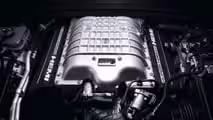
Dodge is reportedly moving forward with plans to bring back the Charger Hellcat, aiming for a 2028 model year launch. Enthusiasts who have long clamored for a high-horsepower V8 variant may soon have their wish granted, as the project has entered early development, potentially arriving in dealerships in late 2027.
The Charger Hellcat’s return comes amid ongoing shifts in muscle car powertrains, where Dodge has expanded its lineup with potent inline-six engines like the twin-turbocharged Hurricane. However, the six-cylinder setups, while impressive on paper, haven’t fully satisfied fans craving the distinct roar and rawness of a V8. Dodge executives appear to understand this sentiment and are pushing to ensure the Hellcat variant stands out with its iconic brute force.
Why a Charger Hellcat still matters
The current Dodge Charger Sixpack impresses with its power and agility, but it isn’t a genuine replacement for the Hellcat’s tremendous V8 muscle. Dodge’s CEO of Ram and SRT, Tim Kuniskis, has indicated that the traditional 5.7-liter Hemi isn’t likely to return, nor does the 6.4-liter V8-which actually produces less horsepower than the new inline-six-make sense as a flagship engine. Instead, Dodge aims for a more potent Hellcat-spec V8 that delivers the punch muscle car enthusiasts expect, even if it drives the price north of $100,000.
Staying true to the Hellcat pedigree sounds like Dodge’s answer to critics of the brand’s move toward more modern, efficient engines. If the new Charger Hellcat retains features such as an adjustable rear- and all-wheel-drive system, it could also carve its niche as a muscle car capable of tackling diverse driving conditions, broadening its appeal beyond traditional street performance.
This strategy echoes a larger trend in the muscle and performance segment: balancing nostalgia and technological advancements to keep legacy models relevant. Dodge is banking on the Hellcat’s unique identity to preserve its muscle car legacy in a market increasingly dominated by turbocharged six-cylinders and electric vehicles.
Challenging the status quo in muscle car engineering
Dodge’s reluctance to fully embrace smaller engines or electric powertrains for its Charger flagship reflects the brand’s commitment to muscle car tradition. While other manufacturers pivot toward electrification, Dodge seems intent on prolonging the life of internal combustion nostalgia, knowing that its core fanbase still craves thunderous V8s. The development of the Charger Hellcat possibly began shortly after the announcement of the six-cylinder models, suggesting it’s a critical part of Dodge’s future lineup.
However, this conservative approach comes with risks. As emissions regulations tighten globally and consumer preferences evolve, muscle cars powered by large-displacement V8s face increasing challenges. Dodge’s gamble relies heavily on brand loyalty and the allure of traditional muscle car performance, even if it means higher costs and potentially limiting mass-market appeal.
If the Charger Hellcat does hit the 2028 market as expected, it will enter a landscape where electric muscle cars from rivals like Ford’s Mustang Mach-E GT and upcoming electric challengers push the envelope on instant torque and emissions-free driving. It raises an intriguing question: will the visceral appeal of a supercharged V8 be enough to keep muscle car purists hooked, or will electric muscle eventually usurp the throne?