

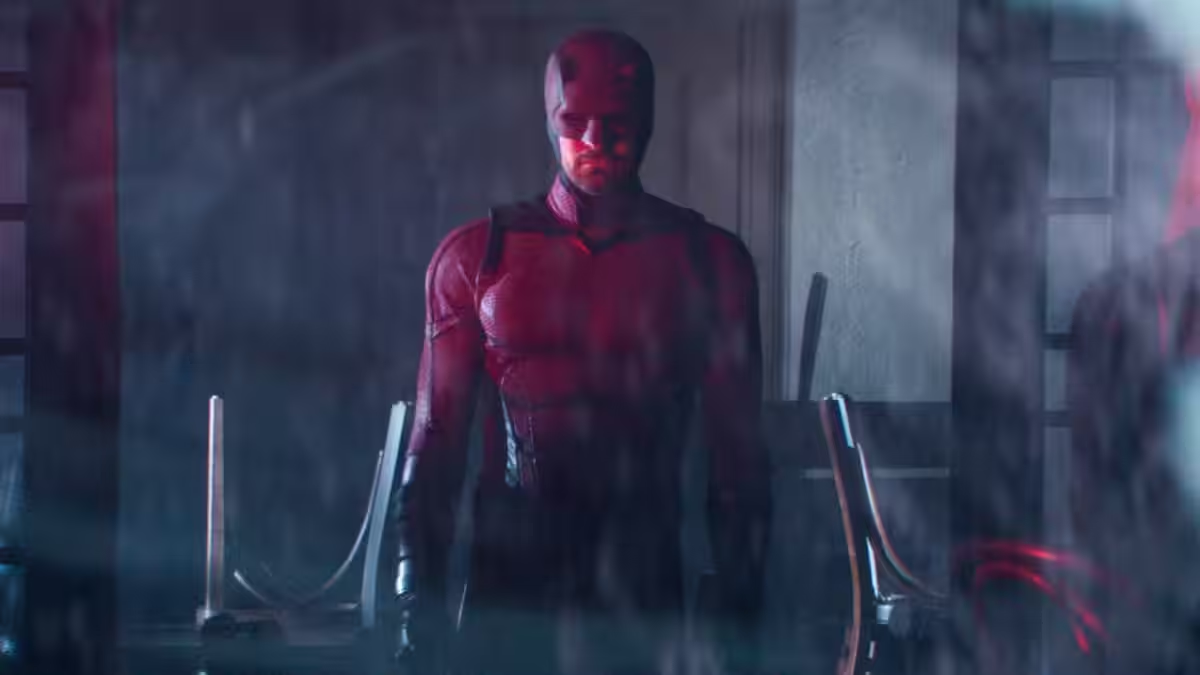
It’s tempting to applaud when comic-book shows try to mirror the real world. But when Daredevil: Born Again leans hard into New York City politics – with Vincent D’Onofrio’s Mayor Fisk tightening the screws on vigilantes – it also exposes an ongoing creative dilemma: do you want your superhero drama to read like a procedural about municipal power, or like mythic, street-level noir?
Showrunner Dario Scardapane admits the series has ”mixed feelings” about the shift toward topical politics, saying parts of season 2 feel almost uncomfortably current. He also signaled a personal preference: he wants the franchise to drift back toward the grittier, Frank Miller-era material – more alleyways and courtroom fights, less backroom mayoral intrigue.
Why this matters now
Political storylines aren’t filler. They change a show’s scale, tone, and audience expectations. A mayor cracking down on masked do-gooders turns a vigilante tale into a debate about legitimacy, oversight, and civil liberties. That’s a very different show to sell to viewers who tuned in for visceral fight choreography and morally ambiguous one-on-one confrontations.
There’s precedent. Marvel’s own cinematic universe introduced government oversight with the Sokovia Accords, which shifted Spider-Man and Captain America stories toward geopolitics. On TV, titles like Watchmen and The Falcon and the Winter Soldier leaned into social and political themes; Watchmen earned prestige and awards for doing so, while The Falcon and the Winter Soldier divided viewers who wanted spectacle over sermons.
Who wins, who loses
Politically charged seasons can win prestige and attention. They invite headlines and awards voters. They also give actors meatier scenes and allow writers to engage with contemporary anxieties.
But the gamble is real. Fans who loved Daredevil for its courtroom scenes, rooftop duels and noir grit risk feeling alienated if the show becomes an extended municipal-throne storyline. Lighter viewers who come for action might find the pacing stalled by policy meetings and political maneuvering. And there’s a creative risk: topicality dates faster than mythic conflict. A sequence that reads as sharp commentary today can feel dated or heavy-handed in a few years.
What the show is trying to balance
Scardapane’s comments reveal the tension: superhero stories are both modern allegory and modern melodrama. Lean too far into politics and you risk losing the archetypal, almost mythological aspect that distinguishes comic-book fiction. Lean too far the other way and the series can look evasive or shallow.
From a storytelling standpoint, Fisk-as-mayor is an excellent lever. Wilson Fisk’s transformation from crime lord to legitimate politician is a classic comics arc that naturally invites questions about power, legitimacy, and optics. But making that arc the central engine for long stretches shifts the focal point from Matt Murdock’s personal reckoning to the machinery of governance.
How other shows handled the trade-off
Look to Watchmen for a model where politics and myth co-existed successfully: it took a real historical atrocity and folded it into genre storytelling, winning critical acclaim because the political heart was integrated into the mythic stakes. By contrast, several Marvel shows have stumbled when the political theme felt bolted on rather than organic to the protagonist’s journey.
On the flip side, the Netflix Daredevil run built its reputation on noir, legal drama, and gritty street-level conflicts – the ”Miller-era” feel Scardapane wants to return to. That era’s success shows there’s an appetite for superhero TV that stays down at eye level with its city’s alleys, not in its city hall.
My take
Topical politics can sharpen a superhero series, but only when it serves character stakes. Arresting the concept of a vigilante is meaningful if it forces Matt Murdock to change, choose, or fail in ways that echo his core dilemmas. If the politics are primarily a backdrop for plot machinations, the show risks becoming an echo of cable dramas about municipal corruption rather than a distinct comic-book voice.
For Born Again, the best route is a compromise: use Fisk’s mayoralty to tighten pressure on Murdock, then let the aftermath pivot the show back to hand-to-hand, morally messy battles that feel both personal and mythic. That would respect Scardapane’s stated preference and preserve what made Daredevil resonate in the first place.
What comes next
Season 2 will test whether Born Again can thread the needle. Expect the Fisk arc to climax and for future episodes to nudge the series back toward street-level stories. How successfully the show reconciles topical urgency with mythic payoff will determine whether this Daredevil keeps its core audience or drifts into political procedural territory.
Whatever happens, the question the creative team is grappling with applies to many modern superhero shows: can you be politically awake and narratively timeless at the same time? The answer will matter for how the genre evolves in the years ahead.