

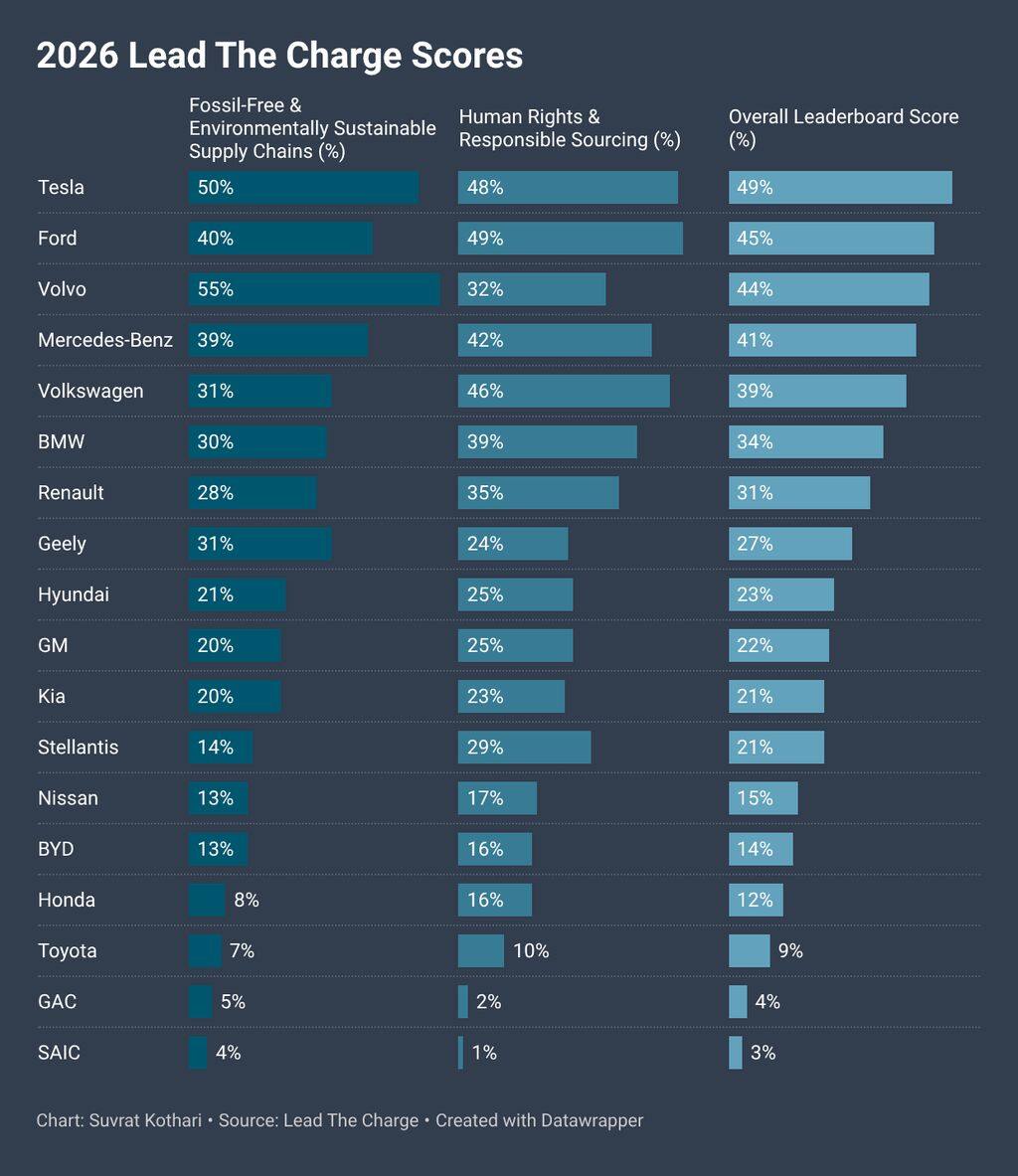
While electric vehicles are praised for their role in cutting carbon emissions, not all EVs are created equal when it comes to environmental impact and ethical sourcing. A recent study examining 18 major car manufacturers reveals stark differences in how they decarbonize their supply chains and manage human rights issues-areas often overshadowed by the race to electrify. Western companies, particularly Tesla, Ford, and Volvo, stand out for making tangible progress, whereas many Chinese brands lag behind, highlighting a divide not just in technology but in corporate responsibility.
Cleaner production and ethical sourcing: a tough balancing act
Electric vehicles offer a cleaner alternative to combustion engines over their entire lifespan, but the journey to green is complicated. The majority of EV production still relies heavily on fossil fuels, and mining for critical battery components-especially cobalt in regions like the Democratic Republic of Congo-is often tied to human rights violations. Environmental group Lead The Charge assessed manufacturers on more than 80 criteria, including carbon emissions during metal and battery production and safeguards for workers and indigenous communities involved in mining.
Overall, automakers averaged just 24% progress toward fossil-fuel-free, sustainable supply chains, with only a modest 5% improvement year-over-year. Human rights and responsible sourcing metrics fared similarly at 27%. Tesla emerged as the leader with a 49% score, closely followed by Ford and Volvo, while companies such as BYD, Toyota, and Honda underperformed significantly, especially in decarbonizing their steel supplies.
Why promises often fall short of action
The study also highlights a persistent gap between automakers’ pledges and their actual performance. Some of the largest brands with vocal sustainability commitments barely register on key metrics. Notably, Toyota, BYD, and Honda scored zero on decarbonizing steel sourcing, a fundamental component of EV manufacturing. However, Toyota has taken steps to improve battery recyclability by introducing designs that simplify disassembly, signaling some movement in battery sustainability.
The top five with the most improved battery supply chains include Tesla, Renault, Mercedes-Benz, Volkswagen, and Ford, suggesting that while innovation is happening, it remains uneven and slow. For many EV makers, the environmental damage associated with materials and energy inputs remains a blind spot.
What this means for the EV market and consumers
As governments and consumers push for greener transportation, this report underlines that the ”green premium” should extend beyond emissions during driving to scrutinize manufacturing and sourcing practices. Western automakers currently lead in transparency and progress, but the overall low scores suggest the industry still has a long way to go before EV supply chains truly align with climate and ethical standards.
Meanwhile, Chinese manufacturers-integral to the global EV market-face the challenge of not only scaling production but also cleaning up supply chains that have remained opaque and problematic. This tension highlights a growing divide between markets prioritizing rapid electrification and those insisting on sustainable, responsible production methods.
For consumers demanding accountability, this study offers a roadmap to distinguish brands based on more than just range or price. The real environmental impact of an EV starts long before it hits the road, and automakers that fail to address their supply chain issues risk losing the credibility that electric cars promise.