

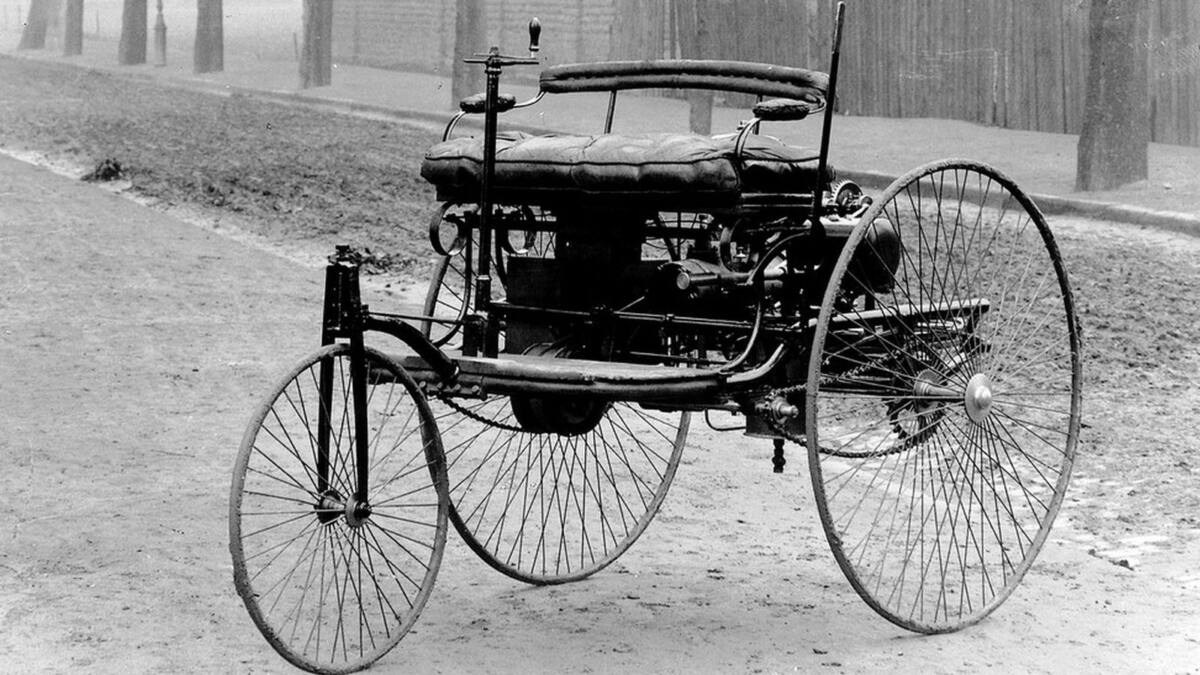
”Car” looks like a modern word, but its roots run back to ancient wagons, Celtic chariots, Latin, and a long chain of borrowed meanings that eventually landed on the thing parked outside your building. ”Automobile” arrived later, sounded fancier, and still lost the everyday usage contest. That’s the story: language kept the short word and quietly buried the grander one.
The trail starts with ”karros,” a Celtic word for a two-wheeled war chariot, which evolved into Latin forms such as ”carrus” and ”carrum” for a wheeled cart or wagon. As the term spread, it picked up new shapes in Anglo-French, Old Irish, Welsh, and Greek, all while the basic idea stayed the same: something that carries people or goods.
From chariots to carts to cars
By the late 1820s, ”car” was already in use in the U.S. for railway freight carriages, and by the early 1860s it had expanded to cable cars, streetcars, and tramway cars. That older transportation sense probably helped the word feel natural when horseless carriages began arriving in the 19th century: people did not need a brand-new label for a vehicle that still behaved like a cart, just with less hay and more attitude.
”Automobile” has a cleaner pedigree, if not a cleaner vibe. It combines Greek ”auto” for ”self” with Latin ”mobilis,” meaning something that moves, and sources place its English and French usage somewhere between the 18th century and 1873. The New York Times was still grumbling about ”the awful name automobile” in August 1897, which is a rare case of a newspaper accidentally predicting common sense.
Why car won in everyday speech
English tends to reward blunt convenience over etymological elegance. ”Car” is fast to say, easy to pluralize, and already familiar from trains and street transit, while ”automobile” feels formal enough to belong in a brochure or a municipal memo. Once mass production turned the horseless carriage from novelty into necessity, the shorter word had all the momentum it needed.
That left the language with a messy, very human result: one term for the broad category and a pile of side labels for everything else. We still get ”jalopy,” ”clunker,” ”hooptie,” and ”rustbucket” when the mood is generous or mean, but ”car” remains the default because it did the one thing vocabulary must do to survive: get out of the way.
The also-rans that never had a chance
- ”Autobaine”
- ”Autokinetic”
- ”Automaton”
- ”Automotor horse”
- ”Buggyaut”
- ”Motor-vique”
Those names read like rejected startup brands, not transport vocabulary. If there’s a lesson here, it’s that the winner in language is often the least annoying option, not the most technically correct one. ”Car” was simple enough to survive the shift from wagon to railway carriage to streetcar to motor vehicle, and that flexibility beat every fancier rival.
The open question is whether today’s EV-era jargon will produce another everyday default word, or whether ”car” has already become too deeply embedded to budge. Betting against it would be a brave move – and probably a losing one.