

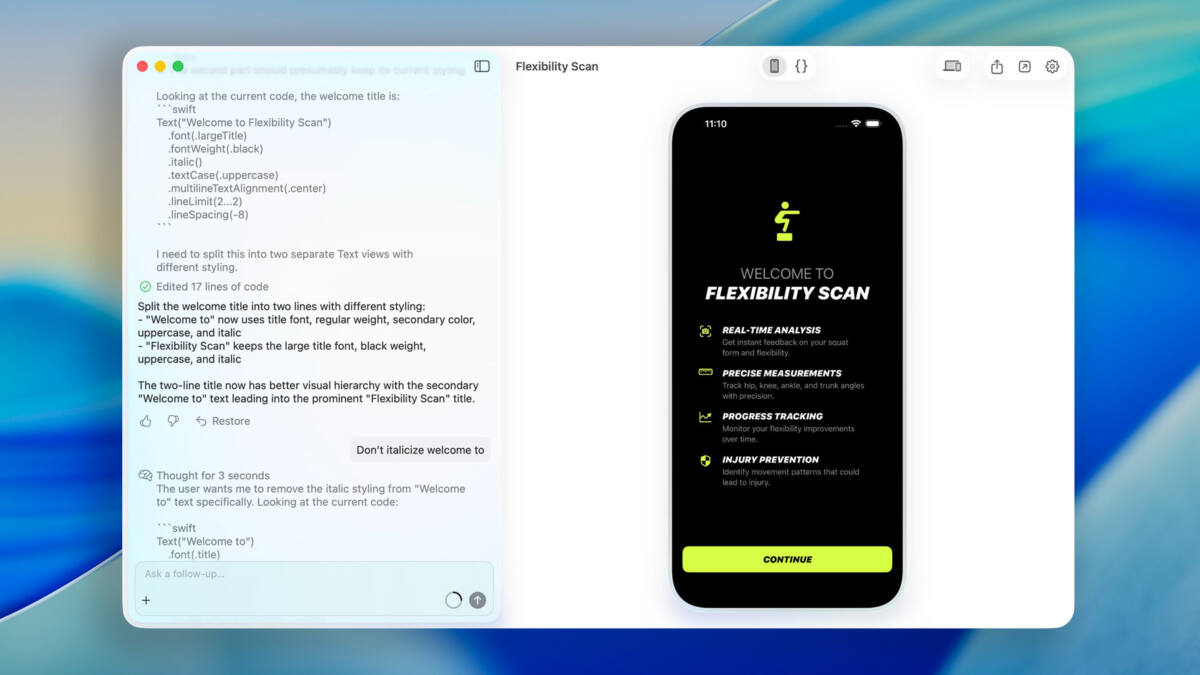
A team of ex-Apple engineers behind Bitrig-the AI-driven app builder initially launched on iPhone-is now bringing their platform to macOS, making it easier to create iPhone apps on the Mac. The new Bitrig Mac app generates real Swift and SwiftUI code based on user prompts, supporting full app development workflows from code editing to on-device testing and deployment.
Bitrig first surfaced last October as an iPhone app that allows users to sketch out entire SwiftUI applications with natural language prompts. The new Mac version addresses a glaring need from users who wanted the comfort of a larger screen, a full keyboard, and the complete Xcode toolchain. Unlike traditional low-code builders that produce proprietary or intermediate code, Bitrig generates authentic Swift code that developers can tweak manually or export as Xcode projects for further refinement and App Store submission.
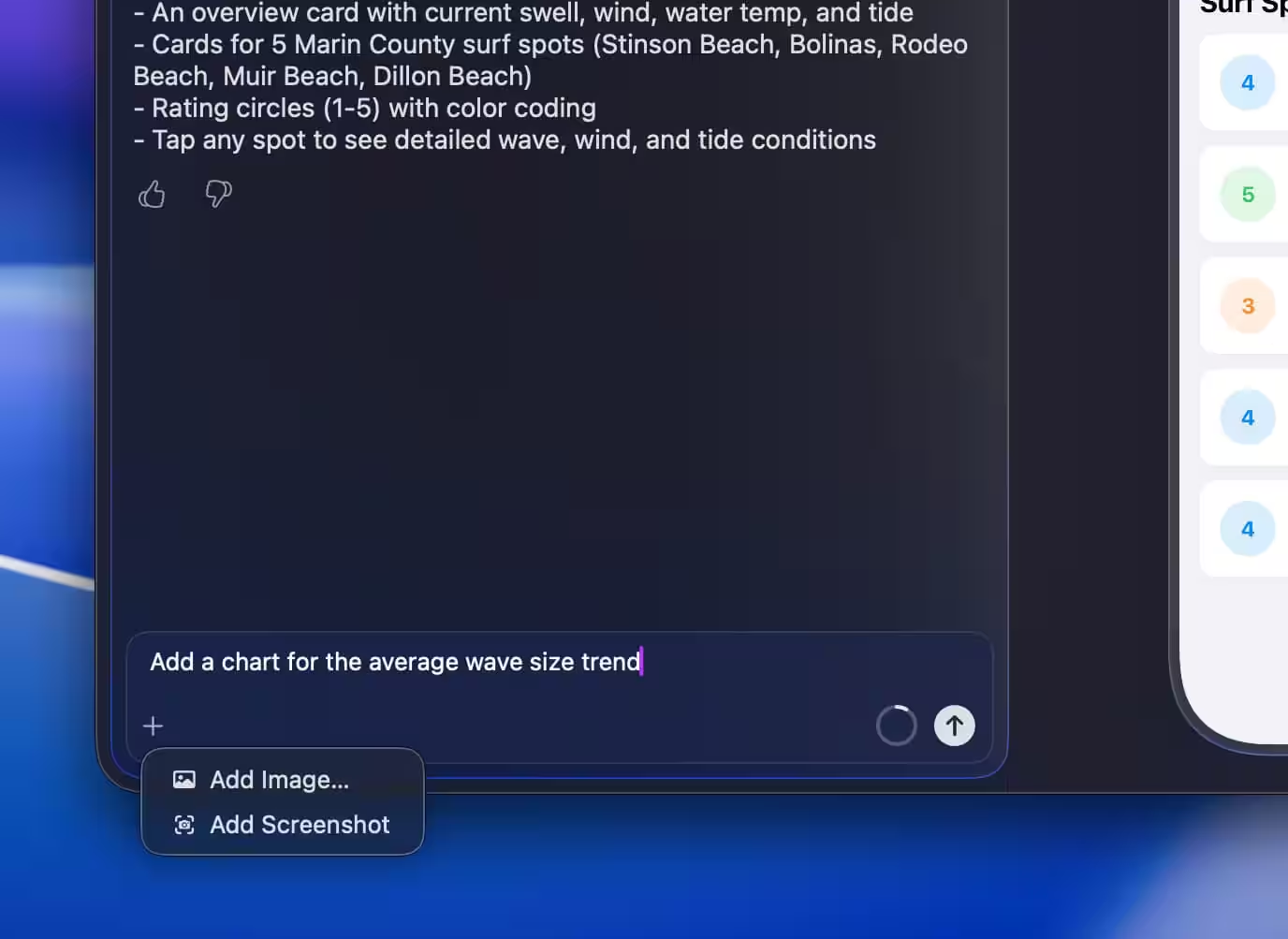
The app supports uploading images and screenshots for UI design and integrates an iPhone simulator to preview and interact with your app in real time. Developers can instantly test apps on a connected iPhone with a single click, bridging the gap between code generation and real device testing-a step many AI-assisted tools skip or complicate.
Bitrig operates on a credit system, where free accounts get a handful of daily credits to generate code, and paid subscriptions offer monthly bundles ranging up to 1,600 credits. These credits work across both the iOS and Mac apps, syncing projects and unused credits for convenience. The Mac app requires macOS Sequoia 15 or later, positioning it for the latest generation of Apple hardware.
This move by Bitrig reflects a growing trend: blending AI-driven code generation with traditional software development environments. Apple’s own SwiftUI and Xcode remain the standard for iOS developers, but newcomers and hobbyists often find the learning curve daunting. Bitrig’s natural language interface simplifies initial app creation while still producing authentic code, potentially speeding up prototyping and lowering barriers to entry.
However, Bitrig isn’t the only player eyeing AI-assisted app building. Giants like Microsoft, Google, and emerging startups are racing to integrate similar capabilities into their IDEs and cloud platforms. Yet Bitrig’s unique hook is its foundation in SwiftUI and direct export to Xcode, offering developers a familiar codebase rather than a walled garden.
While the technology is promising, it remains to be seen whether AI-driven platforms like Bitrig can fully replace the nuanced, human-centric craft of app development or if they will primarily serve as supplemental tools. Bitrig’s latest Mac app certainly makes a compelling case for AI as a bridge between creative ideas and working iPhone apps-just don’t expect it to do all the heavy lifting for you, at least not yet.