

Bitcoin’s sharp drop to nearly $60,000 earlier this year signaled the recent stumble in U.S. equity markets. After beginning 2026 with a painful selloff that contrasted sharply with buoyant stocks, bitcoin’s early weakness now looks like a preview of broader market troubles as bond yields climb. The cryptocurrency’s price fell from around $90,000 to just under $60,000 in the first five weeks, while major indices like the S&P 500 and Nasdaq pushed to record highs. But the divergence has narrowed, with stocks now shedding gains amid rising U.S. Treasury yields and fresh geopolitical concerns.
Since hostilities erupted in Iran at the end of February, inflation worries and diminishing hopes for Federal Reserve rate cuts have driven Treasury yields upward. The benchmark 10-year U.S. Treasury note yield surged to 4.41%, its highest since August 2025, while the two-year yield climbed to 3.94%. Higher yields increase borrowing costs across the economy-from mortgages to corporate debt-pushing investors toward safer assets and away from equities. This shift explains why tech-heavy Nasdaq futures tumbled back to levels last seen in September 2025, following a similar retreat in S&P 500 futures.
Bitcoin as a leading indicator for stock market movements
Bitcoin’s January crash offered an early warning for risks percolating in the stock market, described by Bloomberg’s senior commodity strategist as perils at the ”top of the risk-assets iceberg.” Patterns in stock indices now echo bitcoin’s price moves preceding its slump, suggesting traditional markets are catching up to the crypto-led mood swings. Traders often monitor bitcoin for clues about risk appetite, especially outside conventional market hours, amplifying its role as a barometer for investor sentiment. Meanwhile, bitcoin’s price has stabilized in recent weeks, hovering around $68,700, though derivatives markets express elevated anxiety with record demand for put options, betting on further downside protection.
Altcoin pressure amid broader market uncertainty
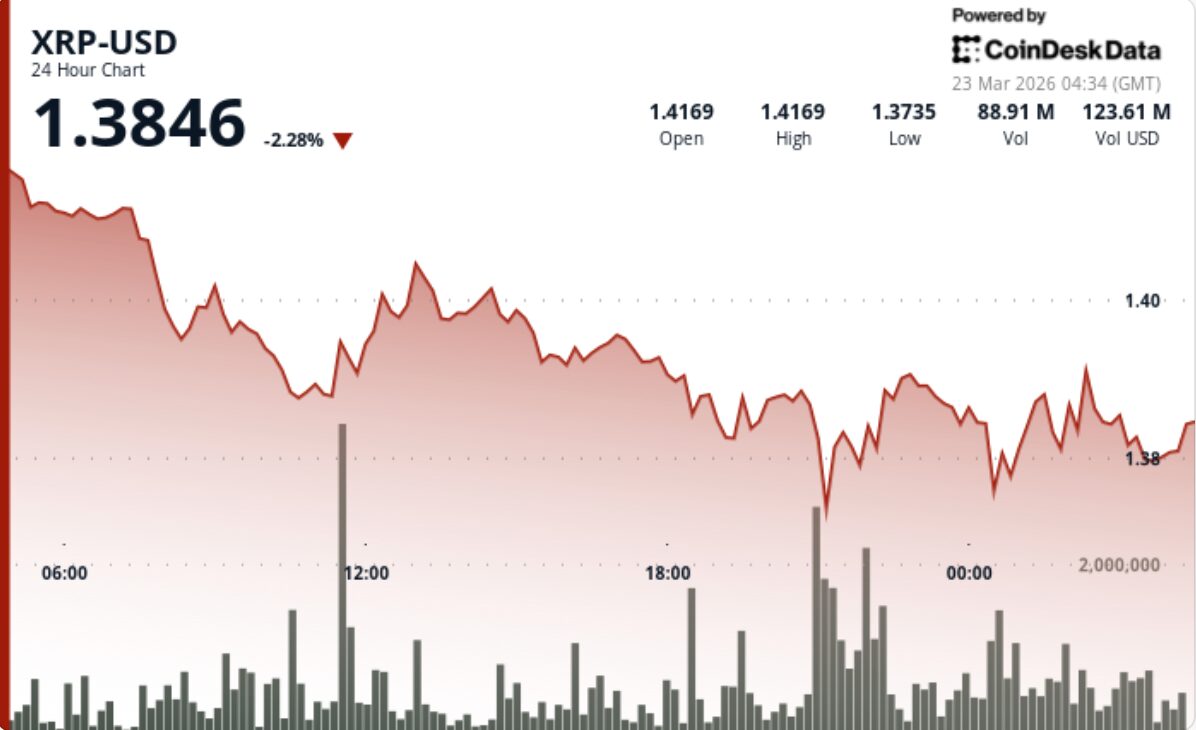
Outside of bitcoin, altcoins like XRP are under pressure after failing to reclaim critical resistance levels. XRP recently slipped below $1.40, trapped in a descending channel as sellers overpower buyers, with traders eyeing support zones between $1.38 and $1.32. This mirrors cautious sentiment in digital assets broadly, reflecting how broader macroeconomic forces ripple through both crypto and traditional markets.
Impact of rising U.S. Treasury yields on stocks and crypto
The rising Treasury yields highlight a broader tightening environment that has been building for months. While bitcoin’s plunge earlier this year was viewed by some as a speculative bubble correction, its leading indicator role in gauging risk appetite is becoming clearer. Stocks responding now to similar pressures underline how interconnected these markets have become, blurring lines between digital and traditional finance. Investors should brace for possible continued volatility as rate dynamics, geopolitical tensions, and inflation fears play out in both domains.