

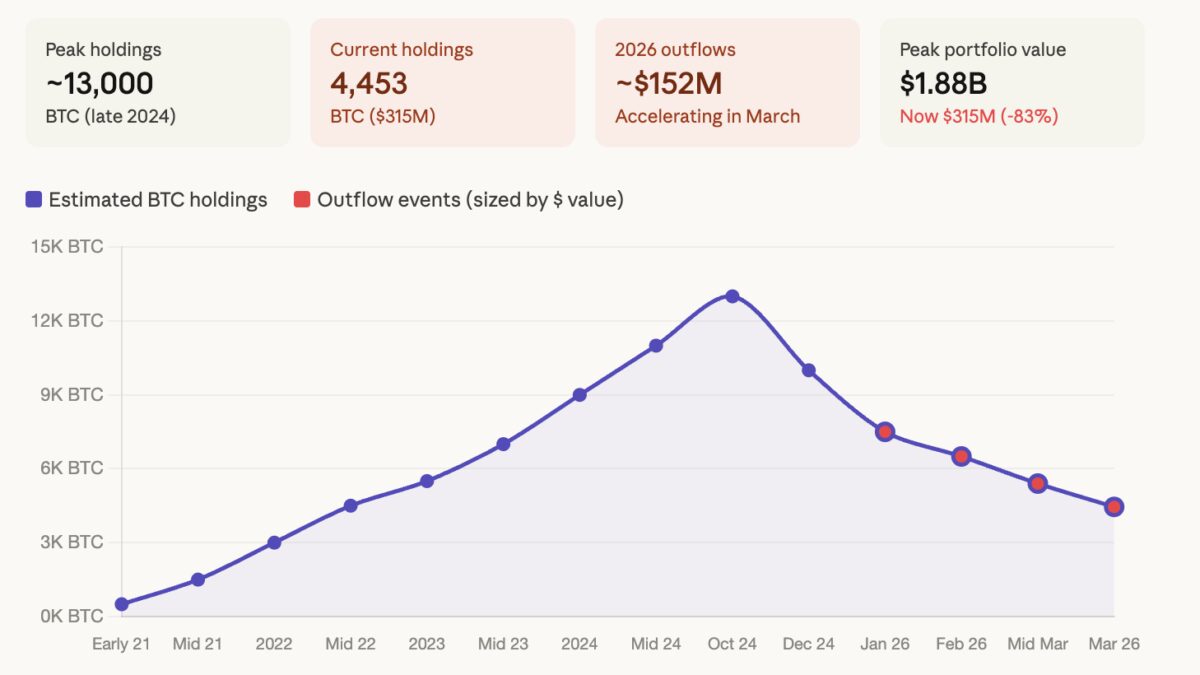
Bhutan is quietly becoming one of the largest bitcoin sellers this year, having offloaded more than $150 million worth of BTC in 2026 alone. The Himalayan kingdom, once holding a peak stash of approximately 13,000 BTC, has slashed its holdings by two-thirds, with the latest transfer moving over 500 bitcoin to exchanges. This accelerating liquidation follows a period of gradually accumulated reserves through state-backed hydroelectric mining, giving Bhutan a nearly zero cost basis on its bitcoin stack.
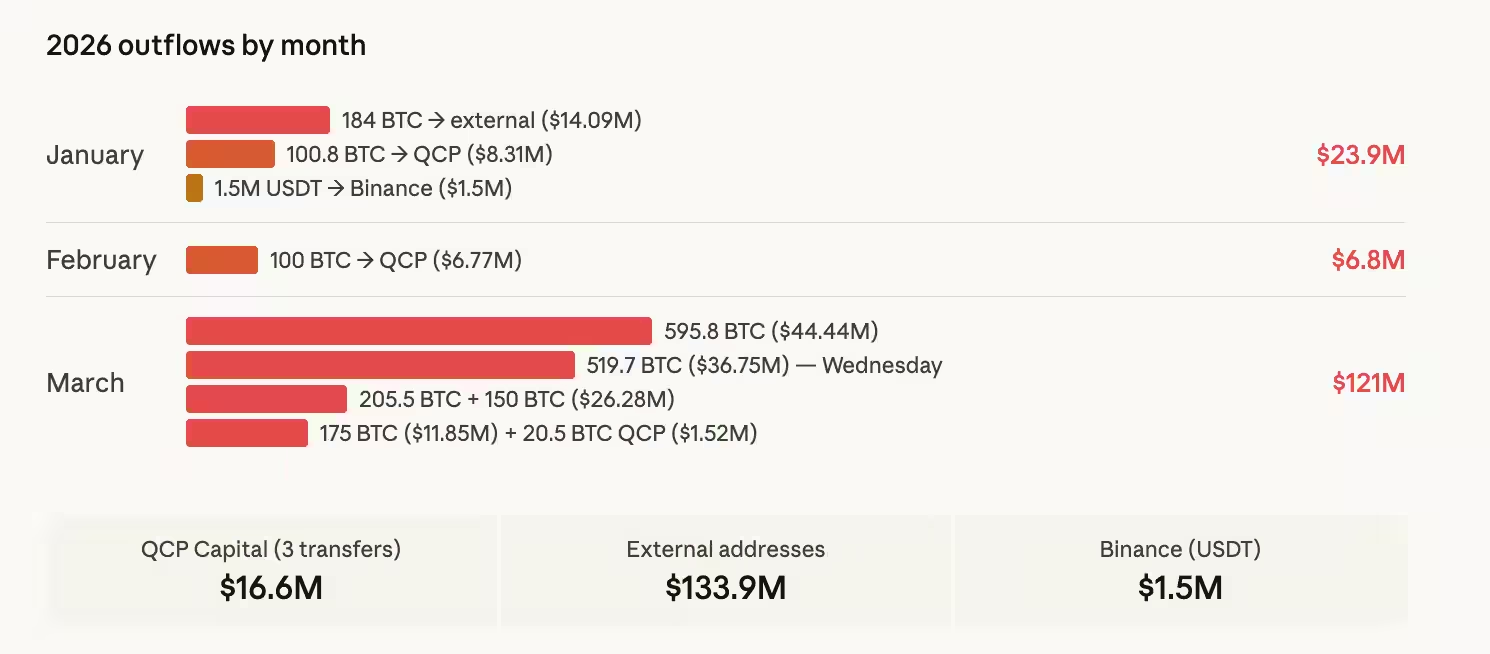
Recent data highlights a sharp uptick in bitcoin outflows since March, with weekly transfers ballooning from modest $5-15 million sums earlier in the year to $35-45 million in single transactions. The largest recorded move in this spree occurred just a week prior, involving 595.848 BTC worth $44.44 million-the most significant single BTC sale Bhutan has made in recent memory. Additionally, QCP Capital, a Singapore-based trading firm, appears to be a frequent counterparty, receiving structured OTC transfers valued at around $16.6 million this year alone. This suggests Bhutan is opting for professional trading partners over spontaneous liquidations as it manages its bitcoin sell-off.
Bhutan’s bitcoin portfolio has shrunk to just 4,453 BTC, currently valued around $315 million, down from a peak portfolio valuation of about $1.88 billion when bitcoin was near $119,000. This decline is a result of both aggressive selling and a drop in bitcoin’s price to roughly $70,000 today. The kingdom’s earlier bullish stance included a December announcement pledging up to 10,000 BTC to fund the Gelephu Mindfulness City project-a commitment now impossible to honor given the sharp reduction in BTC reserves. Attempts to clarify the status of this pledge have yet to yield a response from Druk Holding & Investments, Bhutan’s commercial arm.
Bhutan’s bitcoin mining operations rely heavily on hydroelectric power, providing it nearly free energy costs-an edge that originally motivated its large bitcoin accumulation. Now, the government’s pivot to selling bitcoin could point to shifting fiscal priorities or realizations about market conditions. Comparatively, other smaller nations or state-backed entities have not exhibited such large and public drawdowns. While Bhutan cashes out, bitcoin has remained relatively resilient near $70,000 despite macroeconomic and geopolitical pressures, though institutional buying appears to be slowing based on ETF inflows and Coinbase premiums.
This bitcoin sell-off raises questions about the kingdom’s future strategy with bitcoin and whether it may seek to re-enter the market later at more favorable prices. Given the unique nature of Bhutan’s BTC acquisition and disposal-backed by cheap hydroelectric energy and managed OTC partnerships-their moves merit close attention as a case study in how smaller states navigate cryptocurrency assets amid market volatility.