

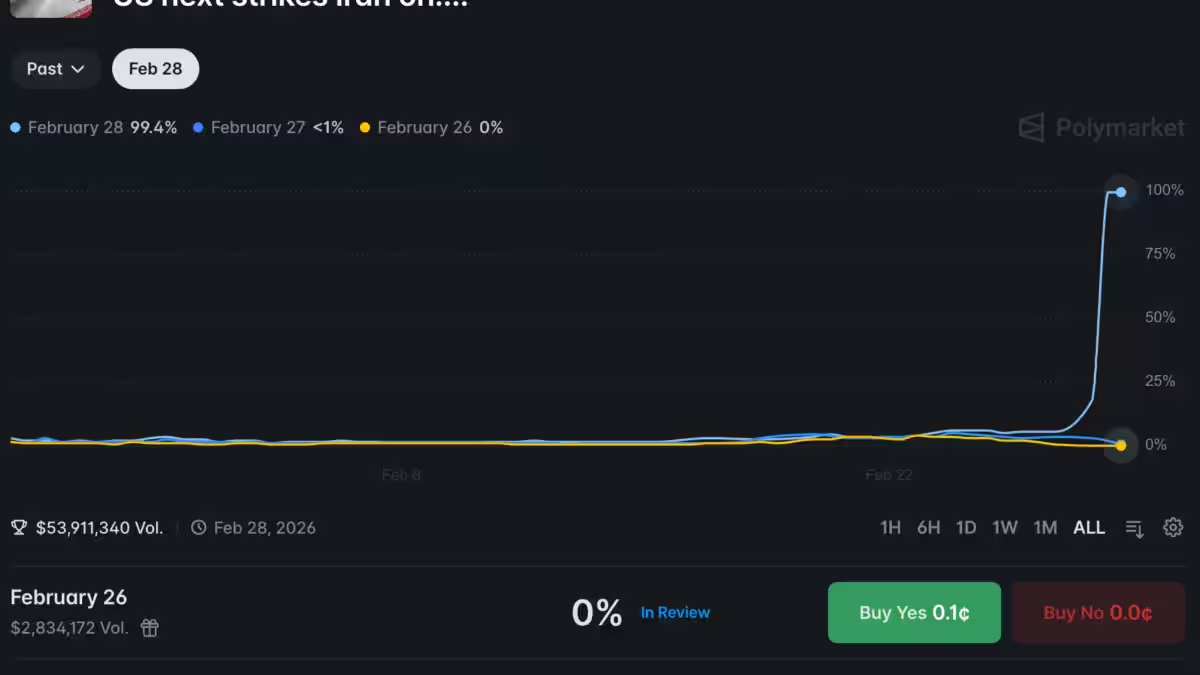
Prediction markets have long offered a way to crowdsource forecasts on everything from elections to sports outcomes – but when those markets start putting odds on violent conflicts and death, a darker debate emerges. Polymarket, a platform where users bet on future events, recently came under scrutiny for allowing wagers on the timing of US military strikes against Iran.
As the events unfolded and real casualties mounted, the practice of betting on such grim scenarios felt to many like gambling on human suffering. Critics have condemned this commodification of conflict, raising uncomfortable questions about ethics and taste. Yet Polymarket defends its approach, arguing that these markets provide a unique and valuable source of real-time information – sometimes even more insightful than traditional media.
The company’s statement described prediction markets as a way to ”harness the wisdom of the crowd” for accurate, objective forecasts during critical moments. Polymarket says its users, including those directly impacted by the attacks, have found the betting data useful to answer pressing questions that TV news outlets and social platforms like Elon Musk’s X cannot adequately address.
This rationale, however, does not settle concerns about the line between useful information and profiting from tragedy. Polymarket’s history shows a pattern of courting controversy, having previously enabled bets on volatile subjects like the Super Bowl halftime show performance outcome and the capture of Venezuelan President Nicolás Maduro – events whose stakes were mostly symbolic. War and death, by contrast, carry far heavier moral weight.
Prediction markets operate in a legal and regulatory gray zone. While some operate in jurisdictions with clear rules, others exploit ambiguities to offer bets on unofficial or sensitive events. Until now, few platforms have openly permitted speculation on the timing or nature of violent conflicts. Polymarket’s decisions reflect a broader tension between innovation in information markets and societal standards.
Compared with other prediction platforms, Polymarket tends to push boundaries by allowing outright betting on conflicts, whereas others focus on political elections, economic indicators, or entertainment. This departure invites a debate on how far prediction markets should go when dealing with sensitive human crises.
As real-world events align with previously speculated outcomes, the ethical temperature of placing wagers on tragedies heats up. Will this trend normalize betting on human suffering, or will public backlash force platforms to reconsider their offerings? For now, Polymarket is standing firm – but the discussion reveals deeper questions about the commodification of real-world pain in digital marketplaces.