

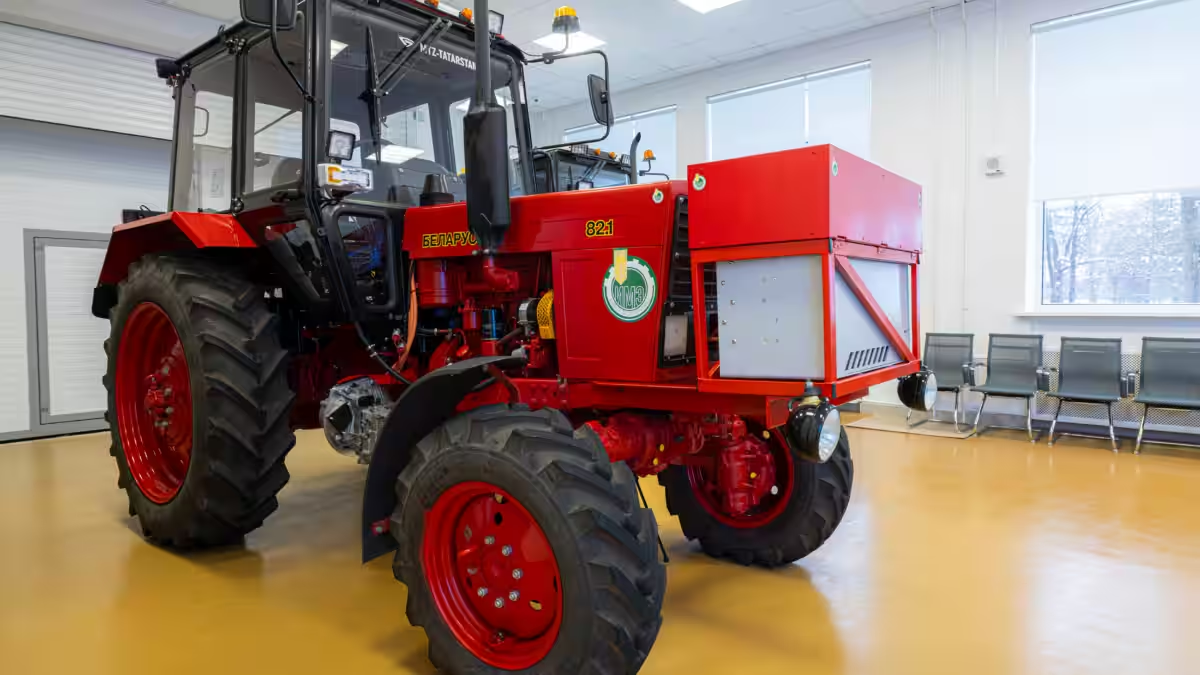
Russia’s Timiryazev Agricultural Academy has reengineered the iconic Belarus 82.1 tractor by transforming it into a hybrid vehicle, combining diesel and electric power to deliver 136 horsepower. This modernization of a Soviet-era workhorse could mark a shift in how legacy agricultural machinery is upgraded, blending established designs with cleaner, quieter propulsion systems.
A diesel-electric hybrid with practical advantages
The upgraded Belarus 82.1 utilizes a parallel hybrid system featuring a 30 kW (roughly 40 hp) electric motor alongside its traditional diesel engine. This configuration allows the tractor to run on diesel, electric power, or both simultaneously. The total output matches that of the bulkier MTZ-1221 model, which boasts a six-cylinder engine, indicating a substantial performance boost without altering the classic frame.
What makes this modernization particularly interesting is its economical approach: the engineers relied mostly on off-the-shelf factory components. By avoiding expensive custom parts, the cost of converting existing tractors into hybrids stays relatively low – a smart move considering the vast number of Belarus 82.1 tractors still working in farms and industrial complexes across the former Soviet Union and Russia.
Targeting niche environments sensitive to emissions and noise
Electric propulsion is especially valuable for applications where exhaust fumes and noise pollution pose problems. The hybrid tractor promises silent operation and zero tailpipe emissions when running on electric power, making it ideal for enclosed greenhouses. Likewise, in livestock facilities, quieter operation can reduce stress on animals – a consideration often overlooked in heavy equipment design.
This focus on specialized use cases hints at a pragmatic path for hybrid agricultural machines. Instead of aiming solely for fuel savings or emissions reductions across the board, the hybrid Belarus 82.1 targets operational contexts where electric power is a functional necessity, not just an option.
Testing begins amid broader trends in agricultural electrification
Laboratory testing of the hybrid Belarus 82.1 is slated to start in March 2026, with full field trials expected by late May. This timeline places the project alongside growing global interest in electrified farm machinery. Several Western manufacturers are also exploring electric and hybrid tractors, though many target entirely new platforms rather than retrofitting classic models.
By basing the hybrid system on an existing agricultural staple, Russia’s approach could appeal to sectors constrained by capital but eager to modernize. The project reflects a trend where innovation works backwards, updating proven machinery to meet contemporary standards without scrapping what farmers already own.
Whether this hybridization will influence mass production or inspire similar renovations remains to be seen. But as agricultural electrification gains momentum, such adaptations could play an outsized role in bridging old and new technology at a practical level.