

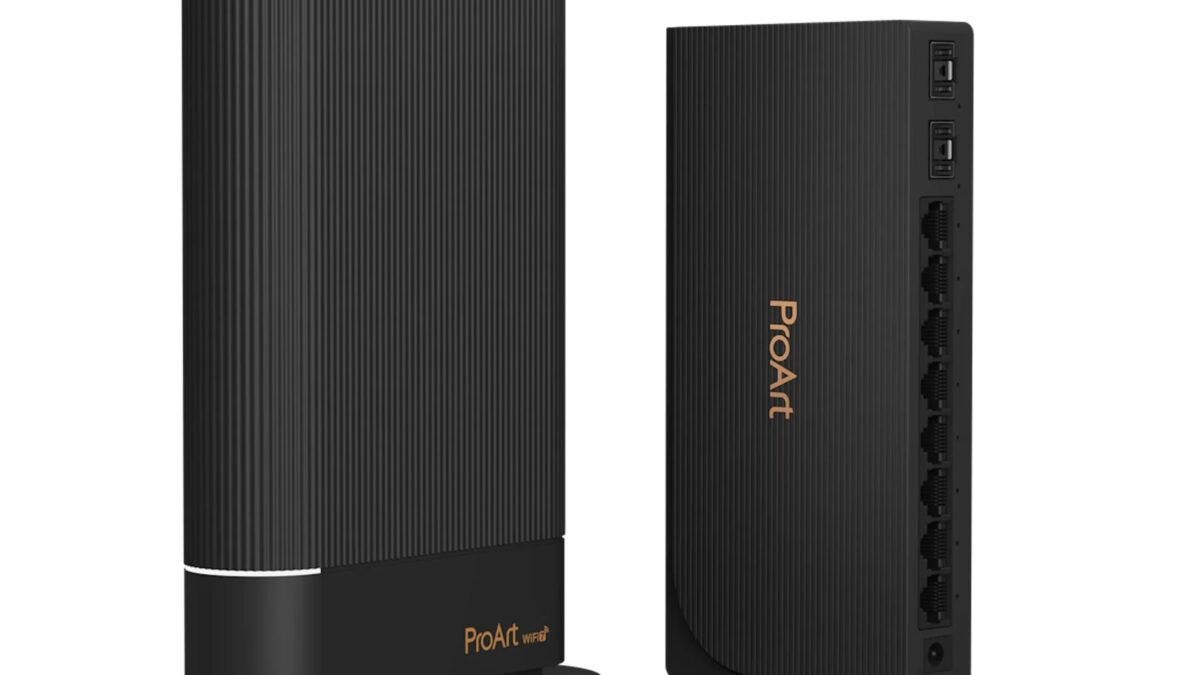
Asus has expanded its networking lineup with the ProArt Router PRT-BE5000, targeting content creators and professional users rather than gamers, who are typically served by the ROG series. The router supports the upcoming Wi-Fi 7 standard and is fully capable of handling general networking tasks.
The ProArt Router PRT-BE5000 operates on the 2.4 GHz and 5 GHz bands, excluding the newer 6 GHz frequency. It delivers top speeds of up to 688 Mbps on 2.4 GHz and a hefty 4.32 Gbps on 5 GHz.
On the wired side, the router includes five Ethernet ports-one WAN and one LAN port support multi-gigabit speeds up to 2.5 Gbps, while the remaining three LAN ports provide standard gigabit rates. The device measures 5.2 × 1.5 × 7.9 inches and features a subtle, understated design with five internal antennas hidden within the chassis.
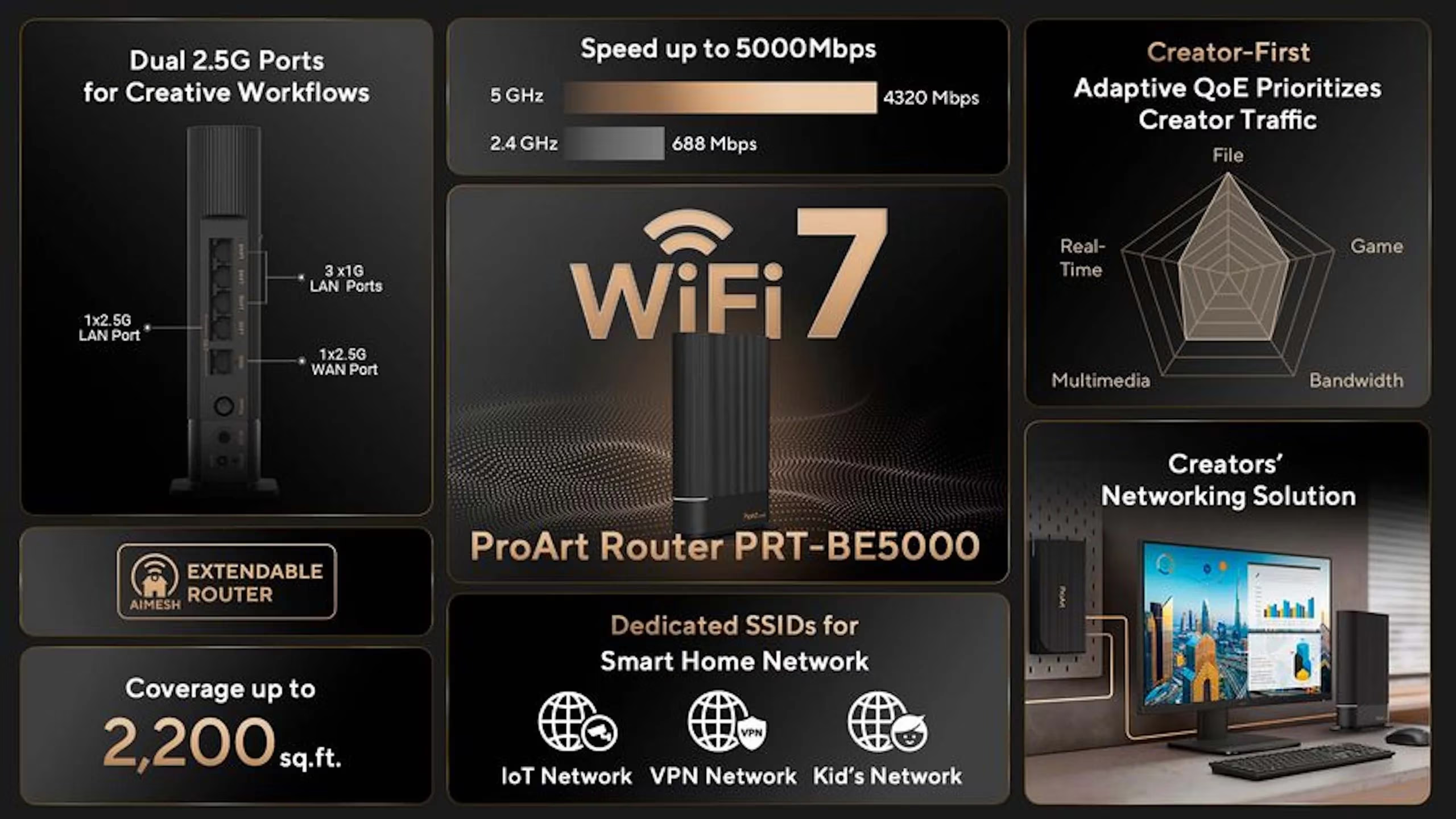
ProArt Router PRT-BE5000 Wi-Fi 7 features and specifications
- Supports Wi-Fi 7 on 2.4 GHz and 5 GHz bands (no 6 GHz support)
- Wi-Fi speeds: up to 688 Mbps on 2.4 GHz, 4.32 Gbps on 5 GHz
- Ethernet ports: 1 WAN + 1 LAN at 2.5 Gbps multi-gig, 3 LAN at 1 Gbps
- Dimensions: 5.2 × 1.5 × 7.9 inches
- Design: discreet with five internal antennas
Alongside the router, Asus unveiled the ProArt Switch PQG-U1080, a professional-grade network switch featuring eight Ethernet ports capable of 2.5 Gbps each, plus two SFP+ ports supporting 10 Gbps speeds. These high-speed SFP+ ports are ideal for connecting fast network storage or other bandwidth-intensive devices.
ProArt Switch PQG-U1080 specifications
- Eight 2.5 Gbps Ethernet ports
- Two 10 Gbps SFP+ ports for uplinks
- Designed for high-throughput professional environments
Asus has not disclosed pricing or availability details for either new device.
Comparison with other Wi-Fi 7 routers for professional users
While Wi-Fi 7 adoption is still in early stages globally, Asus’s ProArt PRT-BE5000 skips the 6 GHz band, making it less versatile than some competitors like Netgear’s Nighthawk series or high-end models from TP-Link and Linksys that fully support tri-band Wi-Fi 7. Still, the router’s focus on multi-gig Ethernet ports and a discreet design may appeal to professional creators looking to balance wired and wireless connectivity in their studios.
The ProArt Switch PQG-U1080 complements the router by upgrading wired network infrastructure for professionals needing faster, more reliable connections to storage systems and workstations. Multi-gig switches with SFP+ uplinks are increasingly common in creative environments where data-intensive workflows demand low latency and high throughput.
Both products illustrate Asus’s attempt to establish a foothold in the professional networking segment-traditionally dominated by enterprise brands-by catering to digital content creators and small studios who want a mix of advanced networking features with user-friendly design and setup.
Keep an eye on how Asus positions these devices against rival offerings as Wi-Fi 7 matures, especially whether they will release firmware updates to enable 6 GHz support or expand multi-gig capabilities in future models.