

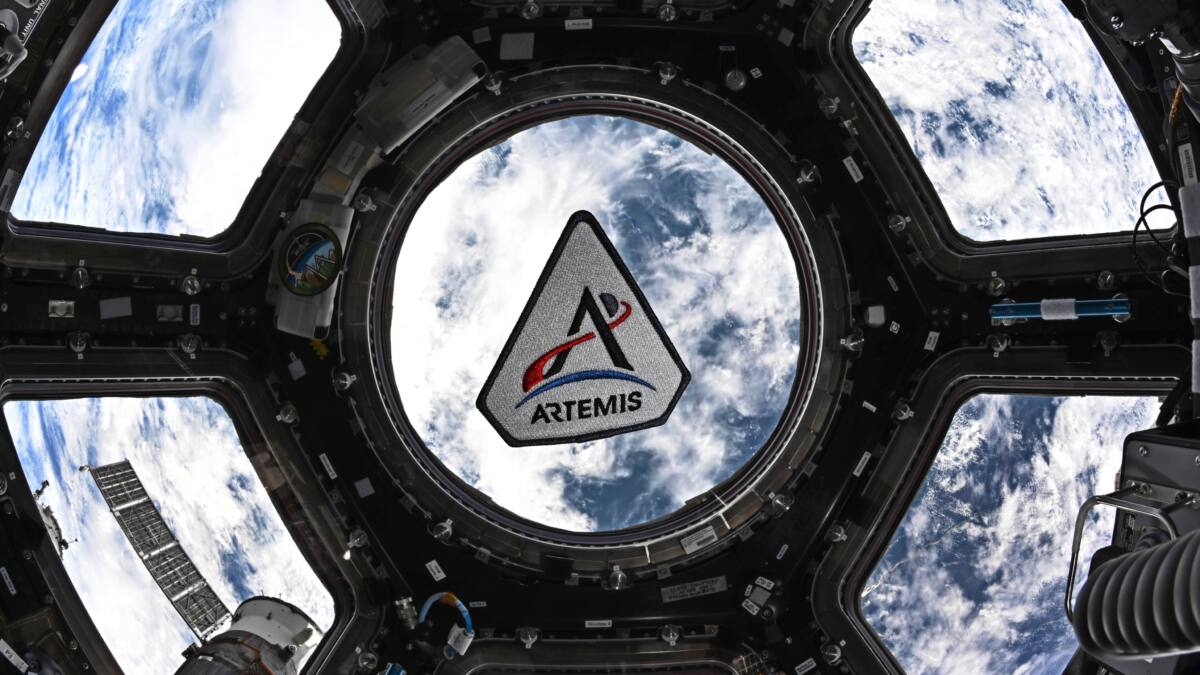
NASA astronaut Jessica Meir has given Artemis II an unusually poetic push from orbit: a photo of an Artemis program patch floating in the International Space Station’s cupola, posted on X on March 30, 2026. The message is less about social media flair than NASA’s favorite habit – using the ISS as a staging ground for the next step, this time a crewed return to the Moon.
The timing is the point. Artemis II is being framed as the moment the Artemis program stops being an abstract roadmap and becomes an actual flight with people aboard. NASA has spent years selling that handoff from low Earth orbit to lunar exploration, and this is the sort of ceremonial beat that tells the public the handover is close enough to name.
A patch, a cupola and a lot of symbolism
Meir’s caption tied the International Space Station directly to the Moon program, calling the station’s work the foundation for the next phase of human exploration. That is classic NASA messaging, but it is also true in the bluntest possible way: the station has trained crews, tested operations and kept the agency flying while the Artemis hardware and timelines have crawled forward.
There is a neat bit of theater here too. Floating patch photo? Check. Cupola backdrop? Check. A line about ”returning humans to the Moon”? Check. If you want to know how NASA likes to market continuity between one era of spaceflight and the next, this is it.
Why this ISS post landed now
The post also pointed to Expedition 74 watching closely, which is a reminder that Artemis is not unfolding in a vacuum, even if the image suggests one. NASA has long leaned on crewed station missions to keep public interest alive between bigger milestones, and that is especially useful when the next milestone is as politically and technically loaded as a return to the Moon.
- Artemis II is being presented as the next crewed step in NASA’s Moon program.
- The photo was taken by Jessica Meir in the International Space Station’s cupola.
- The post was shared on X on March 30, 2026.
The real test is still ahead
The hard part, of course, is not the caption. It is whether NASA can turn this orbit-to-Moon storyline into a flight that actually happens on schedule and with the kind of confidence the agency wants the public to feel. For now, Artemis II is still riding a wave of symbolism – and NASA is happy to surf it.