

Apple’s low-cost MacBook is the A‑series experiment that will reshape who buys a Mac
Apple’s March announcements look modest on the surface – a cheaper MacBook, refreshed iPads, and an updated iPhone 17e – but the real story is strategic. For the first time in years, Apple appears ready to put an iPhone-class A‑series chip into a MacBook aimed at students and schools. That choice is cheap to make, efficient to ship, and elegantly preserves the more expensive M‑series Mac for pros. It also means trade‑offs that will affect accessories, software expectations, and the way schools choose devices.
What Apple is shipping (the public facts)
According to the product previews circulating before Apple’s March 4 Special Experience, the headline items are:
– A low-cost MacBook with an aluminum chassis, colorful finishes, a roughly 12.9‑inch or 13‑inch display option, and – notably – an A18 Pro chip instead of an M‑series Mac chip.
– An iPhone 17e that keeps the affordable model’s single rear camera and 60Hz display but moves to the A19 chip, likely keeps 8GB of RAM, adds MagSafe compatibility, and keeps a starting price of $599.
– iPad Air updated to M4 (11‑inch starting at $599, 13‑inch at $799), and a refreshed low‑cost iPad that moves to an A18/A19 chip and retains a $349 entry price for the base tablet.
Why Apple would put an A18 Pro in a MacBook
There are obvious economics at play. A‑series silicon is designed at huge scale for iPhones and iPads, so unit costs are lower than bespoke M‑series chips for Macs. Using the A18 Pro (the chip Apple put into the iPhone 16 Pro) lets Apple deliver solid everyday performance – the A18 Pro is listed with a six‑core CPU (four performance, two efficiency), a six‑core GPU, and a 16‑core Neural Engine – while keeping bill of materials (BOM) costs down.
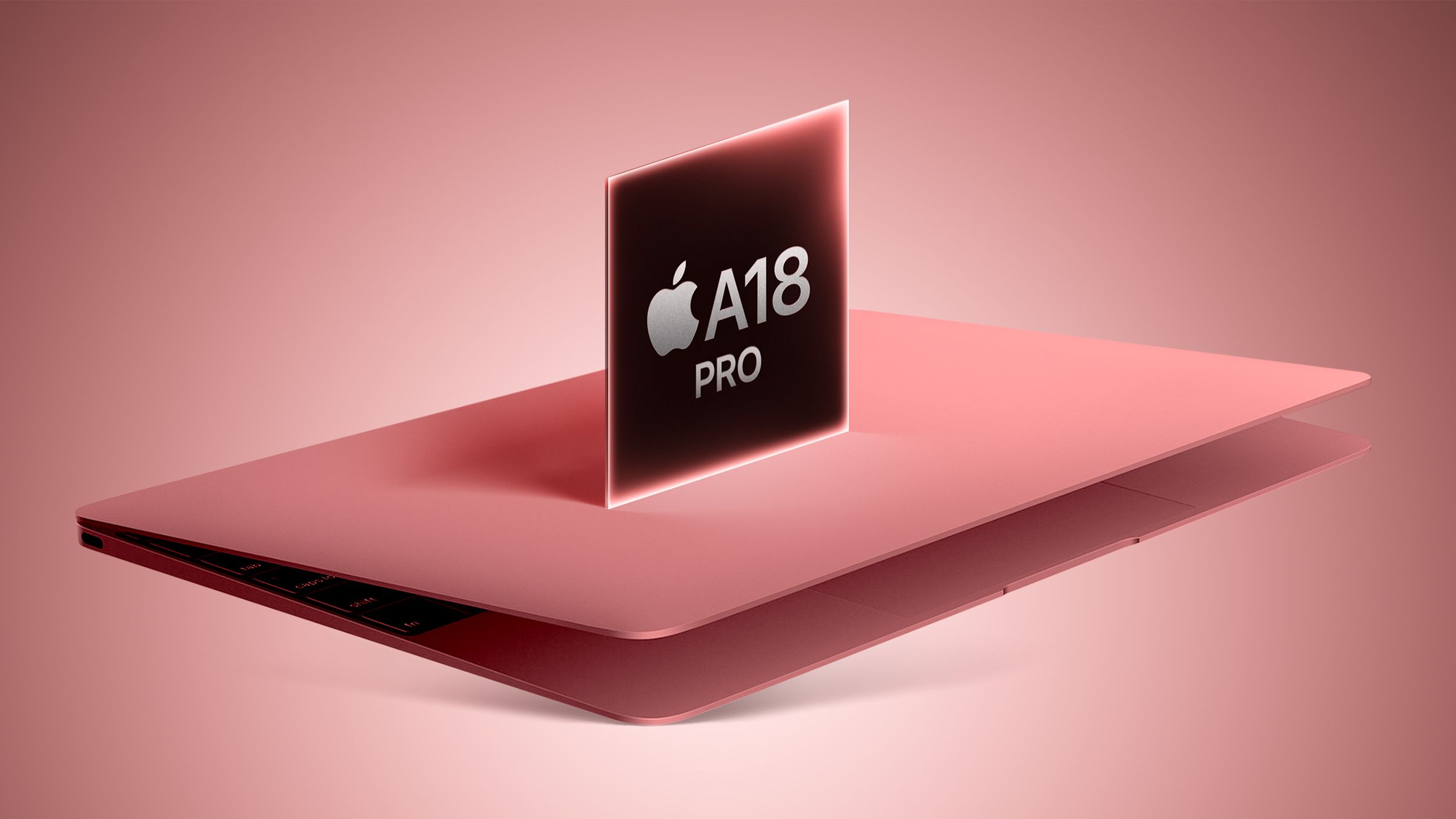
That tradeoff is deliberate: Apple can offer a MacBook that is ”good enough” for browsing, documents, video, light photo editing, and classroom apps without cannibalizing higher‑margin Air and Pro models. It’s essentially Apple’s answer to the Chromebook – a managed, familiar device that fits education budgets while keeping customers inside Apple’s ecosystem.
The compromises that matter
”Good enough” comes with limits. Public details around the low‑cost MacBook point to several constraints: no Thunderbolt support (the A‑series modem in phones and iPads doesn’t support it), USB‑C limited to 10Gb/s, likely support for a single external display, and potential cuts like lower peak display brightness, no True Tone, slower SSDs, and no N1 networking chip in some configurations. Apple is also expected to ship the device with 8GB of RAM so it can run Apple Intelligence, though higher RAM tiers might not arrive.
Those hardware limits have real implications. No Thunderbolt means no high‑speed docks, limited external storage performance, fewer high‑res external monitor options, and degraded workflows for power users. Reduced display brightness and no Pro features make the new MacBook less suitable for creative work. In short: it’s a Mac in name, but closer in capability to an iPad or a Chromebook.
A brief history lesson: Apple tried this before
This isn’t unprecedented. Apple sold a thin 12‑inch MacBook from 2015 to 2019 that used low‑power Intel Core M silicon and prioritized size and battery life over ports and raw power. That line was quietly discontinued when Apple rationalized Mac laptop families around the MacBook Air and MacBook Pro. The new low‑cost MacBook looks like a spiritual successor: slim-ish, colorful, and designed for light workloads.
Competitive context: why schools care
Chromebooks have dominated K‑12 deployments for years because they are cheap, easy to manage, and well supported by Google Classroom and education admins. Apple has repeatedly tried to close that gap with lower‑priced iPads; a cheap MacBook gives schools a macOS option that fits existing curricular workflows for labs and coding classes, and keeps students inside Apple services (and future Apple Intelligence features).
For Apple, the risk is twofold: either the device is underpowered and disappoints buyers, or it’s priced close enough to the MacBook Air and cannibalizes higher‑margin sales. The rumored price window – roughly $599 to $799 – is a deliberate middle ground. It’s below MacBook Air and above the $349 iPad, positioning the machine as an education‑focused laptop rather than a mass consumer escape hatch.
What this means for developers and accessory makers
Developers should expect a more fractured baseline for performance: some Macs will be A‑series, others M‑series, and features like Thunderbolt, multiple external displays, or ProMotion displays won’t be universal. Accessory makers that depend on Thunderbolt performance or multiple display outputs have to keep selling premium products to professionals while also facing a new low‑cost Mac audience that won’t be able to use them.
iPhone 17e and iPad moves: incremental, but sensible
The other modeled changes Apple is shipping make sense in the same strategic frame. The iPhone 17e moves to the A19 chip (an N3P 3‑nm part with modest gains over the A18) and gains MagSafe compatibility while keeping a $599 entry price. iPad Air moves to M4, and the entry iPad gets chips that enable Apple Intelligence at a $349 starting point. Those updates keep Apple’s low and mid tiers relevant without upsetting the premium tiers’ product roadmap.
My take: smart segmentation, awkward messaging
All this is sensible from Apple’s margin and supply‑chain view: reuse widely produced A‑series parts to hit lower price points, keep M‑series rare and compelling, and protect the brand’s premium tier. But it raises a communications problem. Calling the new device a ”MacBook” invites direct comparison with the MacBook Air and Pro lines. Without clear labels and spec transparency, buyers – schools, parents, and first‑time Mac customers – will be confused about which device fits their needs.
Apple should be explicit: this is a classroom‑oriented MacBook with mobile‑class silicon and limited expansion, not a replacement for the Air or Pro. If it isn’t, early buyers will feel misled when they can’t plug into existing Thunderbolt docks or drive multiple monitors.
How to judge the March announcements
When Apple posts the official specs, watch for three small but decisive details that will show whether this is a legitimate education laptop or a confused product: exact RAM and storage tiers (is there an 8GB base and 128GB option?), whether Thunderbolt is present or absent (expect only USB‑C 10Gb/s), and the official display brightness/True Tone specs. Those three points determine real classroom usability and whether the device will be a sensible long‑term buy.
Apple’s March cadence suggests subtle shifts rather than sweeping changes. But a MacBook that runs on A‑series silicon is more than a cheaper SKU. It’s a strategic lever: cheaper entry points, a clearer premium prism around M‑series Macs, and a product family that will be more segmented than it used to be. That matters for school budgets, accessory ecosystems, and the very idea of what a Mac is.
Expect Apple’s press releases on March 4 to provide the missing specifics. Until then, the company’s decision to graft phone silicon onto laptops is the clearest signal yet that Apple will fight the low‑cost device battle on margins and supply, not by simply cutting features at random.