

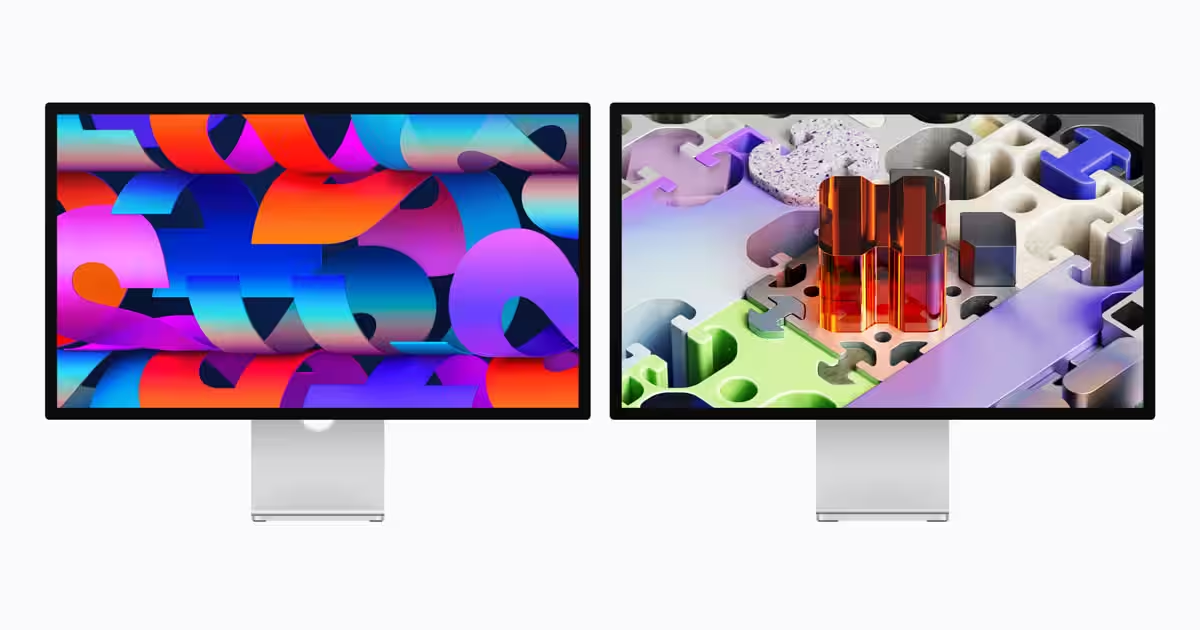
Apple has revealed two new additions to its professional display lineup: the Studio Display and the all-new Studio Display XDR. The Studio Display offers a 27-inch 5K Retina screen with upgraded camera and audio features, while the Studio Display XDR pushes further with an advanced mini-LED backlight, 2000 nits peak HDR brightness, and a smooth 120Hz refresh rate. Both models utilize Thunderbolt 5 connectivity, signaling Apple’s push to streamline high-performance workflows and peripheral support.

Studio Display upgrades focus on lifestyle and connectivity
The new Studio Display modernizes Apple’s established 27-inch 5K Retina screen with several welcome improvements. It now includes a 12MP Center Stage camera with Desk View, allowing framing that shows both the user and a workspace overview, enhancing video calls and demonstrations. Its sound system features six speakers-including four force-canceling woofers delivering 30% more bass-and a three-microphone array for crystal-clear audio. Thunderbolt 5 ports add faster throughput and support daisy-chaining, while USB-C ports handle peripherals and charging, offering up to 96W power via the included cable.

Apple positions the Studio Display as a versatile tool for creatives, developers, and everyday users alike, supporting applications such as Adobe Lightroom, Illustrator, and Pro Tools. Users have options between standard glass and nano-texture glass to reduce glare, and can choose between a tilt-only stand, a stand with height adjustment, or a VESA mount adapter. Starting at $1,599, the Studio Display caters to professionals seeking quality visuals without venturing into ultra-high-end territory.
Studio Display XDR targets high-end pro workflows with mini-LED and adaptive sync
The Studio Display XDR is Apple’s answer to the demanding niche of HDR video editing, 3D rendering, and medical imaging. Its 27-inch 5K Retina panel incorporates a mini-LED backlight with 2,304 local dimming zones, which virtually eliminate haloing and deliver a breathtaking 1,000,000:1 contrast ratio. Peak brightness hits 2000 nits, with 1000 nits of steady SDR brightness, and the display supports P3 and Adobe RGB color gamuts, meeting print and design professionals’ color accuracy needs.

Unlike its predecessor, the Pro Display XDR, this new model supports a 120Hz refresh rate and Adaptive Sync for variable refresh rates between 47Hz and 120Hz-features that can enhance fluidity in both video playback and gaming. Paired with Thunderbolt 5 and multiple USB-C ports offering up to 140W charging power, Studio Display XDR positions itself as a strong contender for creative professionals needing an all-in-one pro desktop setup. The display starts at $3,299, with styling and ergonomic options similar to its sibling display.
Medical imaging and eco-conscious design add new layers
Studio Display XDR introduces DICOM medical imaging presets designed to support diagnostic radiology workflows, an area traditionally served by specialized and expensive hardware. Alongside these presets, an FDA-pending Medical Imaging Calibrator for macOS aims to expand the display’s role in healthcare settings. This strategy reflects Apple’s broader ambition to embed itself deeper into professional verticals beyond creative arts.

Environmental considerations are part of the story as well. Both displays incorporate recycled materials, such as 100% recycled aluminum in the stands and 80% recycled glass in the standard display glass, aligning with Apple’s goal to reach carbon neutrality across its operations by 2030. Packaging is fibre-based and designed for easy recycling.
Analysis: Incremental innovation with hefty pricing continues Apple’s pro display saga
The Studio Display’s feature set and pricing sit firmly in line with expectations for Apple’s mid-tier pro hardware, enhancing previous strengths without groundbreaking change. The inclusion of Thunderbolt 5 ports is timely, as creative professionals increasingly require high-speed, expandable connectivity for multi-monitor and accessory setups. Meanwhile, the Studio Display XDR’s leap in mini-LED technology and refresh rate upgrades represent meaningful evolution, particularly for HDR content creators and medical professionals.
Apple’s continued emphasis on color gamut accuracy with P3 and Adobe RGB support and its push into medical imaging hint at a strategy to broaden pro display appeal beyond media and into specialized fields. However, the $3,299 starting price for the XDR model is a steep investment, reflective of Apple’s premium hardware positioning but likely to limit its audience to professionals with deep pockets or institutional buyers.
Competitors in the pro display market, such as Dell’s UltraSharp series or Eizo’s color-accurate monitors, offer alternatives that may appeal to budget-conscious pros or those prioritizing niche features over overall brand cachet. Apple’s tight macOS integration and Thunderbolt 5 support may prove decisive for loyal Mac users, but the question remains whether these incremental refinements justify the premium cost amid advancing rival displays.
The new Studio Display family arrives for pre-order on March 4, with availability starting March 11. For Apple, this rollout continues its long game of deepening ecosystem lock-in by offering high-end, tightly integrated accessories rather than competing on price or radically disrupting the category.