

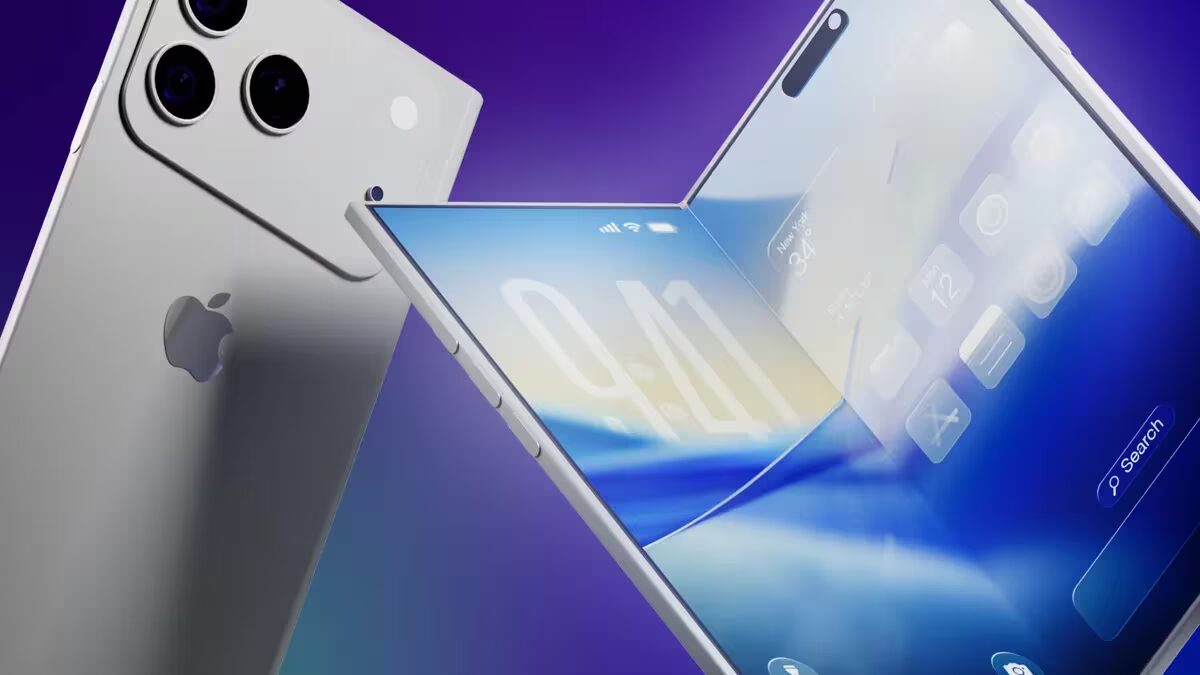
Apple’s upcoming foldable iPhone could almost eliminate the dreaded crease on its main screen by using a double layer of ultra-thin glass, according to new leaks. This design tweak might finally tackle one of the biggest challenges foldable displays face: visible folds in the flexible screen.
Insider Digital Chat Station reports that the iPhone Fold will sandwich its display between two layers of ultra-thin glass (UTG), instead of the screen sitting directly on the hinge mechanism. This approach would reduce the visibility of the crease and improve the durability of the foldable panel over time.
The leak also mentions the use of self-healing glass technology alongside an improved seamless hinge design, both aimed at extending the device’s lifespan while keeping the screen’s fold as discreet as possible.
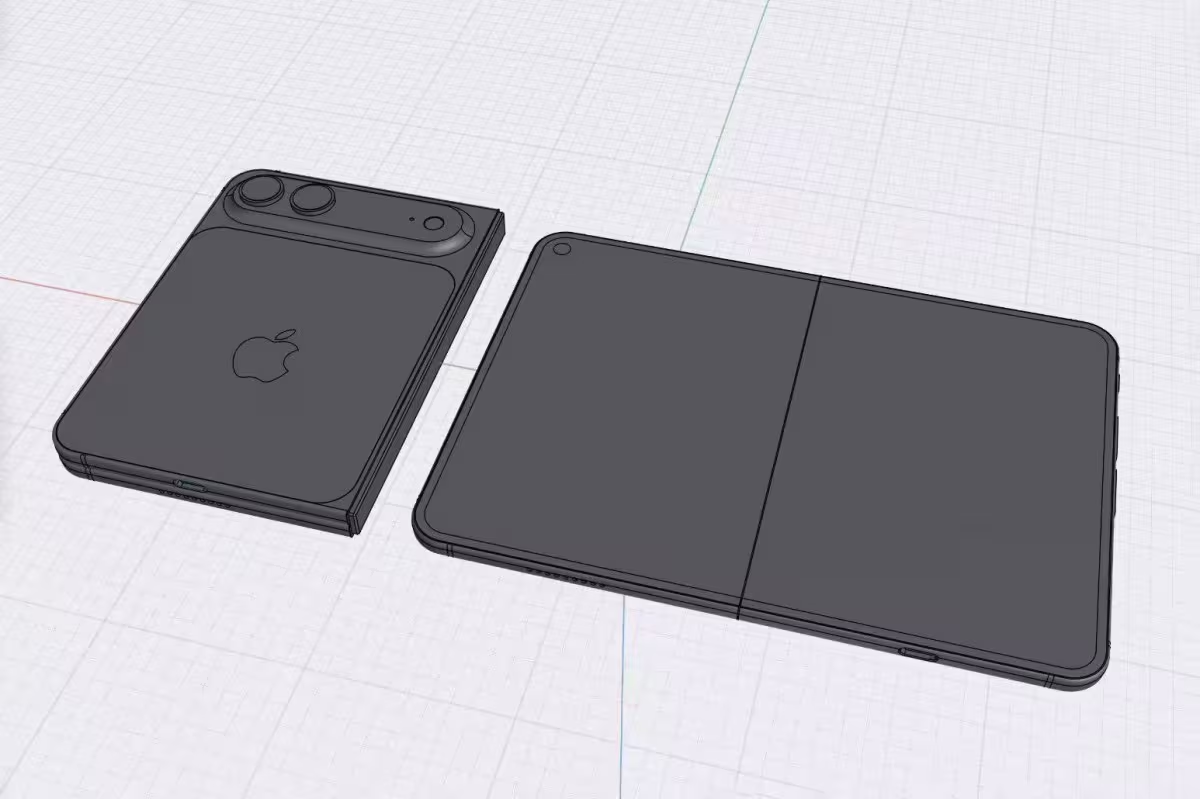
Previous rumors suggested the crease could be as narrow as 0.15 mm, reportedly thanks to a Samsung-made display. The iPhone Fold might also borrow hinge and fold technologies similar to those seen in the Oppo Find N6, a well-reviewed foldable known for its minimal crease.
Apple iPhone Fold release date, price, and specs
Apple is expected to unveil the iPhone Fold around September, with a starting price rumored to be $1,999 in the US and approximately 15,999 yuan in China. The foldable will reportedly sport a 7.8-inch internal display and a 5.49-inch external screen.
- 7.8-inch internal foldable display
- 5.49-inch external display
- Double-layer ultra-thin glass (UTG) to reduce crease visibility
- Self-healing glass technology
- Seamless hinge design
- Starting price: $1,999 (US), ~15,999 yuan (China)
How Apple’s glass layering and hinge innovations could improve foldables
While Apple enters a foldable phone market currently dominated by Samsung’s Galaxy Z Fold and Huawei’s Mate X series, the iPhone Fold’s refined glass layering and hinge innovations could make it a strong option for users seeking a durable foldable without the usual screen fold annoyance. Foldable phones still face challenges with reliability and visible screen creases, so Apple’s approach might set a new industry standard-if it successfully overcomes the engineering hurdles.