


Apple’s latest budget-friendly laptop, the MacBook Neo, shakes up its usual approach by slicing key features to reach a $500 price tag-an attempt to lure buyers who might otherwise pick Chromebooks or budget Windows laptops. While it dazzles initially with a colorful aluminum design, a 13-inch Liquid Retina screen, and up to 16 hours of battery life, the MacBook Neo reveals itself as a noticeably stripped-down machine when you dig into the specs.
At the heart of the MacBook Neo is not one of Apple’s high-performance M-series chips but rather a slightly altered version of the A18 Pro, the same chip powering the iPhone 16 Pro. This mobile chip was not designed with typical laptop workloads in mind, leading to potential throttling under heavier tasks like video editing. The fanless design keeps things whisper-quiet, but it can’t escape the physical limits imposed by a processor optimized primarily for smartphones.
Memory options highlight another compromise. Fixed at 8GB RAM without upgrade options, the MacBook Neo contrasts sharply with recent Mac models starting at 16GB. The unified memory, integral to Apple’s architecture, affects both CPU and GPU performance, so this limitation will be obvious when multitasking or handling intensive applications. Additionally, the Neo’s memory bandwidth sits at 60GB/s, barely half that of the MacBook Air’s, underscoring the budget trim.
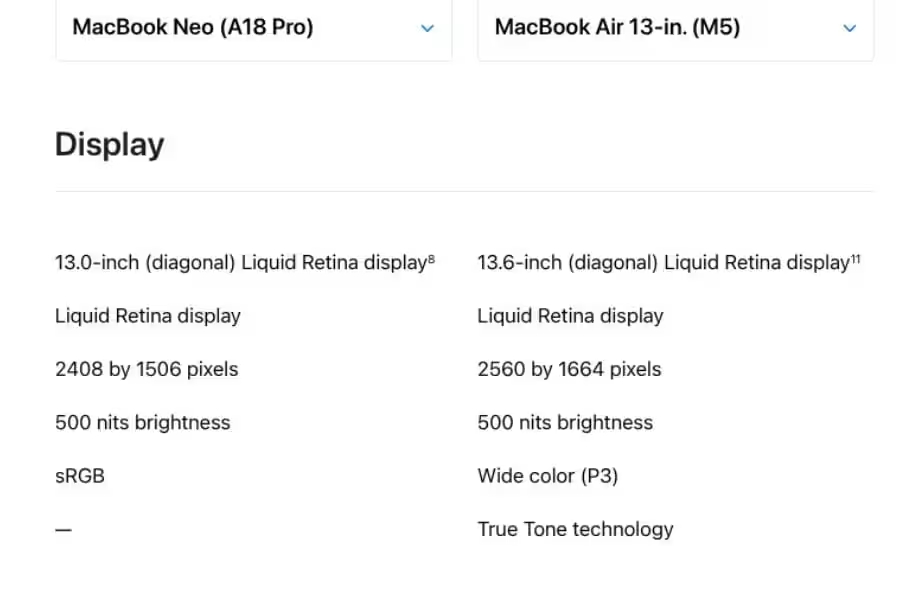
The display, while labeled ”Liquid Retina,” misses several hallmarks of Apple’s premium screens. Though it peaks at 500 nits and supports a billion colors, it restricts color coverage to the narrower sRGB gamut instead of the richer P3 color space found on other MacBooks. It also drops True Tone and omits an ambient light sensor entirely, forcing users to manually adjust brightness in varying conditions-a surprising absence in a laptop from Apple.

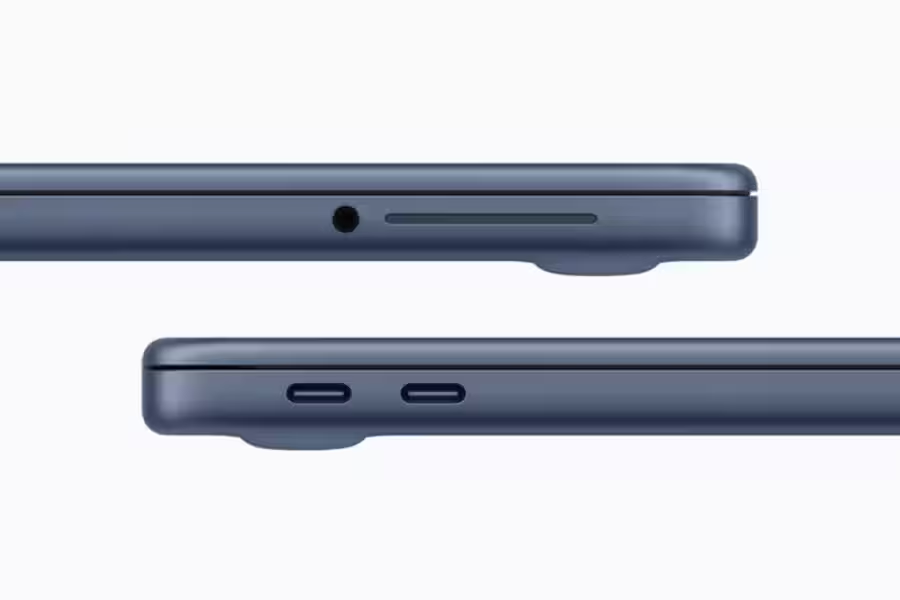
On the hardware front, Apple ditched staples like MagSafe charging in favor of USB-C ports only-both positioned exclusively on the left side, with one port offering faster data speeds and the other lagging behind at USB 2 speeds. While USB-C charging is not uncommon, eliminating MagSafe removes the safety benefit of a magnetic release, increasing the risk of damage from accidental tugs and limiting port flexibility.
The keyboard and trackpad also get budget treatments. The MacBook Neo’s keyboard drops backlighting entirely-a rare omission for a modern MacBook-while the trackpad is a straightforward physical multi-touch design, lacking the Force Touch technology that enables pressure sensitivity and richer interactions. Touch ID, too, is optional, appearing only on higher storage configurations.
Apple’s positioning of the MacBook Neo as an affordable entry point makes clear trade-offs: it’s a laptop designed for everyday tasks rather than power users, banking on quiet operation and solid battery life. However, these cutbacks on core MacBook features could test the patience of anyone hoping for a full Mac experience at a bargain price.
This move into the budget laptop arena pits Apple more directly against Chromebooks and low-end Windows PCs, signaling a strategic shift. But by repurposing a smartphone chip and scaling back display and input features, Apple faces questions about how much of the MacBook’s premium feel can survive such compromises. For buyers weighing the Neo, it’s a lesson in reading the small print: cheaper doesn’t mean Apple’s usual gold standard.