

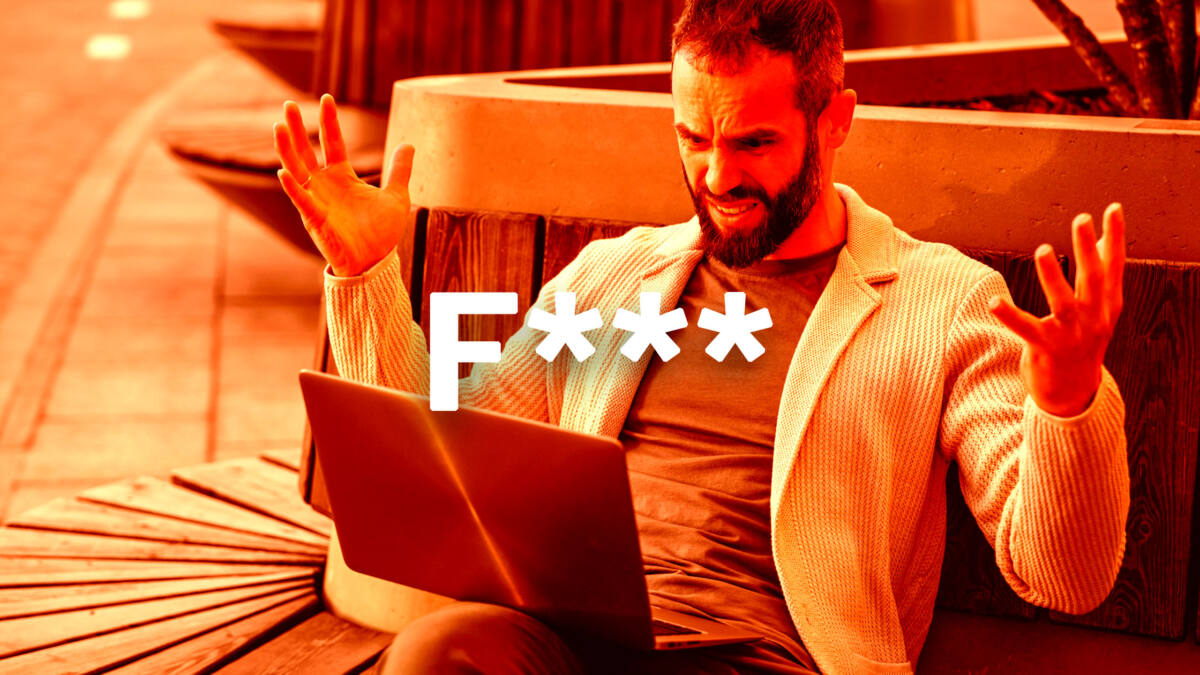
Anthropic is scrambling after a leak of Claude Code source code revealed a few odd things about how the company measures user behavior, including a system that flags vulgar language and labels it ”negative.” The leak also gave outsiders a glimpse of experimental features and internal tooling, but the profanity tracker is the bit that is likely to make privacy-conscious users raise an eyebrow.
According to code spotted by developers, Claude Code uses a regex to catch phrases such as ”wtf,” ”ffs,” and a few stronger insults, then quietly logs an ”is_negative: true” signal to analytics. Anthropic says the point is to judge whether people are having a good experience, which is a fairly corporate way of saying it wants a dashboard of frustration. The company is hardly alone in watching product sentiment, but the granularity here makes the system feel less like product research and more like a mood ring with access to your terminal.
How Anthropic uses the f***s chart in Claude Code
Claude Code creator Boris Cherny said the internal readout is literally called the ”f***s” chart, and that the signal helps the team understand when the assistant is irritating users. That may sound useful, but it also underlines a familiar tension in AI tools: the more they observe, the more they can optimize, and the more they can make users wonder what else is being measured.
There is some precedent here. Big consumer platforms have long used sentiment proxies, bug-report prompts, and telemetry to tune products, but AI assistants sit closer to the user’s actual work and language, which makes the data feel more intimate. Google, Microsoft, and OpenAI all have their own flavors of usage analytics; the difference is that most of them do not advertise a profanity detector with this much personality.
Claude Code’s leak exposed more than mood tracking
The source code leak did not stop at irritation metrics. It also pointed to unreleased models and a ”buddy” feature described as a Tamagotchi-like companion that sits beside the input box and reacts to coding. That kind of novelty can help Anthropic stand out in a crowded market, but it also suggests the company is still experimenting with how playful an enterprise tool can be before it starts feeling a bit too much like a toy.
The leak itself has turned into a distribution event, which is exactly the opposite of what Anthropic wanted. Recreated repositories based on the stolen code have spread quickly, and the episode may end up giving competitors, hobbyists, and enterprise buyers a clearer view of how Claude Code works under the hood than any sanctioned demo would have done.
What the leak means for Claude Code users
Anthropic says the breach came from human error and that no one was fired, while also arguing that the fix is more automation, not more bureaucracy. That’s a very Silicon Valley answer: patch the process with more AI and hope the AI notices the humans before the humans notice the AI. Whether that approach actually prevents another slip is the bigger question now, especially as developers keep combing through the exposed code for the next weird detail.
The more immediate open question is whether users will care enough to push back. If Claude Code is already flagging frustration, Anthropic may have a useful internal metric; what it does not yet have is proof that being silently scored for swearing feels acceptable to the people generating the data.