

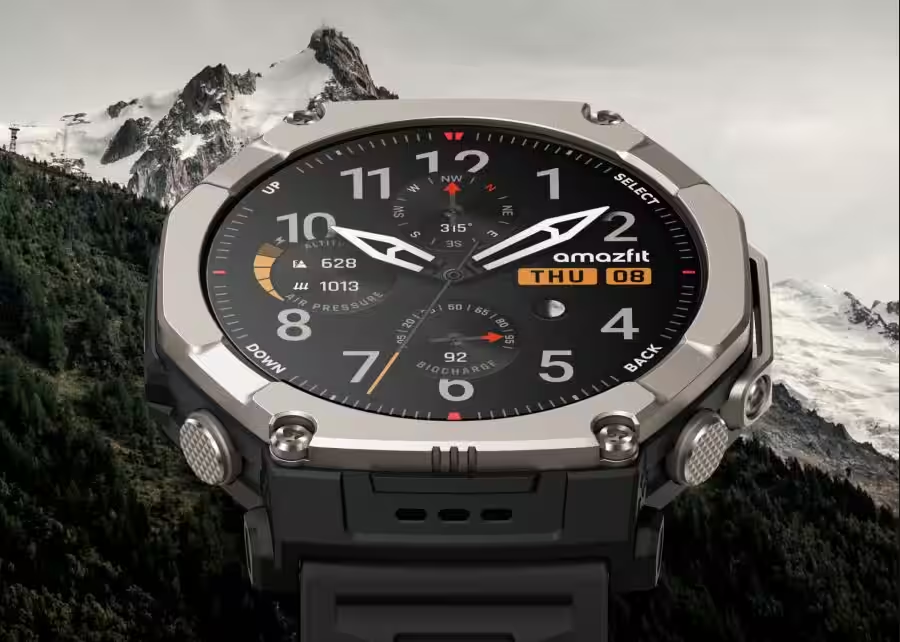
Long backcountry trips expose one simple truth: a smartwatch is only useful when it stays on and actually helps you navigate. Amazfit’s new T‑Rex Ultra 2 is an unapologetic answer to that problem – a rugged, titanium‑trimmed wearable that trades app ecosystems and frills for extreme brightness, big maps and multi‑day battery life.
Built like a tank, but aimed at hikers who hate charging
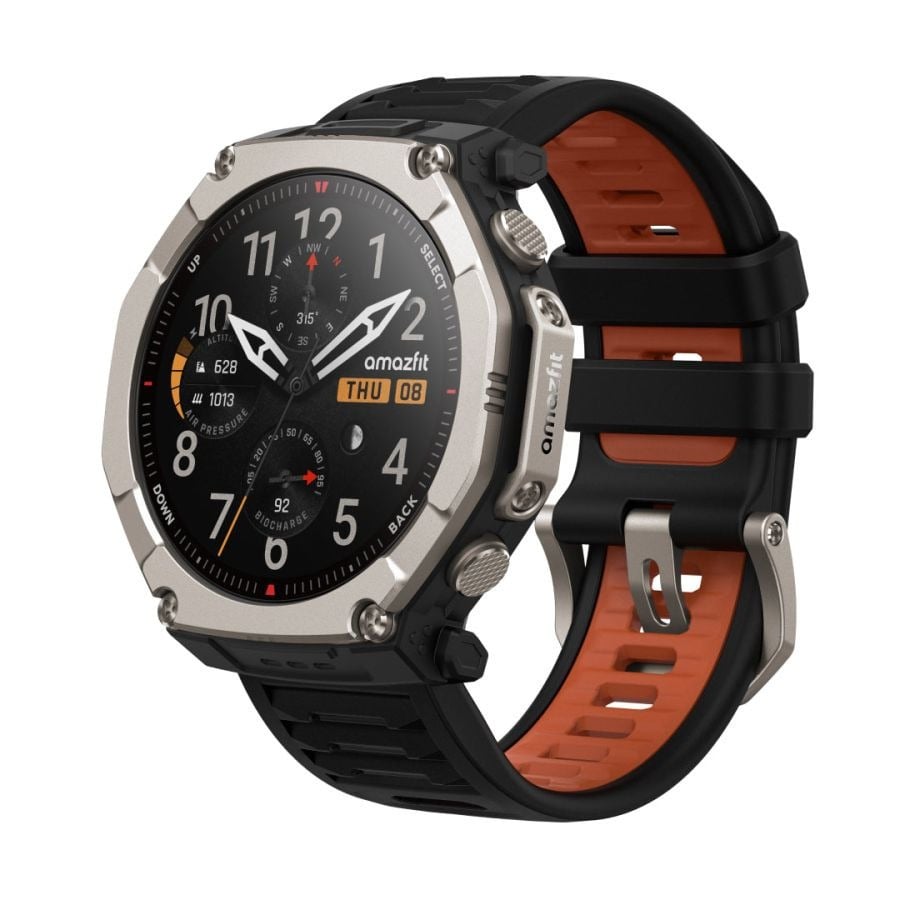
The headline specs read like a checklist for outdoors people: a Grade‑5 titanium bezel, case back and buttons combined with a fibre‑reinforced polymer body, a 1.5‑inch AMOLED screen under sapphire glass that can hit 3,000 nits peak, and a relatively light chassis of around 89.2 grams. The watch carries 10ATM water resistance plus dual diving certification and is rated to work down to −30°C.
Where the T‑Rex Ultra 2 really shifts the conversation is battery. An 870mAh cell Amazfit rates for up to 30 days of typical use or roughly 50 hours in GPS mode puts it in a class that prioritizes endurance over always‑on background features. That’s exactly the trade most people on multi‑day hikes make: longer runtime in exchange for fewer smartphone‑style conveniences.
Maps, satellite fixes and phone‑free routing
Navigation is no afterthought. The Ultra 2 supports six satellite systems for faster and more accurate tracking, allows users to preload full‑colour global maps through the Zepp app, and can handle turn‑by‑turn routing and 100 km offline routes without a paired phone. It also stores music and activity data on board thanks to 64GB of internal storage, and adds practical extras such as NFC payments, a dual‑mode LED flashlight (including a low‑interference green light for night‑vision use), and Bluetooth calling via a built‑in speaker and mic.
What Amazfit is choosing not to be
This is a hardware‑first device. At $549.99 the T‑Rex Ultra 2 undercuts and overlaps with pricier, more complete outdoor platforms, but it doesn’t solve every problem those platforms attempt to address. There’s no sign the watch brings satellite emergency messaging, integrated LTE, or a mature third‑party app ecosystem to match Apple or Garmin’s ecosystems. If you need cellular SOS, specialized training plans or a marketplace of apps, this won’t replace those dedicated devices.
That matters because modern outdoor wearables increasingly sell two things at once: rugged hardware and a software ecosystem that keeps you connected, safe and entertained off‑grid. Amazfit has focused on the hardware checklist – premium titanium, extreme brightness for daylight legibility, long endurance and offline maps – and left the rest to future updates or companion apps.
How it stacks up and who wins
Competitors such as Garmin and Coros have long dominated the multi‑day navigation and training space, typically pairing advanced routing and satellite features with higher price tags. Apple’s Ultra models pushed display brightness into the same 3,000‑nit territory while leaning on a rich app ecosystem and cellular options. Amazfit’s play is narrower: give hikers, trail runners and expeditioners the essentials they need to navigate and endure at a lower price point.
That creates clear winners and losers. Hikers and endurance athletes who value battery life, offline maps and a tough build – and who can live without a sprawling app store or two‑way satellite SOS – are the obvious winners. High‑end users who depend on advanced safety features, deep app integrations or ongoing service subscriptions will likely stick with Garmin, Apple or specialist devices.
What’s missing and what to watch for
Amazfit has tightened the hardware screws impressively, but the product’s long‑term appeal will hinge on software and services. Will Zepp OS continue to expand reliable offline map updates, third‑party routing compatibility and emergency features? Can Amazfit keep delivering software polish at the pace required for serious outdoor use?
Expect pressure on Garmin and others to justify $700-$1,000 price points if $549.99 buys similar core navigation and endurance. Conversely, Amazfit will be tested on support: software stability during long expeditions is worth more than titanium on the casing.
Verdict
The T‑Rex Ultra 2 is a clear, pragmatic pitch: if your priority is multi‑day uptime and offline navigation in a premium, lightweight package, Amazfit has built exactly that. If your priority is an ecosystem of services, satellite emergency messaging or an app catalog, you’ll want to check whether the tradeoffs are acceptable before handing over $549.99.
Either way, the model underlines a simple trend in wearables: increasingly, hardware can be bought independently of ecosystem. The next battleground will be who keeps users safe and satisfied after they leave phone range for days at a time.