

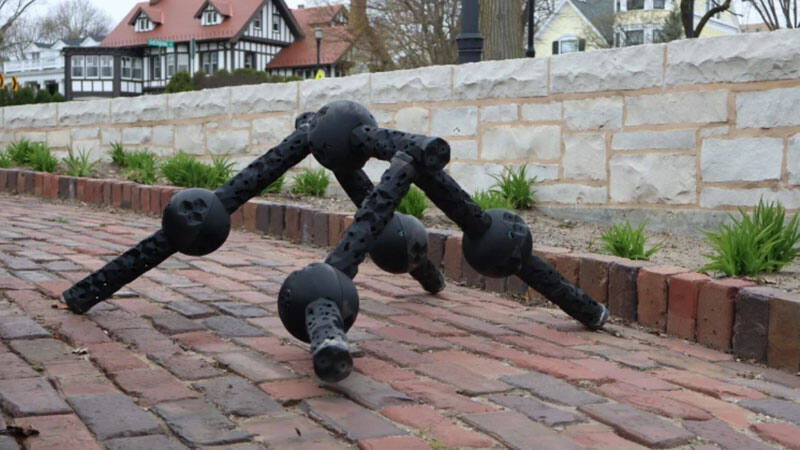
Researchers at Northwestern University in the US have pioneered a new approach to robotics by applying artificial intelligence to evolve robot designs in virtual environments. Instead of manually engineering robots, they used evolutionary algorithms to rapidly generate and test millions of configurations, selecting the most resilient and mobile variants through simulated natural selection. The result? Modular ”legged metamachines” that can survive severe damage and adapt their movements-offering an unprecedented level of robustness compared to conventional robots.
The AI tested robot assemblies within a virtual simulator filled with obstacles and damaging conditions to push designs toward maximum survivability and mobility. This evolutionary pressure led to unconventional architectures often overlooked by human designers. Each robot consists of multiple autonomous modules, each with its own motor, battery, and computer, connected to form configurations ranging from four-legged walkers to sprawling, limbless arrangements.
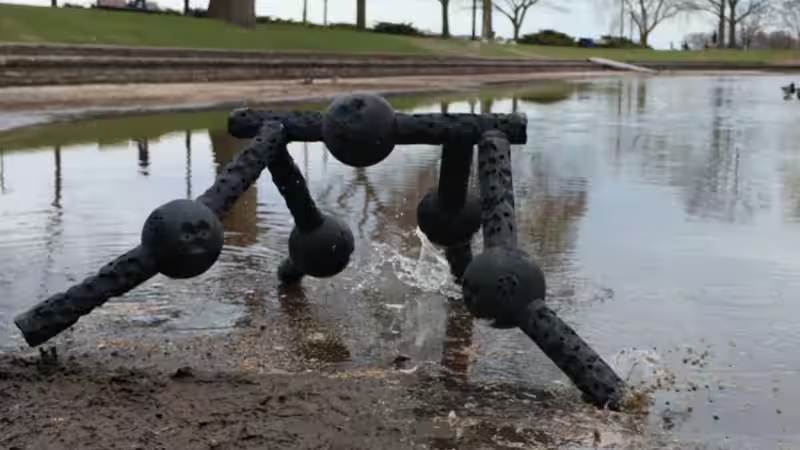
Each module contains a central sphere with two rotating limb-like extensions allowing it to roll, jump, or spin independently. When combined, these modules create a new class of robots capable of dynamically adjusting their locomotion strategies. The modular design offers a remarkable feature: even if parts are lost or damaged-through severed limbs or fragmentation-the remaining modules can reorganize and continue moving. This capability resembles the relentless, crawling aftermath often dramatized in sci-fi ”Terminator” robots, slow yet unstoppable.
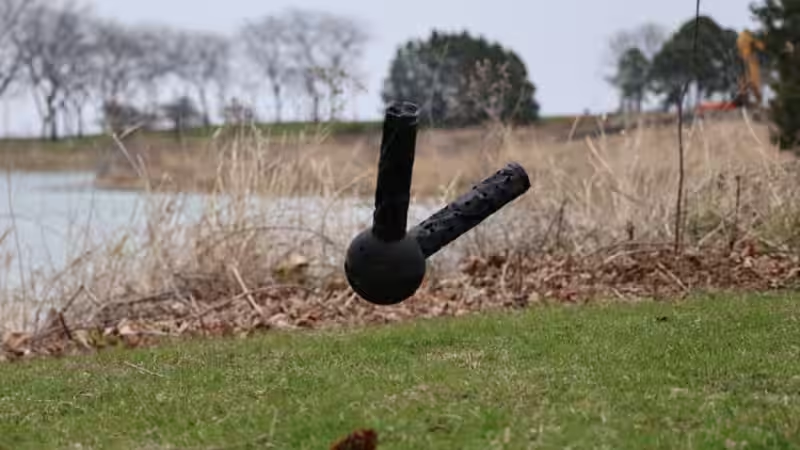
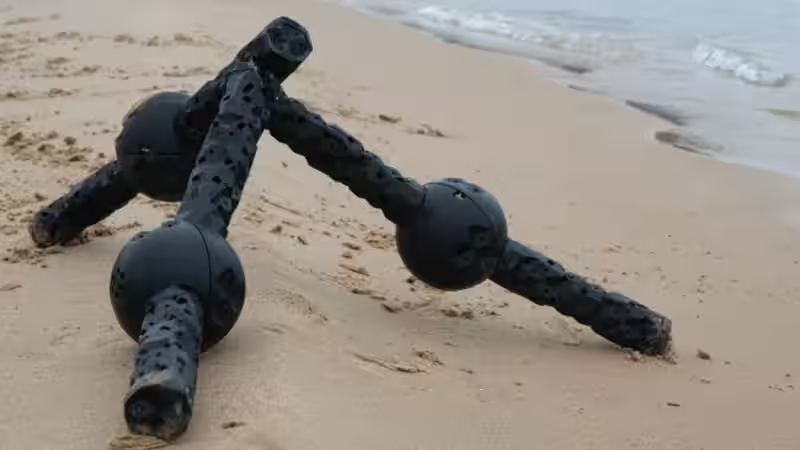
Compared to traditional robots that often fail upon losing a single part, these AI-designed metamachines exhibit a level of resilience and fault tolerance that could transform applications where robustness is critical. Although their current movements are relatively slow and ungainly, their ability to climb, flip from back to feet, and traverse rough terrain-including grass and mud-marks a significant step forward in robot adaptability.
Looking ahead, the team plans to equip these machines with sensors to perceive their environment, enabling better navigation and target detection. Potential uses include deploying them in dangerous or inaccessible conditions-such as search and rescue missions in disaster zones, deep ocean exploration, or outer space missions-especially if deployed in swarms where their modularity and redundancy ensure continued operation despite damage.
As remarkable as these AI-evolved robots are, their eerie resilience and relentless mobility evoke both fascination and unease. Deploying large numbers of these ”undead” modular machines in real environments evokes science fiction scenarios, but for now, this research is a powerful demonstration that machine evolution can outmatch human design for adaptability and survival.