

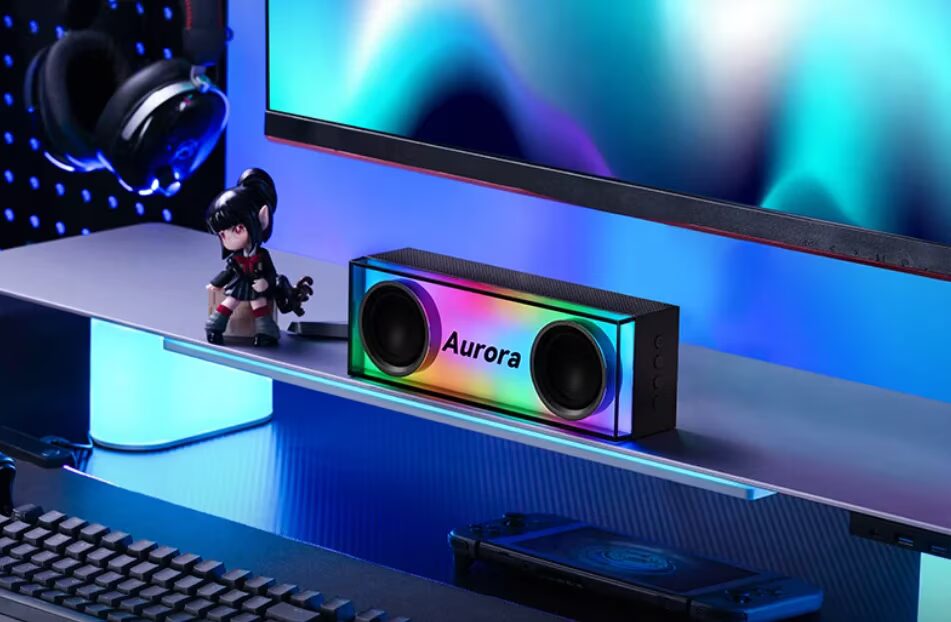
Edifier has unveiled the Hecate Aurora, a compact Bluetooth speaker aimed at gamers and users who prioritize both sound quality and style. Priced at just 269 yuan (about $39) in China, this speaker packs impressive features into a small footprint.
Measuring 225 × 76 × 55 mm, the Hecate Aurora fits easily beneath a monitor, making it ideal for tight desk setups. Its design draws inspiration from the Braun Audio 300 player, combining a transparent acrylic front panel with a metal rear shell to evoke a retro-industrial vibe.
Sound comes from two 56mm drivers paired with an oval passive radiator, delivering up to 20W peak power. The speaker offers balanced audio with pronounced bass and clear mids and highs, covering a frequency range from 120 Hz to 20 kHz.
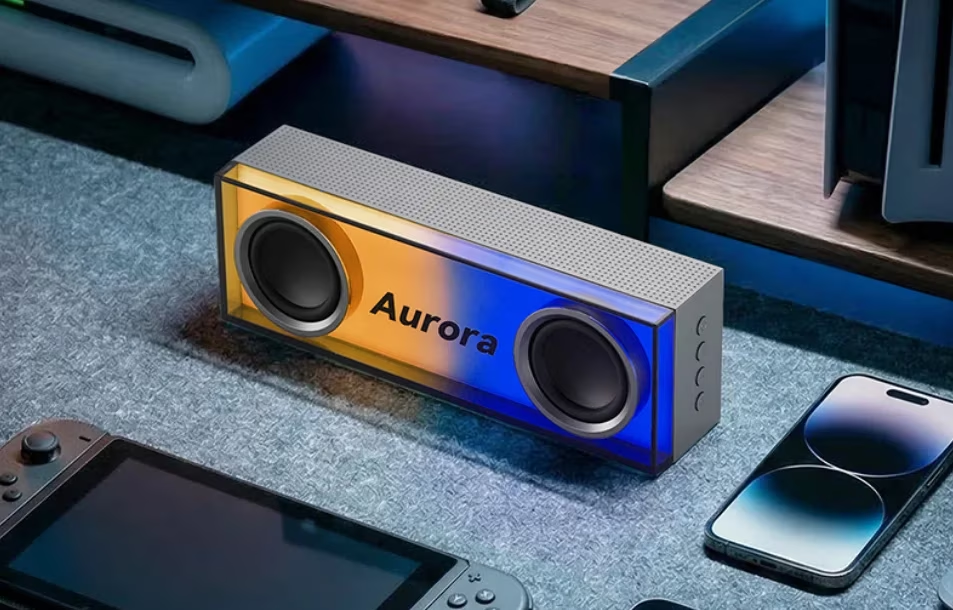
For wireless connectivity, the speaker uses Bluetooth 6.0 and also includes an AUX input for wired connections. It is compatible with smartphones, laptops, PCs, tablets, and gaming consoles such as the Nintendo Switch. Physical buttons on the device handle basic controls.
The built-in 5200mAh battery powers the speaker for up to 5 hours when the RGB lighting is active and up to 11 hours with the lighting off. Charging takes roughly three hours, and the speaker can be used while plugged in.
The RGB lighting offers 14 effects, including a rainbow mode and static colors. Lighting and audio settings can be adjusted both through the speaker’s buttons and via Edifier’s dedicated app. The app provides volume control, sound mode selection, battery status, and timer functions.
Edifier’s Hecate Aurora plays in a pricing tier below more mainstream Bluetooth speakers from brands like JBL and Logitech, yet it stands out by blending gaming-centric aesthetics with solid sound and decent battery life. Its compact dimensions and retro styling give it a unique presence among compact gaming speakers.
As gaming setups continue to incorporate more RGB and compact peripherals, the Hecate Aurora’s combination of lighting effects and practical features may appeal to users seeking a balance between form and function. It will be interesting to see if Edifier expands this line with enhanced audio performance or deeper app integrations for a more immersive user experience.