


Grell OAE2 open-back headphones, designed by former Sennheiser engineer Axel Grell, have officially launched worldwide after debuting in Germany. Priced at $499, these headphones aim to deliver a more immersive listening experience by simulating sound as if it’s coming from in front of you, rather than directly from the sides.
Unlike traditional headphones that position drivers directly beside your ears, the OAE2 features uniquely angled 40mm drivers engineered to project sound forward. This design intends to mimic the natural way we experience live performances, where sound reaches our ears after interacting with the outer ear’s anatomy.
Most headphones fail to replicate this subtle spatial effect accurately. To tackle that, Grell uses what they call Front-sided Sound Field Modulation (FSFM) technology, which creates a more natural, lifelike soundstage by modulating how audio waves interact with the listener’s ear structures.
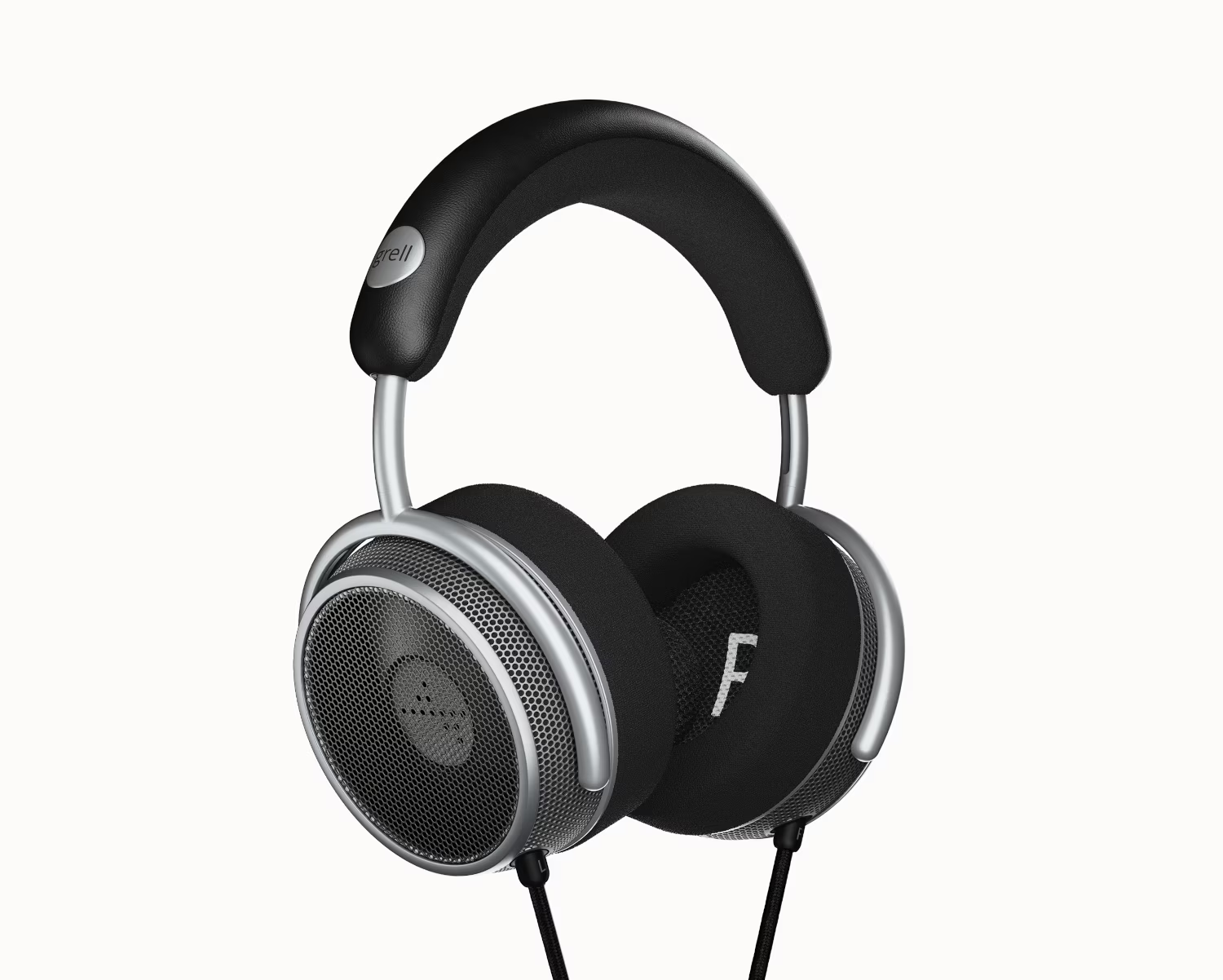
Under the hood, the OAE2 employs biocellulose diaphragms with a frequency response spanning 12 Hz to 34 kHz (±3 dB) and impressively low total harmonic distortion of just 0.05% at 1 kHz, targeting audiophiles who demand pristine sound quality.
The headphones weigh 378 grams and come with both a 3.5 mm unbalanced and a 4.4 mm balanced cable, making them compatible with a wide range of audio gear, from smartphones to high-end DACs and amplifiers.
Here’s a quick overview of Grell OAE2 headphones pricing:
- Price: $499 globally
In comparison to offerings from brands like Sennheiser, Beyerdynamic, or Audeze, the Grell OAE2’s unique driver placement and FSFM technology set it apart by focusing on a soundstage that feels more spatially oriented and ”live.” While many flagship headphones emphasize planar magnetic drivers or ultra-wide soundstage, Grell attempts to solve a different problem: the perceived directionality and naturalness of sound.
With the OAE2, Grell targets audiophiles craving a headphone that better captures the essence of a real concert, prioritizing spatial realism over traditional headphone sound presentation. Its arrival on the global stage invites a fresh discussion about how headphone design can evolve beyond long-standing conventions.