

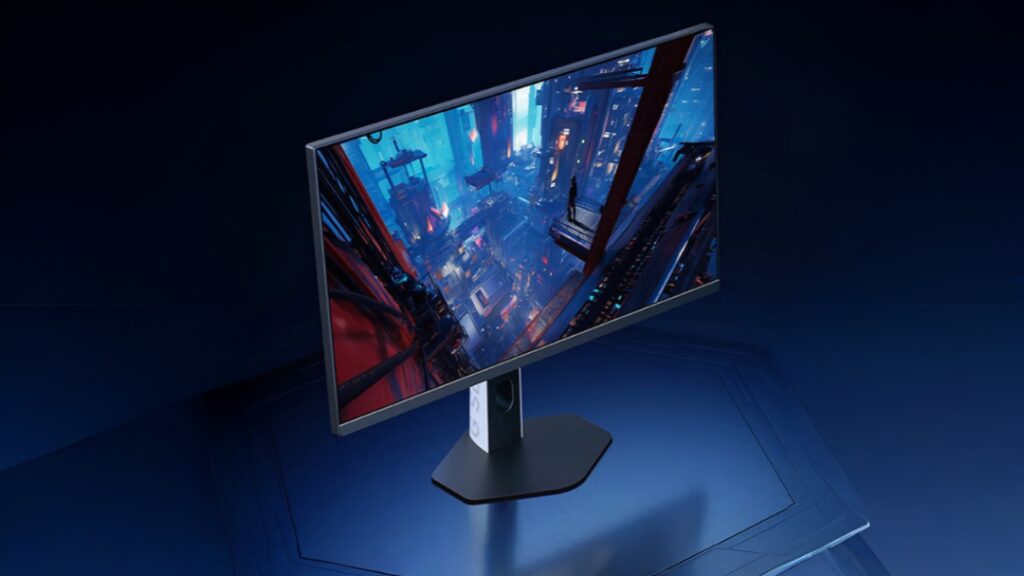
Xiaomi has added another aggressively priced display to its Redmi lineup: the Redmi G25 2026, a 24.5-inch monitor priced at 599 yuan ($87) in China. The Redmi G25 2026 is built for the same crowd that keeps buying ”cheap but fast” gaming screens, and at this price, Xiaomi is clearly aiming to undercut rivals that still treat 240Hz as a premium badge.
Redmi G25 2026 display specs
The panel uses a Full HD 1920 x 1080 resolution, a 240Hz refresh rate, and Fast IPS LCD tech. Xiaomi says the monitor delivers a 1ms GTG response time, 178-degree viewing angles, and VESA DisplayHDR 400 certification with peak brightness of 400 nits. It also supports AdaptiveSync, with compatibility for Nvidia G-Sync and AMD FreeSync, which is the sort of feature set that used to make monitors cost a lot more than 599 yuan.
- 24.5-inch Fast IPS panel
- 1920 x 1080 resolution
- 240Hz refresh rate
- 1ms GTG response time
- 400 nits peak brightness
Color, comfort and ports
Xiaomi also leans on color accuracy to make the G25 2026 look more serious than its price suggests. The display covers 100% of the sRGB gamut and 95% of DCI-P3, with factory calibration keeping Delta E below 2. It supports 8-bit color depth and 16.7 million colors, while TÜV Rheinland-certified low blue light protection and DC dimming are there for the people who stare at spreadsheets, shooters, or both.
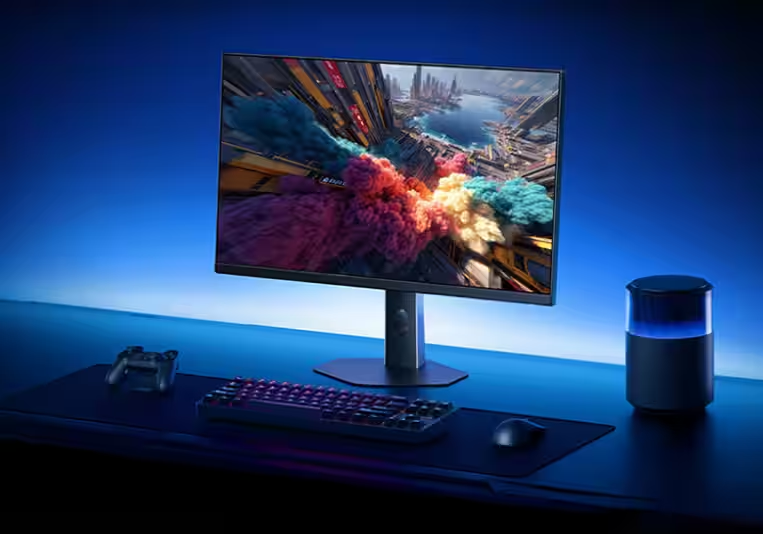
Design is basic in the best sense: thin bezels, a stand with tilt adjustment, and VESA 75 x 75 mm mounting. Connectivity is straightforward too, with one DisplayPort 1.4, one HDMI 2.0, and a 3.5mm audio jack. The monitor weighs about 3.1 kg and measures 557 x 171.3 x 445.6 mm with the stand, so it should fit easily on most desks that can handle a keyboard and an energy drink.
Xiaomi’s budget monitor push
The G25 2026 lands alongside Xiaomi’s Redmi G27Q 2026, a 2K model with a 320Hz Fast IPS display. That gives the company a neat one-two strategy: sell one screen for bargain hunters who want high refresh rates without paying for extra pixels, and another for buyers chasing sharper resolution and even faster motion. It is a familiar play from Chinese brands – stack the spec sheet, keep the price low, and let the bigger monitor makers explain why their ”entry-level” models still cost more.
The open question is how far this pricing can travel outside China. If Xiaomi keeps pairing high refresh rates, decent color coverage, and eye-care features at this level, the pressure on budget gaming monitors elsewhere is going to get uncomfortable very quickly.