

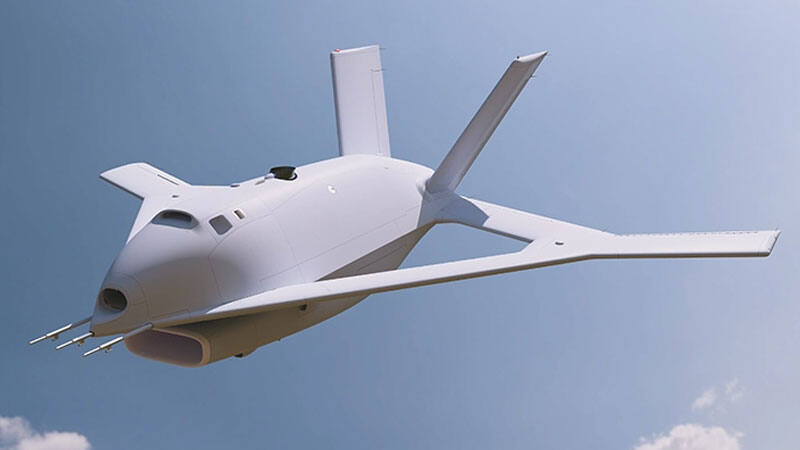
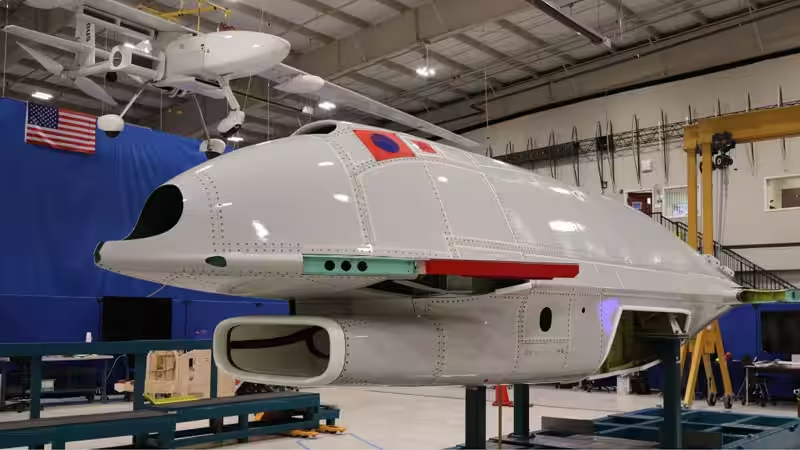
A Boeing-backed experimental jet that ditches flaps, ailerons, and other moving control surfaces has reached a major assembly milestone. Aurora Flight Sciences has moved the X-65 fuselage to Virginia for final integration, where teams are fitting avionics, engines, and the aircraft’s active flow control system – the part that makes the whole sci-fi trick work. The X-65 first flight is still planned for 2027.
That means the X-65 is no longer just a concept sketch with a dramatic render. It is becoming a real airframe built to steer with blasts of air from the body rather than with the usual mechanical bits hanging off the wings and tail. The promise is obvious: fewer moving parts, less weight, simpler upkeep, and, if the engineers are right, a cleaner way to fly.
How the X-65 controls flight with air jets
The X-65 carries 14 nozzles in its fuselage that will release compressed air to adjust angle of attack, roll, and other flight parameters. In other words, the airplane is being designed to move by pushing air around its own skin instead of physically deflecting surfaces – a neat idea that could reshape how future aircraft are built if the testing holds up.
That kind of setup is especially appealing to defense agencies and aircraft makers because fewer moving parts usually means fewer failure points. It also gives engineers a chance to test whether novel control methods can match the precision of conventional systems without the baggage of extra hardware.
X-65 size, speed and modular design
Aurora has chosen modest-enough test vehicle numbers for repeated experimentation rather than raw performance bragging rights. The X-65 has a wingspan of about 9 m, a takeoff mass of about 3100 kg, and a top speed of 860 km/h.
- Wingspan: about 9 m
- Takeoff mass: about 3100 kg
- Maximum speed: 860 km/h
- Control system: 14 fuselage nozzles for compressed air
The airframe also uses a modular layout, allowing engineers to change the sweep angle of the wings and swap components for different tests. That is the sort of unglamorous engineering decision that makes sense when the point is to learn quickly, not to win a beauty contest at 30,000 feet.
DARPA CRANE and the road to 2027
The X-65 is part of DARPA’s CRANE initiative, short for Control of Revolutionary Aircraft with Novel Effectors, and the program has been funded jointly with DARPA since August 2025. The current shift from structure-building to systems integration suggests the schedule is holding together well enough for now, with the first flight still planned for 2027.
If that flight goes as planned, the aircraft is expected to stay busy for a long time afterward as a flying laboratory gathering data for future designs. That is the real prize here: not a one-off stunt, but a testbed that could help decide whether air-jet control stays a curiosity or becomes part of mainstream aircraft design.