

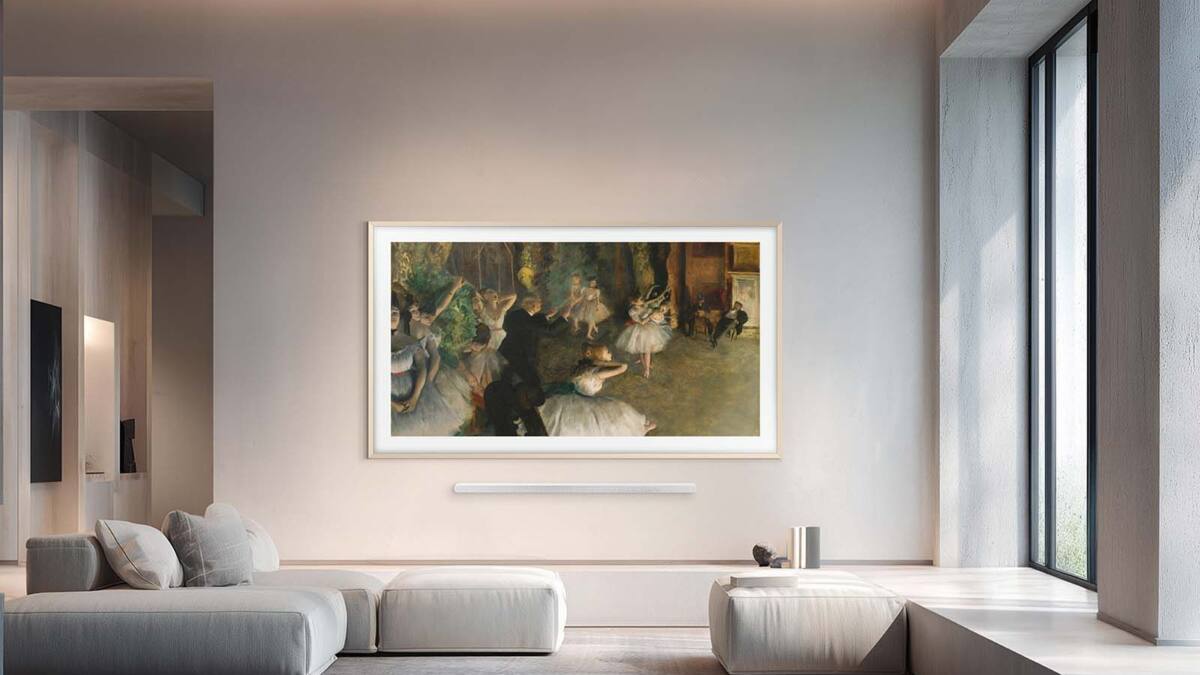
Samsung’s 2026 TV lineup is built around a simple idea: make the screen disappear when you want it to, then turn around and punch harder than last year when you start watching. That philosophy shows up in the new Frame Pro, a refreshed Frame, and three OLED series that stretch from 42 inches to 83 inches.
The timing makes sense. Samsung is leaning into art TV and OLED in a market where premium displays are also lifestyle objects, not just panels with app menus. The company is trying to keep pace with rivals that already push bright, wall-friendly OLEDs and art-mode televisions, so this launch is as much about design bragging rights as raw picture quality.
The Frame Pro gets the biggest hardware upgrade
The new Frame Pro sits at the top of Samsung’s art-TV family and keeps the wireless transmission trick that still sounds a bit like a cheat code. Samsung says it can send audio and video from a Blu-ray player or game console from up to 30 feet away through the wireless box, while the panel itself gets improved glare reduction, a 144 Hz refresh rate, the NQ4 AI Gen3 Processor, and a Micro HDMI port with HDMI eARC support for soundbars and speaker systems.
Sizes run from 55 inches to 85 inches, with the 65-inch model starting at $1,999.99. The 75-inch version is $2,799.99, and the 85-inch model lands at $3,999.99. Samsung has not disclosed pricing or availability for the 55-inch Frame Pro yet.
Samsung is turning the Frame into more of a design object
The regular Frame is getting the same glare-reduction treatment and new back stoppers for easier cable management, though Samsung is keeping the rest of its specs close to the vest. That restraint is a little odd for a product line that lives and dies on presentation, but the software story is clearer: both Frame models get access to Samsung’s Art Store, which offers up to 5,000 works from more than 800 artists for $5 a month.
If you would rather not subscribe, Art Store Streams includes 30 curated works each month at no extra charge. Samsung also wants the bezel to do some of the styling work, with Modern Brown, Modern Teak, Modern White, and Sand Gold options, plus more choices for the Frame Pro through Deco TV Frames.
Samsung’s OLED range is going brighter and wider
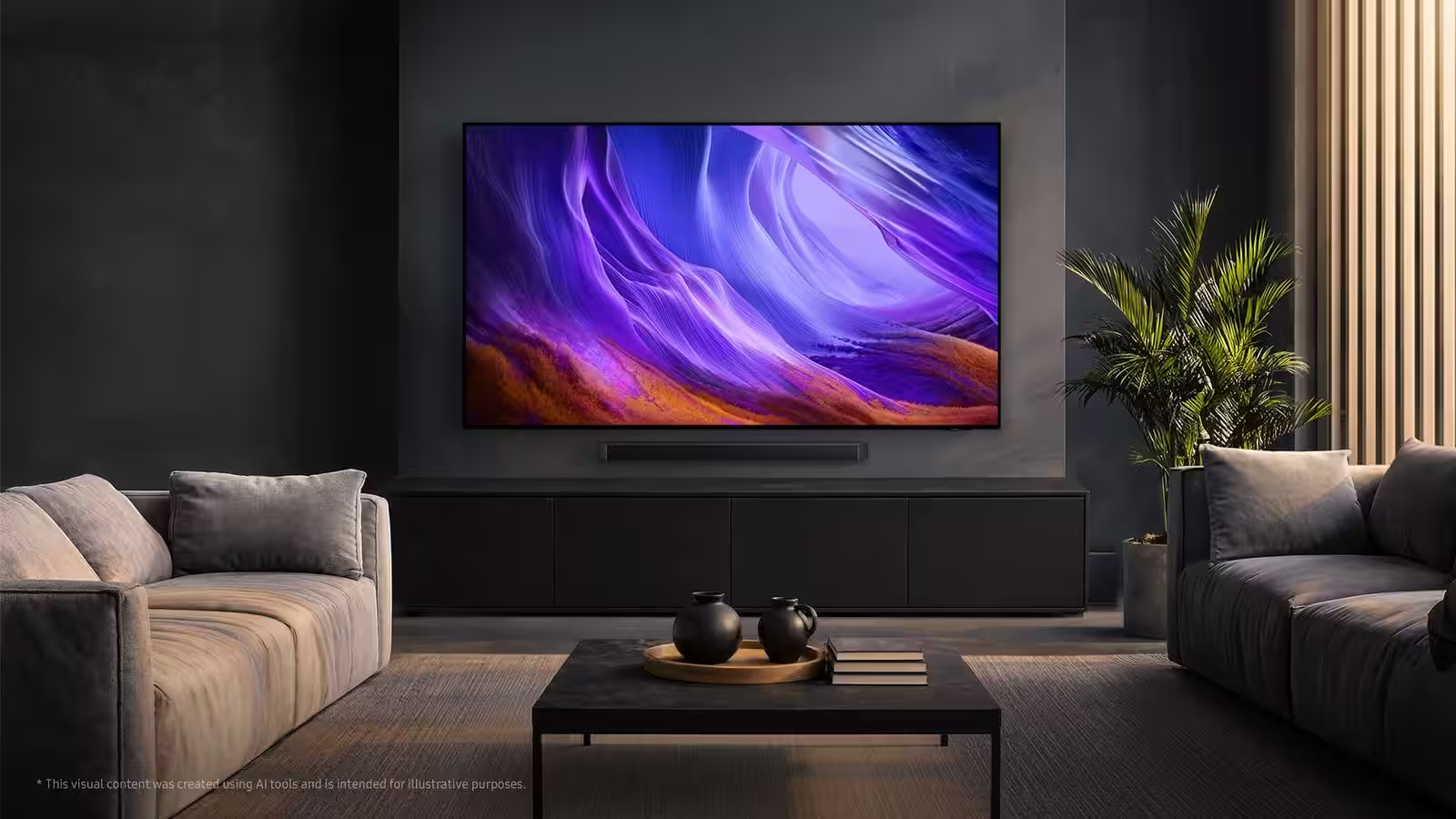
Samsung’s OLED lineup for 2026 has three tiers: the flagship S95H, the brighter and more affordable S90H, and the S85H entry model. The S95H adds a new FloatLayer design with a metal bezel and flush wall mounting, while Samsung is also making it the first OLED TV in its range to support Art Store access.
The S90H gets Samsung’s matte-style screen this year, plus more sizes from 42 to 83 inches. Both the S95H and S90H use the NQ4 AI Gen3 Processor, support a 165 Hz refresh rate for PC gaming, and include AI processing aimed at improving lower-resolution video as well as brightness and contrast. That puts Samsung squarely in the same fight as LG’s OLED lineup, where brightness and anti-glare treatment have become the new arms race.
OLED prices and features by model
Samsung is packing more premium features into more models, but the pricing ladder is steep enough to remind you that ”art TV” is still a luxury category with a straight face. The S95H starts at $2,499.99 for 55 inches and rises to $6,499.99 for 83 inches, while the S90H begins at $1,399.99 and the S85H starts at $1,199.99.
- S95H: 55, 65, 77 and 83 inches
- S90H: 42, 48, 55, 65, 77 and 83 inches
- S85H: 48, 55, 65, 77 and 83 inches
- Shared features include Dolby Atmos, Object Tracking Sound+ and Vision AI Companion
The real test is whether Samsung can make these models feel meaningfully different from one another without making buyers squint at a spec sheet. My bet: the Frame Pro sells on the wireless-box convenience and wall art pitch, while the OLEDs win on pure picture performance, especially if Samsung’s brighter panels and matte finishes hold up in real living rooms rather than under showroom lighting.