

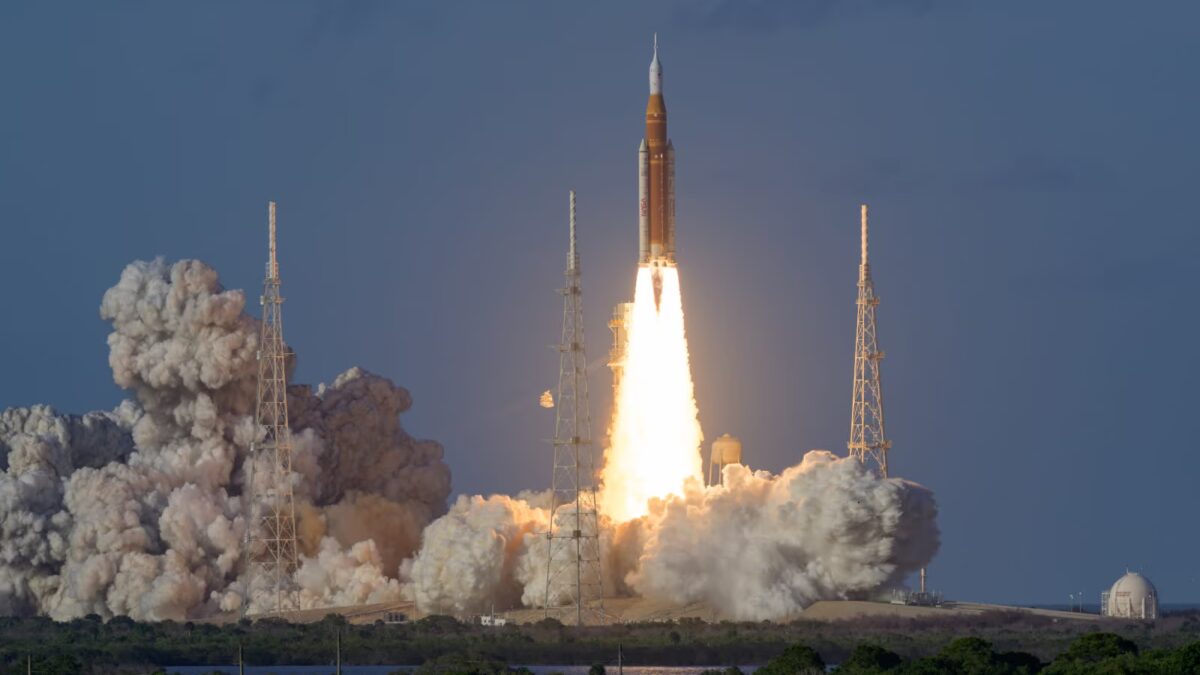
Artemis II blasted off on April 1 at 6:35 PM Eastern from Kennedy Space Center’s Launch Complex 39B in Florida, marking NASA’s first crewed lunar mission in over 50 years. The 10-day journey around the Moon includes astronauts Reid Wiseman, Victor Glover, Christina H. Koch, and Jeremy Hansen from the Canadian Space Agency.
This mission is the inaugural crewed flight for NASA’s Artemis program, which aims to re-establish human presence on the Moon and lay the groundwork for future lunar landings. It also represents the first time astronauts have flown aboard the new Space Launch System (SLS) rocket and Orion spacecraft, venturing beyond low Earth orbit since the Apollo era.
Hours after launch, the crew enjoyed stunning views of Earth but reported an issue with the spacecraft’s waste management system-a first-of-its-kind toilet designed for deep space missions. Fortunately, astronauts have backup waste collection bags similar to those used during Apollo flights.
At 10:43 PM, the Orion capsule successfully separated from the SLS upper stage. Shortly after, Victor Glover took manual control of the spacecraft to test maneuverability and practice potential docking procedures with future lunar landers being developed by SpaceX and Blue Origin.
The mission is scheduled to conclude with Orion splashing down in the Pacific Ocean on April 10.
Artemis II mission details and crew
Artemis II’s crew consists of four astronauts:
- Reid Wiseman
- Victor Glover
- Christina H. Koch
- Jeremy Hansen (Canadian Space Agency)
The mission duration is 10 days, with objectives including testing Orion’s systems, spacecraft maneuverability, and validating deep space operational procedures.
Significance of Artemis II for NASA’s lunar exploration goals
Artemis II is a critical step in NASA’s broader plan to return humans to the Moon and eventually send crewed missions to Mars. By flying astronauts beyond low Earth orbit for the first time since Apollo 17 in 1972, the mission validates the Space Launch System (SLS) and Orion spacecraft for deep space travel.
The data and experience gained from Artemis II will influence upcoming missions, including Artemis III, which aims to achieve the first crewed lunar landing of the Artemis program. The mission also supports collaborations with commercial companies like SpaceX and Blue Origin, who are developing future lunar landers.
Orion spacecraft systems and in-flight challenges
Following launch, astronauts encountered a problem with Orion’s advanced waste management system. However, the crew safely used backup waste collection bags modeled after those employed during Apollo missions.
Successful separation of the Orion capsule from the SLS upper stage demonstrated key aspects of the spacecraft’s operability. Manual control tests by astronaut Victor Glover also evaluated maneuvering capabilities necessary for future docking with lunar landers.
Artemis II launch and mission timeline
Key dates and events for Artemis II include:
- Launch: April 1, 6:35 PM Eastern, Kennedy Space Center, Florida
- Orion separation from SLS upper stage: 10:43 PM on launch day
- Manual spacecraft control and maneuvering tests: Shortly after separation
- Mission duration: 10 days around the Moon
- Scheduled splashdown: April 10 in the Pacific Ocean
Artemis II’s success is vital for establishing a sustainable human presence on the Moon and advancing NASA’s exploration ambitions. The mission initiates a new era of lunar exploration, testing critical technologies and operational procedures that will shape the future of human spaceflight beyond Earth orbit.
This mission lays the foundation for international collaboration and commercial partnerships, accelerating humanity’s next giant leap in space.