

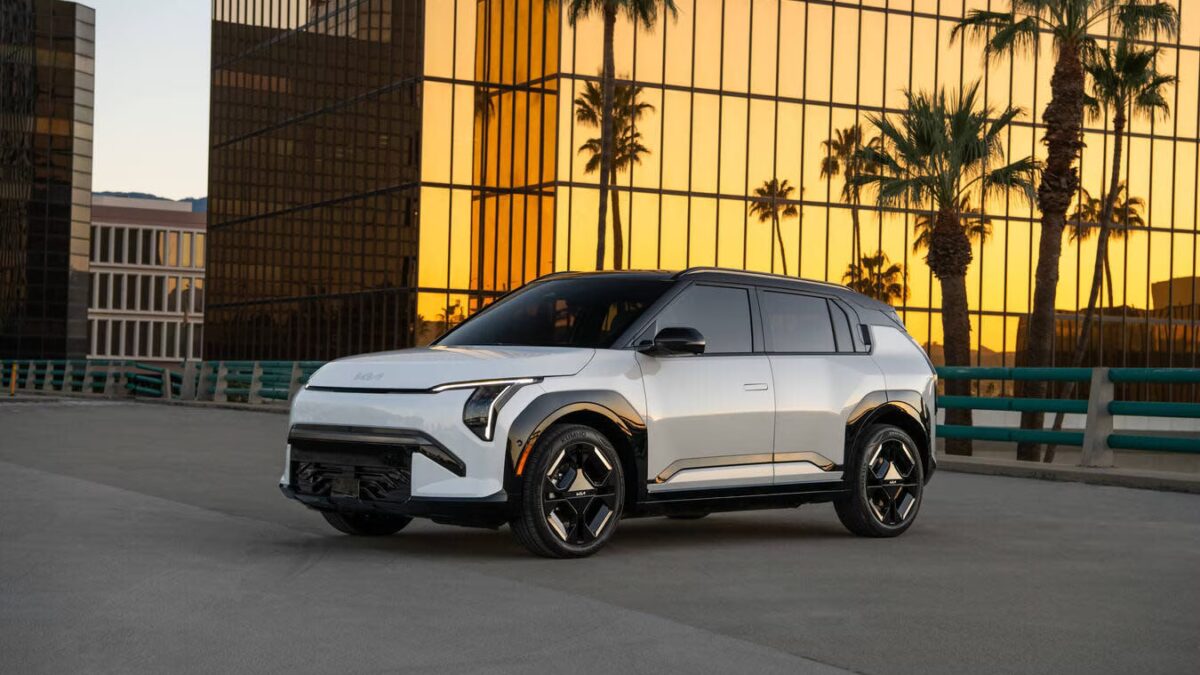
Kia is finally bringing its compact electric crossover, the EV3, to the US market. Announced at the New York Auto Show, the 2027 EV3 will hit showrooms later this year. While the automaker hasn’t revealed exact pricing yet, earlier estimates placed the starting price around $35,000.
The EV3 targets American buyers seeking an affordable, small electric SUV-a segment with few contenders, especially after Volvo discontinued its EX30. With a size and price point close to the popular Kia Sportage, the EV3 could become a key player in Kia’s lineup.
Kia will offer two battery options for the EV3: a 58.3 kWh pack delivering about 220 miles (354 km) of range, and a larger 81.4 kWh battery promising up to 320 miles (515 km). This lets buyers choose between affordability and longer-distance capability.
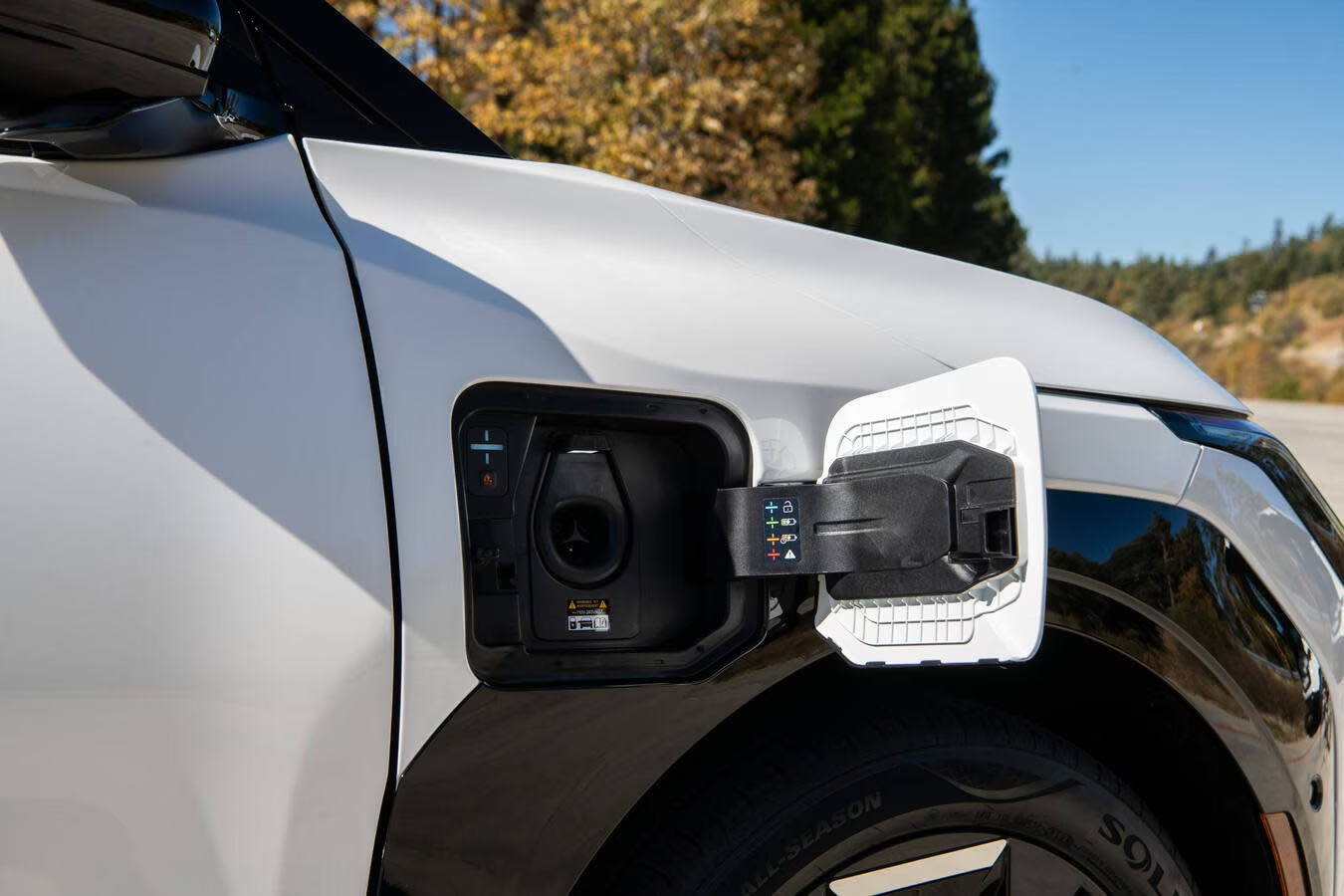
The EV3 runs on a 400-volt electrical system, which isn’t as fast for charging as higher-voltage rivals like Kia’s EV9 SUV. Still, rapid charging can boost the battery from 10% to 80% in roughly 29 minutes for the base version, and 31 minutes for the bigger battery. It features the North American Charging Standard (NACS) port located at the front passenger side.
Additionally, Kia will offer an optional Vehicle-to-Home (V2H) system that enables the EV3 to power a house during peak demand hours-an appealing feature for those looking to optimize home energy use.
Industry observers expect the EV3’s final sticker price to fall between $35,000 and $50,000, though Kia will confirm details closer to the launch.
Compared to electric SUVs from global giants like Tesla, Ford, and Hyundai, the EV3’s combination of compact size, competitive range, and affordable pricing positions it as a strong contender in the growing US electric crossover field. Its NACS-compatible charger follows a recent trend as automakers align with Tesla’s charging standard to improve convenience for buyers.
With the EV3’s US arrival, Kia aims to capitalize on a market hungry for practical, budget-friendly electric crossovers. What remains is how quickly it can compete with established players and whether features like Vehicle-to-Home will catch on with American consumers.
- Price estimates: Starting around $35,000, with a potential cap near $50,000
- Battery options: 58.3 kWh (220 miles/354 km) and 81.4 kWh (320 miles/515 km)
- Charging system: 400-volt; rapid charging from 10% to 80% in 29-31 minutes
- Charging port: North American Charging Standard (NACS) on front passenger side
- Optional feature: Vehicle-to-Home (V2H) energy system