

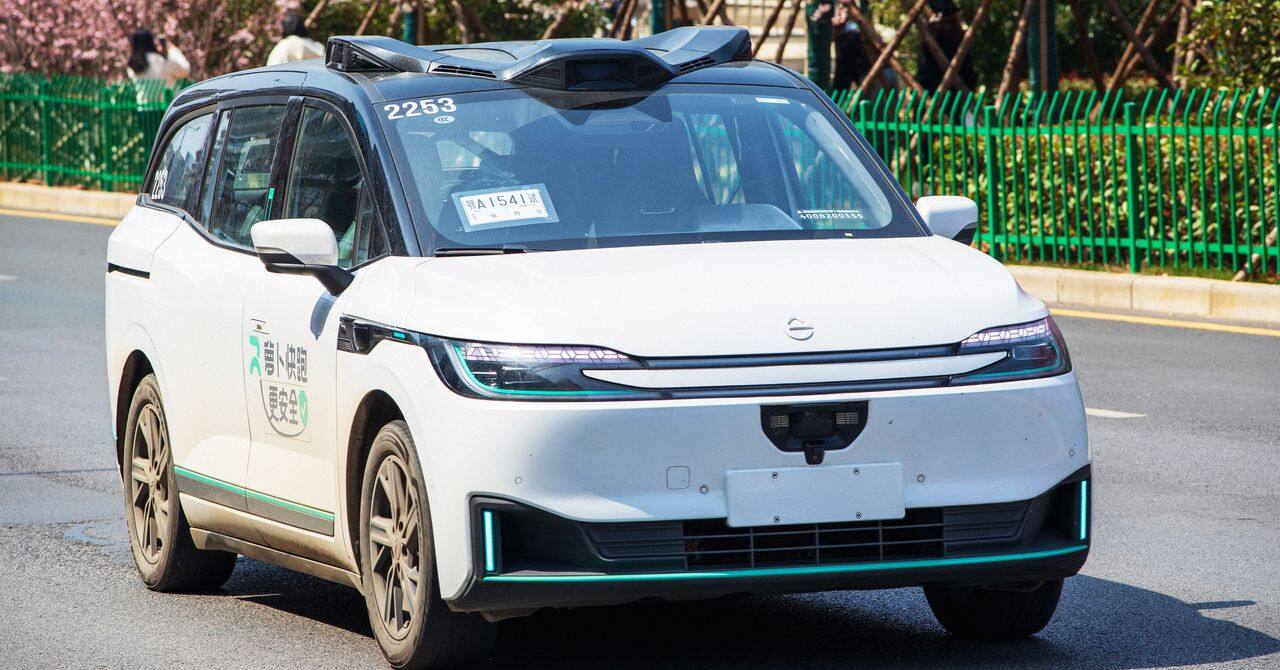
Baidu robotaxis froze in traffic in Wuhan, China, on Tuesday, leaving some passengers stuck for more than an hour and triggering a fresh headache for Apollo Go, one of the country’s biggest self-driving fleets. The outages, which local police said were likely caused by a system malfunction, raised an awkward question for Baidu’s robotaxi service: what happens when the driverless car becomes the roadblock?
Social media posts from Wuhan showed multiple Baidu vehicles stopped in busy lanes, including fast lanes on highways. At least one rider said her trip stalled repeatedly before the car finally came to a halt near an intersection, where she and two friends eventually gave up waiting and walked away themselves. In a city that has been unusually willing to let autonomous cars roam highways and airport routes, that kind of failure is more than an inconvenience; it is exactly the sort of scene that makes regulators, rivals, and nervous riders pay attention.
Passengers couldn’t get help
One Wuhan college student said she was trapped in a Baidu robotaxi for about 90 minutes. She said the car stopped several times during the ride, then parked near an intersection in eastern Wuhan. The display told passengers to stay inside with seatbelts on and wait for a company representative ”in five minutes,” but the help never arrived.
That kind of broken support loop is as damaging as the roadside freeze itself. When a robotaxi can’t move, passengers need a working escalation path immediately, and that’s where a lot of autonomous-vehicle operators still look embarrassingly unprepared.
- Reported wait time inside one stuck vehicle: about 90 minutes
- Customer service call time reported by one passenger: about 30 minutes
- Police description of the cause: ”likely caused by a system malfunction”
The Wuhan highway scene turned messy fast
Other riders on Chinese social media said Baidu’s app support failed them too, including one who reported that the SOS button was unavailable. Photos and videos posted online showed robotaxis sitting on active roads while other drivers swerved or braked hard to avoid them. In one dashcam clip, a car passes 16 Apollo Go vehicles parked on the road over 90 minutes.
There were also reports of collisions. One social media post described a crash after a lane change to avoid a stopped robotaxi, while other photos showed a rear-end collision involving a parked Baidu vehicle. No one was reported injured, but the damage is the sort that travels fast online and even faster through public perception.
Baidu robotaxi expansion is getting bigger, not safer-looking
Baidu is one of China’s best-known self-driving companies, with robotaxi services in more than a dozen Chinese cities and recent international expansion to Seoul, Abu Dhabi, and Dubai. In February, the company said Apollo Go had completed 20 million rides covering over 300 million kilometers, a reminder that scale alone does not buy immunity from a bad failure mode. The larger the fleet, the more a single glitch can become a public demonstration.
Wuhan has been especially permissive, allowing fully autonomous vehicles on public roads, highways, and airport trips. That makes it a useful testbed for Baidu, but also a brutal one: if a fleet can freeze in the fast lane there, the next debate won’t be about ambition. It will be about whether the backup systems are actually good enough when the software isn’t.