

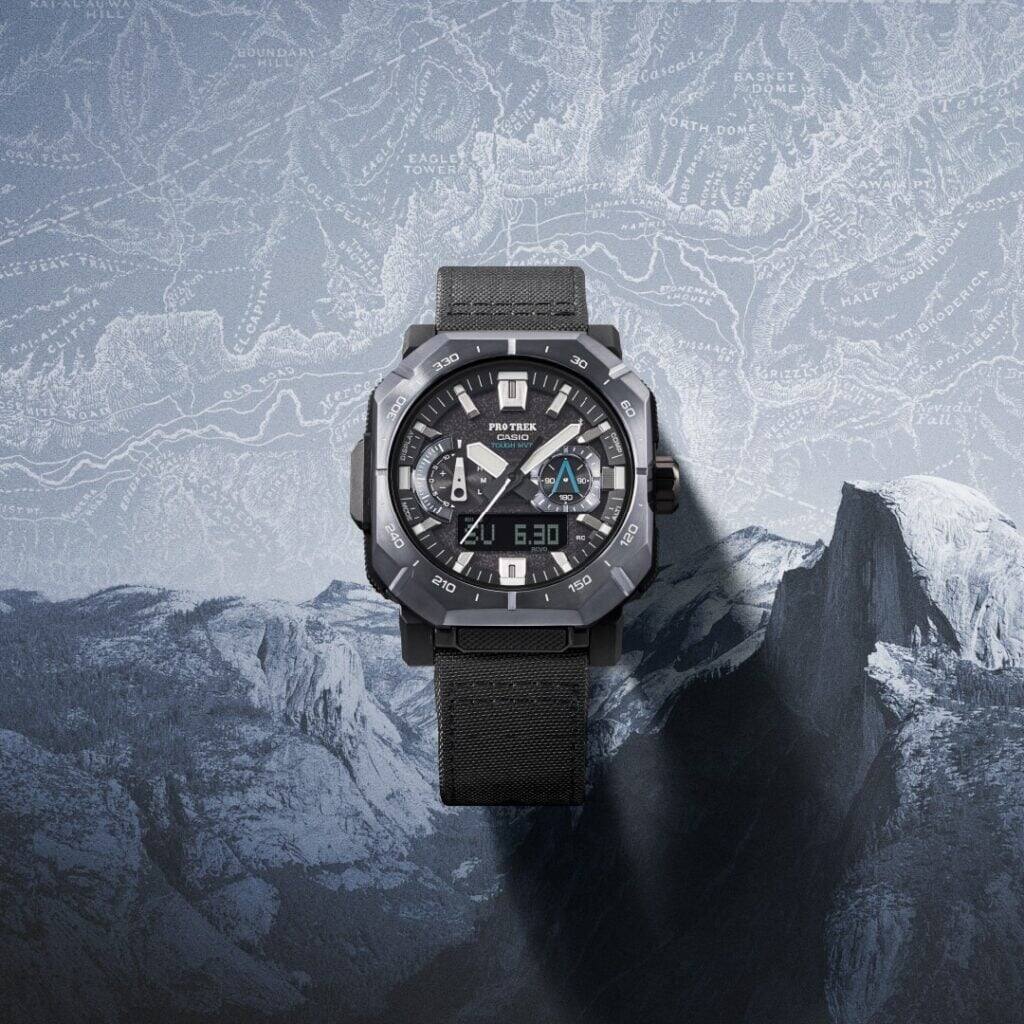
Casio’s new Pro Trek PRW-B1000B-2 is a very on-brand outdoor watch: rugged, packed with navigation tools, and dressed up with design cues from Yosemite National Park. The Casio Pro Trek PRW-B1000B-2 was announced in Japan and is due to launch in April 2026, with a price of ¥89,100, or about $561. It leans hard into the ”serious hiking gear” brief without forgetting the usual Casio flourishes like solar charging and radio-controlled timekeeping.
It is also the sort of watch that tries to solve a real problem rather than just survive a dramatic product photo. With sensors, route tracking, glove-friendly controls, and a case built to handle cold weather, Casio is targeting people who actually go outside, not the ”outdoor lifestyle” crowd that mostly commutes in trail shoes.
Yosemite-inspired design with a practical twist
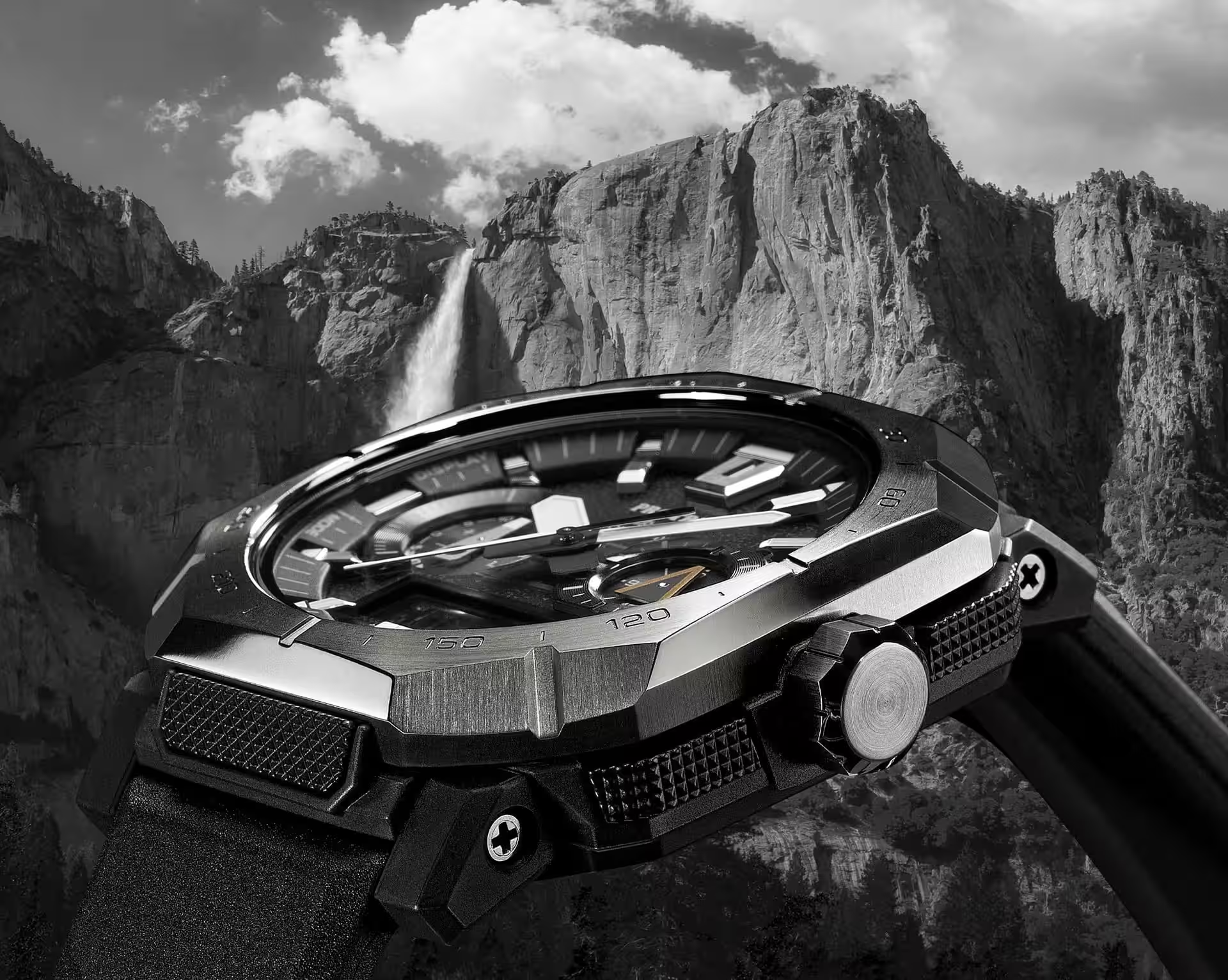
The watch sits inside Casio’s Pro Trek PRW-B1000 Climber Line and takes its styling from Yosemite’s rocky terrain. The stainless steel bezel has a sharp, multi-sided shape with corner slits meant to evoke cracks in rock surfaces, while the dial uses layered elements for more depth. One small hand is shaped like a climbing piton, which is a nice touch if you enjoy your wristwear with a little 1970s mountaineering nostalgia.
Casio also gives the watch a more functional look than many premium adventure models from Garmin or Suunto, which often prioritize screens and software over tactile hardware. Here, the large metal buttons and crown are designed for use with gloves, which matters far more than a glossy aesthetic when the weather turns unpleasant.
Casio Pro Trek PRW-B1000B-2 sensors and Tough Solar power
Under the hood, the PRW-B1000B-2 gets Tough Solar charging, Multi Band 6 radio correction, and Bluetooth connectivity. That combination should keep the watch running steadily while also helping it stay accurate without constant manual tinkering, which is a big part of the appeal of Casio’s higher-end outdoor lineup.
The triple sensor setup covers direction, barometric pressure, altitude, and temperature. The digital compass uses the second hand to point north, while a location indicator helps with navigation. The small hand at 3 o’clock points to a saved location, and the LCD shows distance from the current position. Users can also log a location directly on the watch, which is handy for finding the way back on a hike or remembering where the car was parked after a long day outside.
Pair it with Casio’s smartphone app and the watch can automatically correct altitude data, record routes, and show directions to a destination. Route log tracking is supported too, which gives the model a more complete activity-recording angle than older analog-heavy outdoor watches ever managed.
Materials built for heat, sparks, and cold
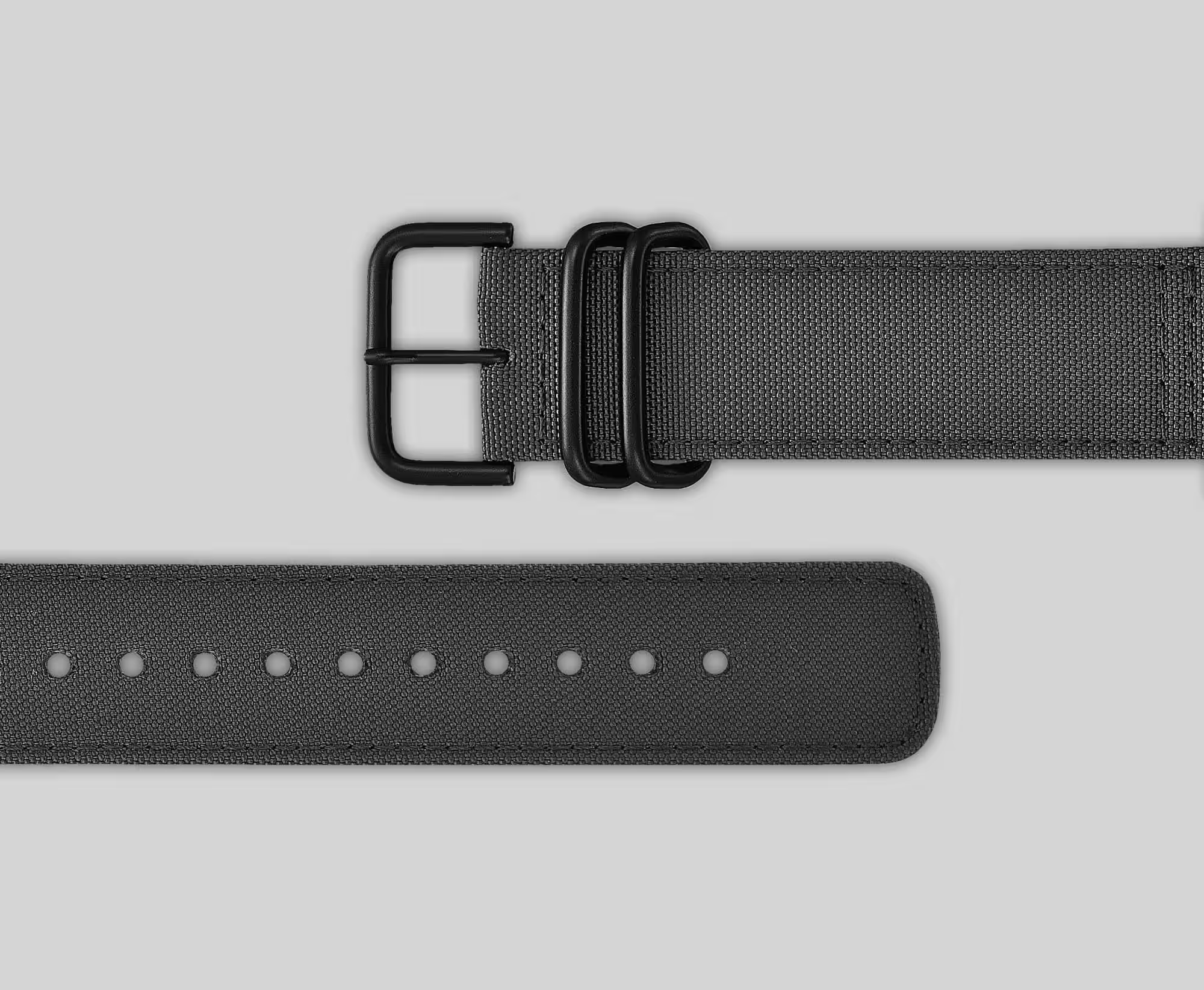
Casio has also loaded the case and strap with materials that sound appropriately overengineered. The case uses flame-retardant biomass plastic and meets UL94 V-0 certification, meaning it stops burning once the flame source is removed and helps reduce fire spread. The band is made from CORDURA re/cor material, which is lightweight, durable, made from recycled waste, and flame-resistant.
The watch is water resistant to 100 m and can operate in temperatures down to -10°C. That puts it squarely in the ”snow, campfires, and bad decisions” category, which is exactly where a Pro Trek model should live.
Casio has also listed it on its global website, which points to a broader release beyond Japan, even if the company is not spelling that out just yet.
With Garmin and Suunto pushing deeper into advanced outdoor tracking, Casio is making a familiar argument: not every adventure watch needs to look like a tiny smartphone. The unanswered question is whether buyers still want a physical, solar-powered tool watch with real buttons, or whether the crowd has already drifted toward bigger screens and richer apps.