

Apple is reportedly preparing to turn Siri into something closer to an AI traffic cop, letting requests flow to outside services like Google Gemini or Anthropic’s Claude instead of forcing every answer through Apple’s own stack. If that sounds like a quiet surrender, it is also a very practical answer to a problem Samsung knows well: no single assistant is good enough for everything, so the winner may be the company that hides the mess best.
That shift would mark a sharp break from Apple’s old instinct to keep Siri sealed off. It would also underline how quickly the AI race has moved from ”who owns the assistant” to ”who can orchestrate the best one,” a transition that has already made Gemini the default smart layer on plenty of Android phones.
Apple’s Siri could become an AI router
The reported plan for iOS 27 is simple enough on paper: Siri would handle the request, then hand it off to the AI provider best suited to the task. Apple is said to be building an ”Extensions” system for this, giving users a way to choose which service responds to voice requests.
That is a very Apple move, even if it looks un-Apple-like at first glance. The company is not abandoning control so much as redefining it, keeping the interface while borrowing intelligence where it makes sense. Competitors have been heading this way in pieces for a while; the difference is that Apple tends to package the compromise as strategy instead of compromise.
Samsung already lives with a split assistant setup
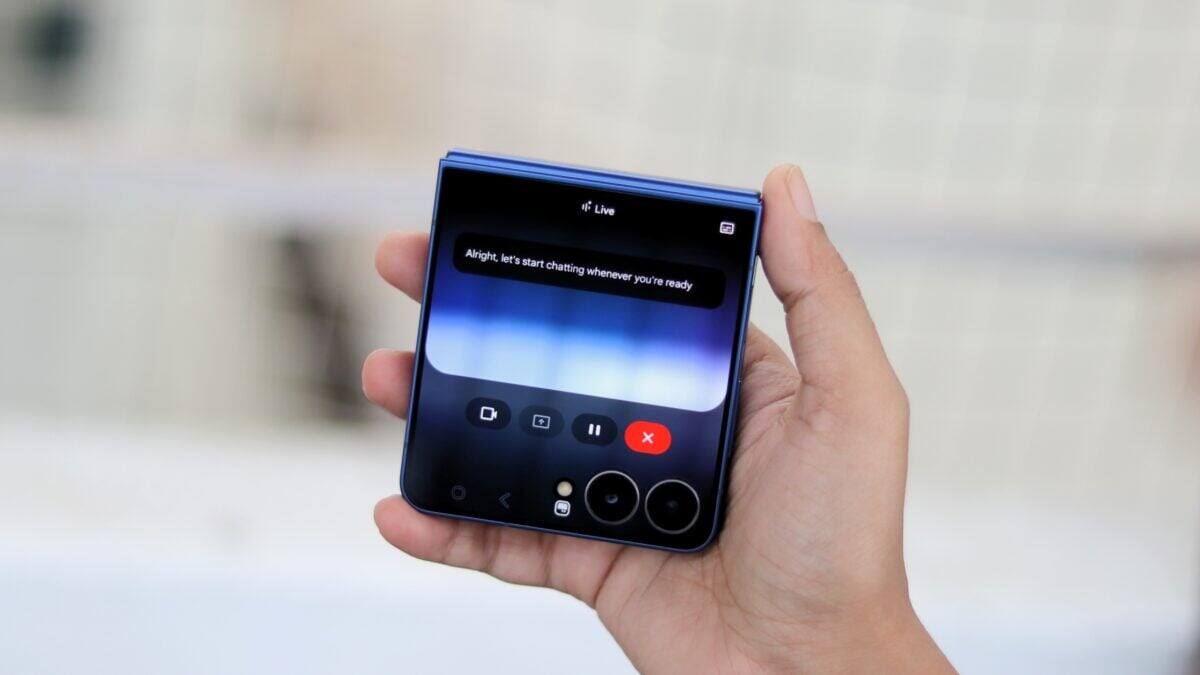
Samsung’s problem is that it already has multiple AI personalities on its phones, but they do not exactly sing in harmony. Gemini is the main attraction, while Bixby has been pushed into a more limited role and now offloads some tasks to Perplexity.
That arrangement gives Samsung plenty of features, but not much elegance. Users still have to think about which assistant to invoke, and that is the sort of friction Apple has spent years trying to eliminate from its products. Google, meanwhile, is unlikely to let Gemini become a neutral middle layer that freely routes voice commands to rivals like Claude or Perplexity, which makes Samsung’s flexibility look thinner than it first appears.
Galaxy AI still feels assembled, not unified
Galaxy AI is a strong umbrella brand, and Samsung deserves credit for moving fast while Apple hesitated. But power and polish are different things. A feature set can be impressive and still feel stitched together, especially when the assistant underneath it is not clearly the one deciding what happens next.
Apple’s rumored direction points to a cleaner model: one assistant interface, many brains behind it. That may sound less ambitious than trying to own every layer, but users usually reward the company that makes complexity disappear. Samsung can copy the architecture in theory; in practice, the company has a much harder job convincing people to care, because Bixby has never had Siri’s built-in gravity.
- Apple’s reported plan: Siri fronts the experience while outside AI services handle requests.
- Samsung’s current setup: Gemini leads, Bixby exists, and some requests are handed to Perplexity.
- Big difference: Apple is trying to unify the experience; Samsung is still managing coexistence.
If Apple follows through, Samsung may find itself in an awkward spot: it will have more AI features on paper, but Apple could end up offering the more coherent assistant experience. The next contest may not be about who has the smartest model. It may be about who can make a pile of smart models feel like one product.