

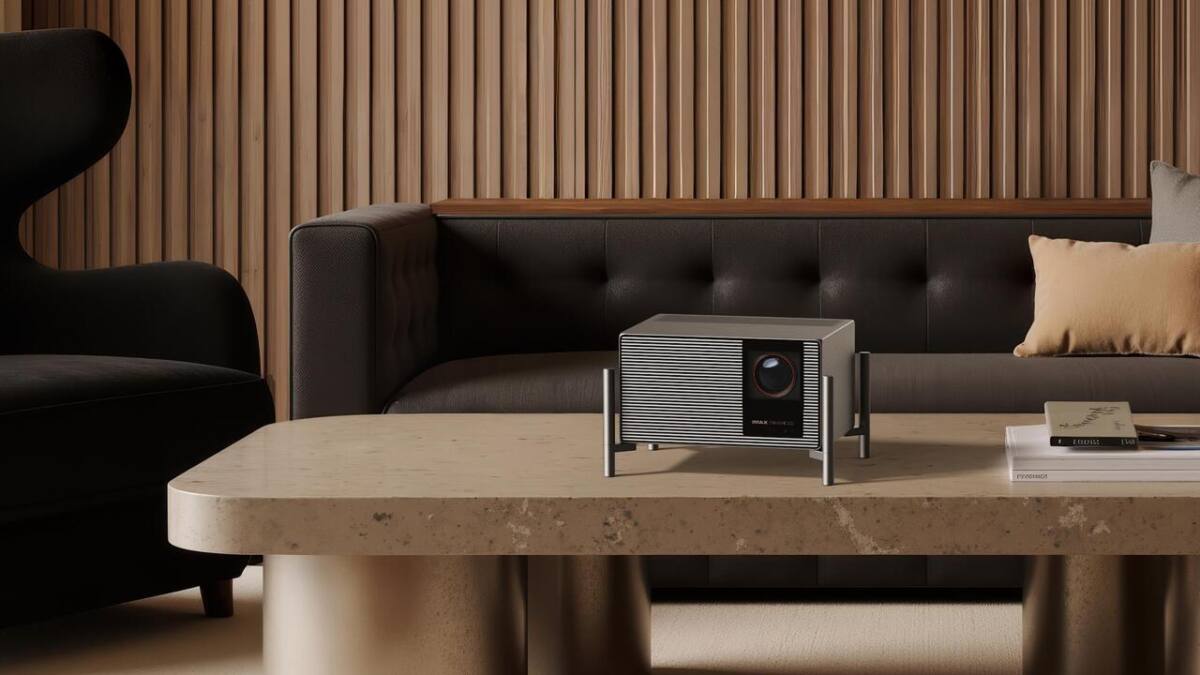
A new projector trio is up for preorder, and the pitch is straightforward: big screens, modern HDR support, and a flagship bright enough to make a dark room feel optional. The Titan Noir projectors lineup covers three models – Titan Noir, Titan Noir Pro, and Titan Noir Max – with the top version promising up to 7,000 lumens, 240 Hz output, and images as large as 300 inches.
That puts the series squarely in the ”home theater without compromise” camp, where laser projection has quietly become the selling point that matters most. The better pitch here is not just size, but consistency: laser light sources tend to hold brightness and color more steadily than older lamp-based designs, which is exactly why premium projectors keep leaning on them.
Titan Noir projector lineup and display features
All three models use a laser system and add a technology designed to improve the handling of dark and bright areas in the image. The lineup also supports Dolby Vision and HDR10+, which should help when streaming services and Blu-ray discs decide to flex their HDR badges for once.
Inside, the projectors come with 4 GB of RAM and 64 GB of internal storage. That is not laptop territory, but it is enough to suggest these machines are meant to run as self-contained media hubs rather than dumb display boxes.
Titan Noir Max brightness and cooling
The Titan Noir Max sits at the top of the stack with its claimed 7,000-lumen output and high contrast. If those numbers hold up in real-world use, it will be aiming at a crowded premium segment where BenQ, Epson, and Hisense have all spent years trying to convince buyers that projection can still beat a giant TV wall.
The company also says it has improved the cooling system, which matters more than it sounds. Bright projectors make more heat, and heat makes noise, so a better thermal design can be the difference between a living-room win and a very expensive desk fan impression.
Titan Noir preorder price and deposit
Preorders require a $50 deposit, and the campaign price is $3,200 after the preorder campaign starts. The structure is familiar crowdfunding theater: a small upfront bet in exchange for a lower launch price, with buyers essentially wagering that the finished product will match the spec sheet.
Whether that trade-off feels smart will depend on how much faith buyers have in a new projector brand entering one of AV’s most unforgiving categories. The spec sheet is flashy; the hard part is proving that the picture still looks good after the showroom lights go on and the fan stays quiet.