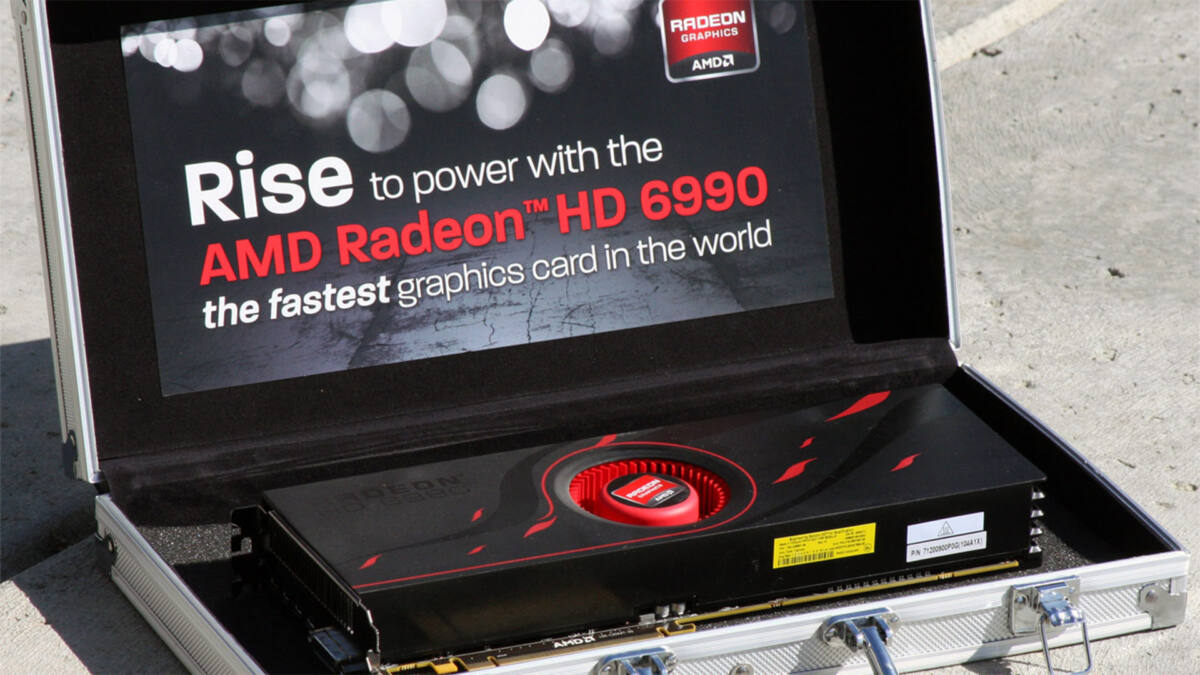
In March 2011, AMD unveiled the Radeon HD 6990, a dual-GPU behemoth that briefly claimed the title of the world’s fastest graphics card. Codenamed Antilles, this dual-Cayman XT powerhouse arrived weeks before Nvidia’s response but boasted an impressive 4GB of GDDR5 memory spanning its two GPUs at a time when such specs were unprecedented. Despite its blistering performance, users quickly noted the hefty trade-offs: prodigious heat output, loud operation, and voracious power consumption.
The Radeon HD 6990 packed two 40nm Cayman XT GPUs, totaling 3,072 stream processors and a staggering 5.28 billion transistors. Operating at an 830 MHz base clock with an overclockable ceiling of 880 MHz, the card’s dual 2GB GDDR5 setup supported massive graphics workloads and up to five concurrent displays. However, these strengths brought a steep price in thermals and energy demands, hitting a 375-watt thermal design power (TDP) that could spike to 450 watts when overclocked using its innovative dual BIOS switch.
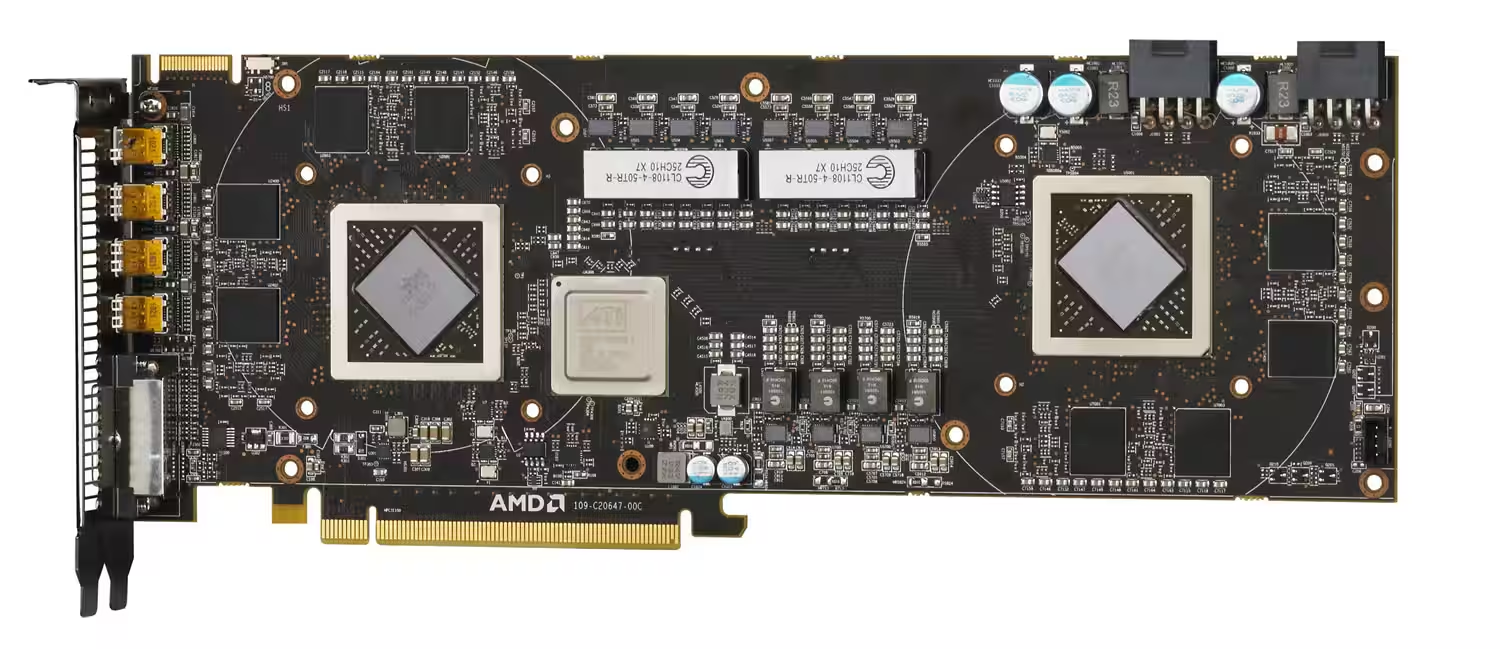
From a design perspective, the HD 6990 was a bulky card, requiring a 12-inch dual-slot PCB and two 8-pin power connectors. At launch, it carried a flagship $699 price tag that matched its high-end ambitions. While it edged out Nvidia’s GeForce GTX 590-which arrived shortly after and managed a quieter and somewhat cooler operation-the HD 6990 maintained a performance lead but at the cost of noise and heat that tested the limits of PC cooling solutions of the era.
Reviewers from the time, including Tom’s Hardware, praised the card’s raw speed but criticized its intense noise levels and power draw. The acoustic output was so pronounced that alternative setups using two separate Radeon HD 6970 cards were recommended for similar performance without the oppressive racket. Even with Nvidia’s quieter GTX 590 challenging it, the Radeon HD 6990 held its ground as the fastest single-board GPU configuration of its generation.
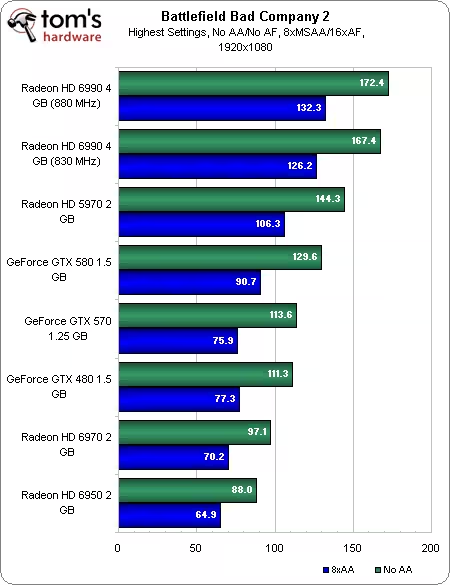
Its legacy stands as an early demonstration of the possibilities and pitfalls of dual-GPU cards: unmatched speed paired with complexity in power delivery and cooling. While technology has since progressed toward more efficient multi-GPU approaches and single GPUs with vastly superior performance, the Radeon HD 6990 symbolizes a bold, if somewhat reckless, leap for gaming hardware in the early 2010s.
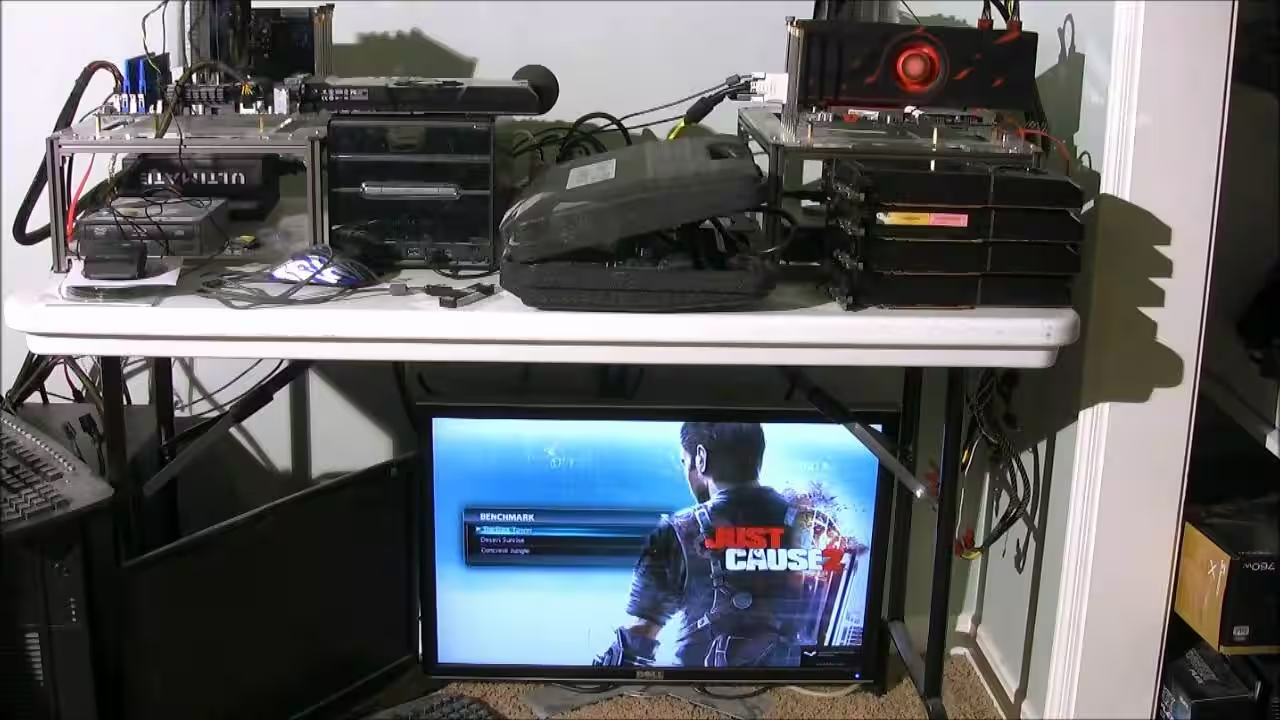
For enthusiasts still nostalgic for titles like F1, Battlefield, and Metro, comparing gameplay experiences on a Radeon HD 6990 versus modern GPUs highlights how far graphics cards have evolved in terms of efficiency and noise control. Its dual-GPU setup even provokes the question: does any integrated GPU today stand a chance against the combined might of the HD 6990’s Quad-CrossFire in a demanding game like Crysis?
Tom’s Hardware’s Editor Emeritus Chris Angelini once captured the HD 6990’s audio signature in dedicated noise tests, highlighting just how daunting these beasts were to live with. Today, they serve as collector’s items and fascinating tech relics reminding us of a time when raw speed came with few compromises.