

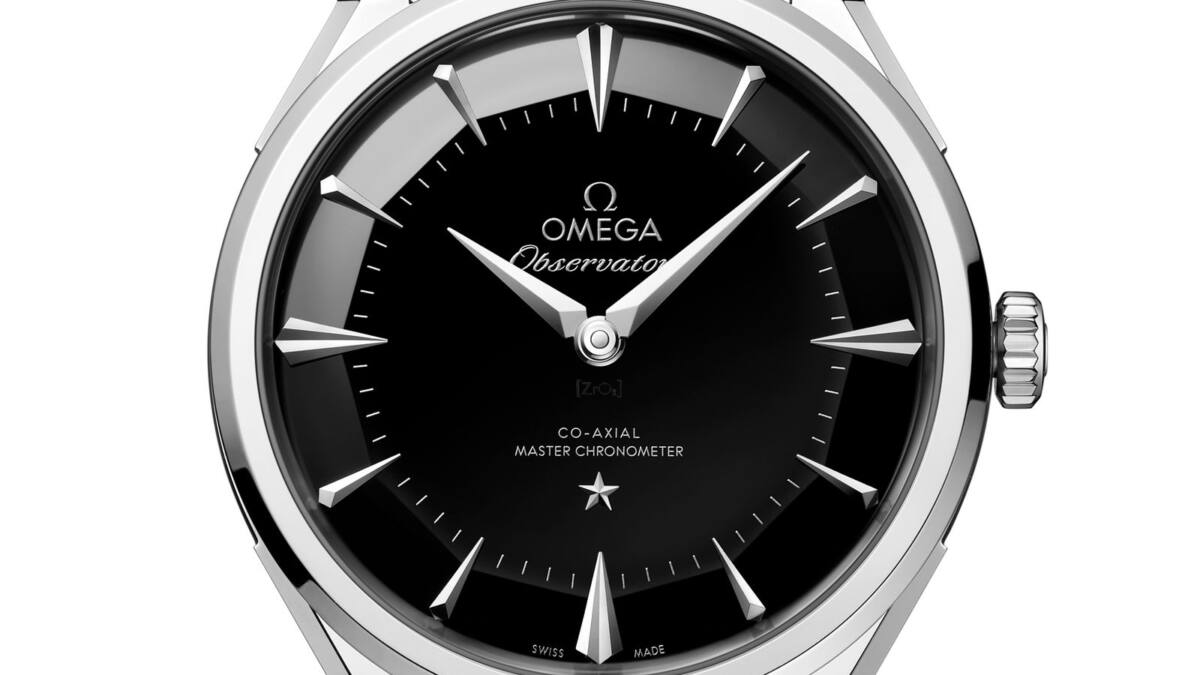
Omega has rewritten the rules of measuring precision in mechanical watches with its new Constellation Observatory collection. These watches stand out as the first two-hand timepieces ever to secure the prestigious Master Chronometer certification without sporting a seconds hand-a feat that conventional testing methods deemed impossible until now.
Historically, watch accuracy tests relied on photographing the position of a watch’s seconds hand at intervals. The Swiss Official Chronometer Testing Institute (COSC), which certifies Swiss watches, uses this method over 15 days to ensure a movement’s precision within -4 to +6 seconds per day. However, COSC only tests the movement, not the entire watch, and requires a seconds hand for timing. Omega’s more stringent in-house Master Chronometer certification also demands METAS testing, which analyzes the complete watch’s performance-temperature shifts, magnetism up to 15,000 gauss, water resistance, and positioning. To pass, accuracy must fall between 0 and +5 seconds per day. Until now, METAS testing required a seconds hand as well.
Omega overcame this challenge with an ingenious innovation from its Laboratoire de Précision. Instead of relying on visual tracking, the company developed a self-contained acoustic testing device that listens to each tick and tock for 25 full days. This system continuously captures the watch’s unique sound signature alongside environmental data like temperature, position, and atmospheric pressure. This detailed acoustic profile reveals even the slightest timing irregularities, their exact moments, and conditions-far surpassing the snapshot data points of traditional methods.
While acoustic measurement itself isn’t novel to watchmaking-Witschi machines have long used microphones to analyze rate, amplitude, and beat error-Omega’s breakthrough is in expanding this from spot checks to a continuous 25-day observation that replicates METAS’s full environmental testing regimen. This approach is akin to replacing a quick medical ECG snapshot with a 24-hour heart monitor, capturing fluctuations and anomalies with far greater nuance.
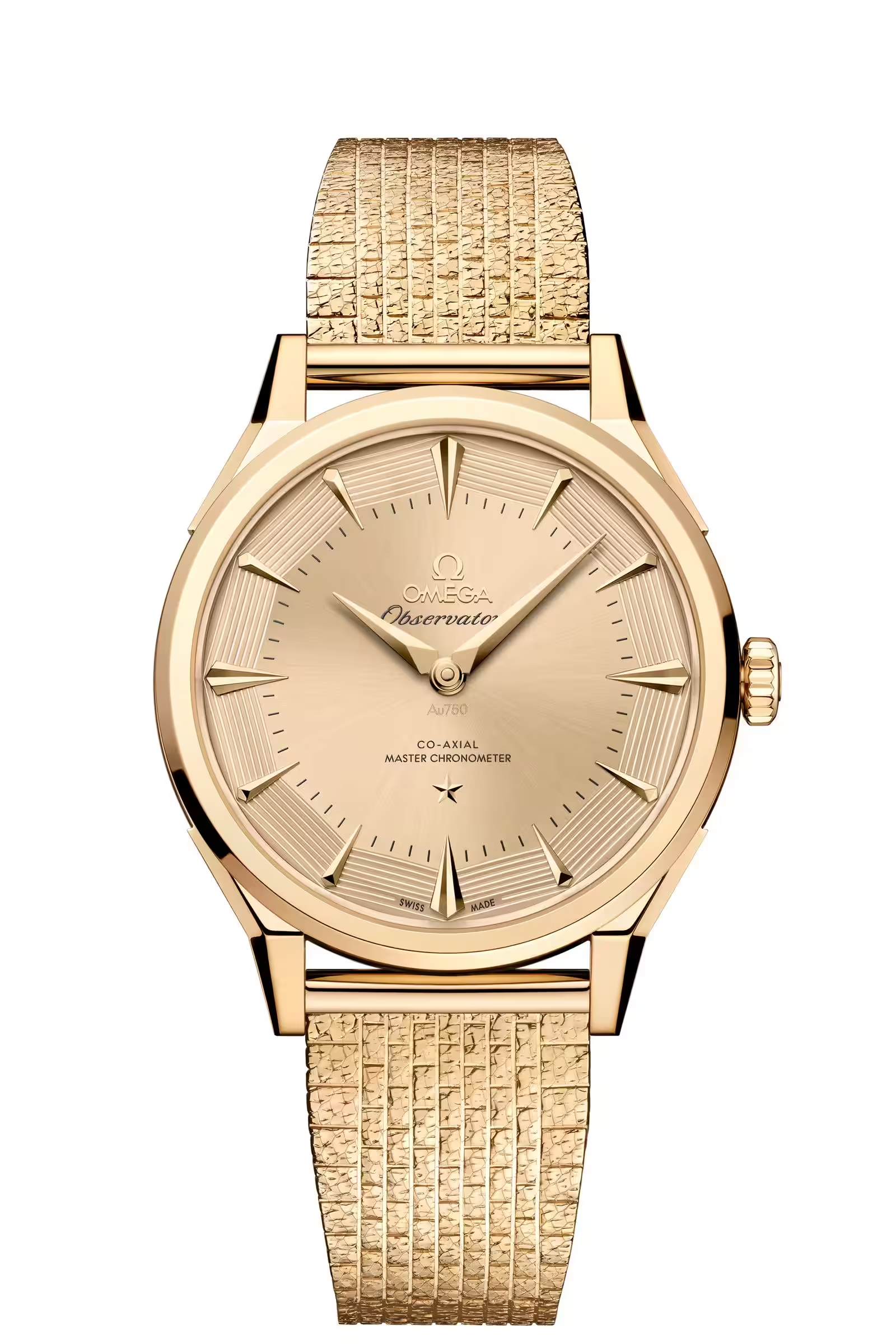
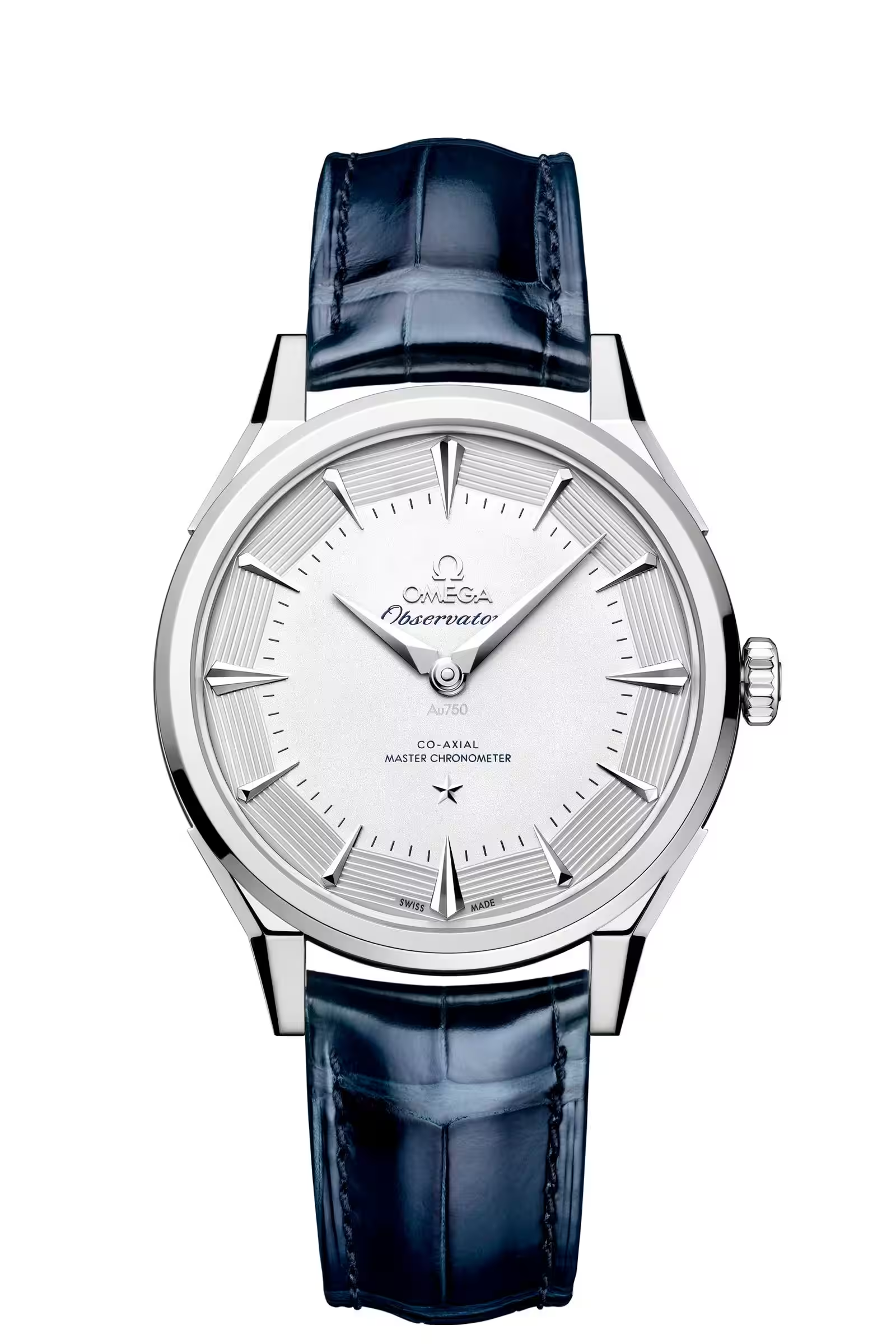
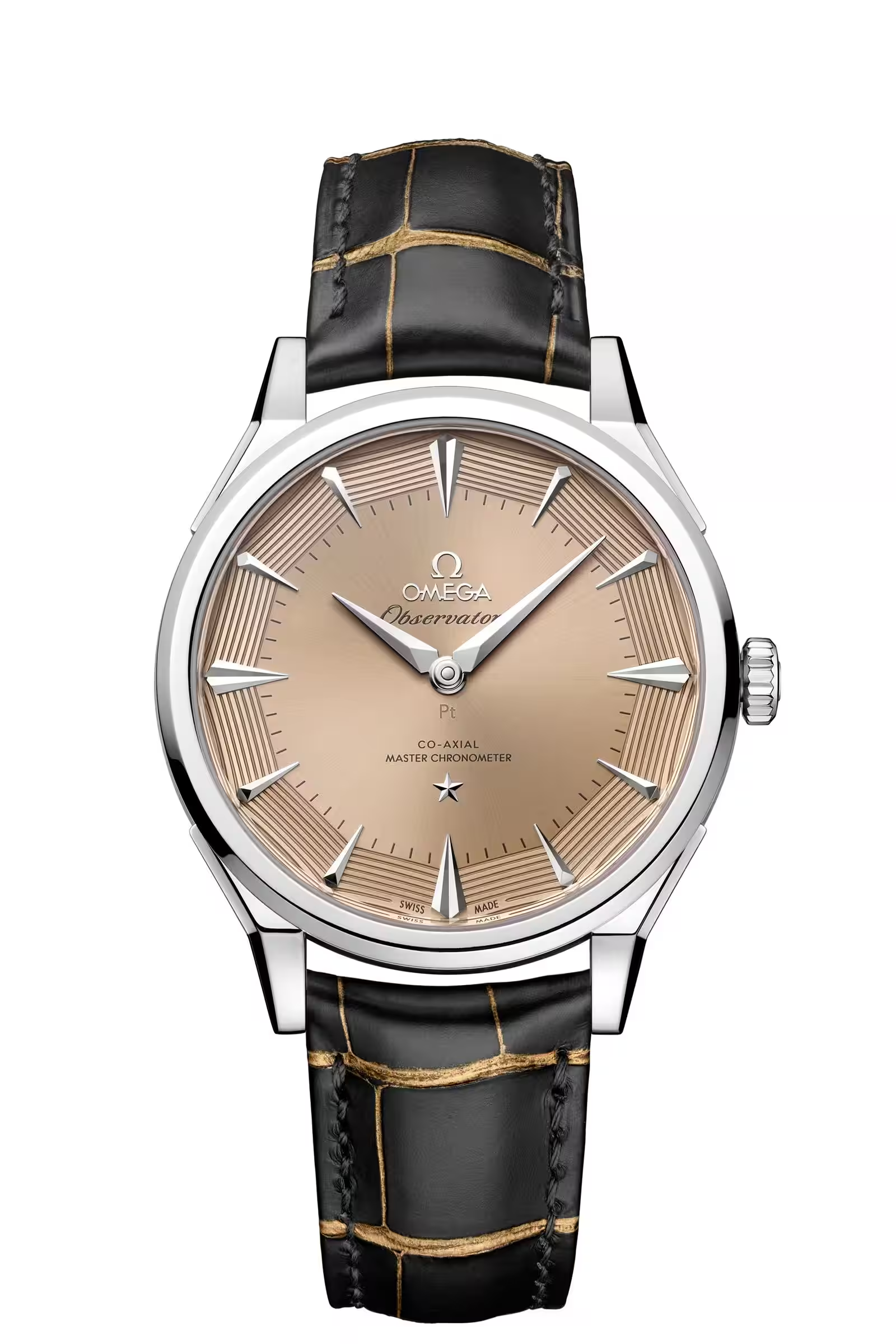
The Constellation Observatory models come in 18K gold, platinum-gold, and steel options and feature two new calibers found exclusively in this collection. Pricing starts at $10,900, with the all-gold variant topping $59,100. They become available for purchase on March 27.
Omega’s new two-hand Master Chronometer watches offer the same advanced precision as multi-hand chronometers but with a minimalist design. Some might argue that this level of chronometric precision is overkill for a dress watch, a category known for its aesthetic understatement rather than obsession with split-second accuracy. After all, dress watches typically serve as elegant accessories checked periodically, not tools demanding relentless scrutiny. Still, Omega’s acoustic testing breakthrough is a technical milestone that pushes the boundaries of what mechanical watch certification can achieve-even if the wearer’s eye won’t catch seconds passing.