

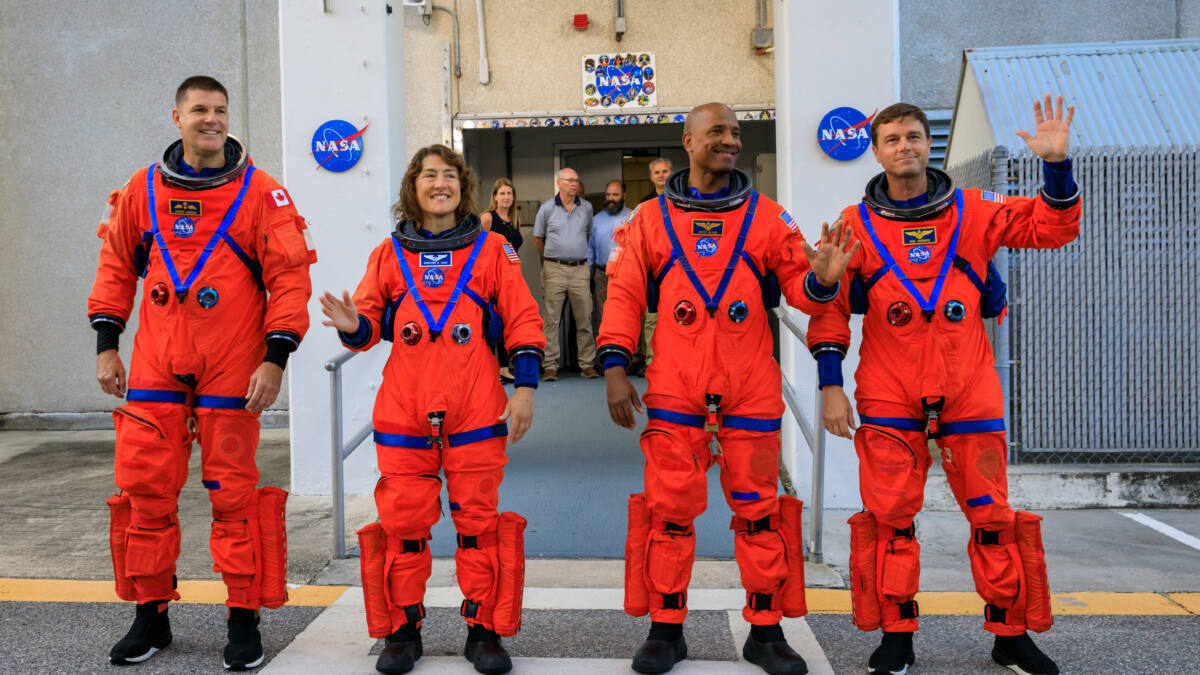
NASA is gearing up to stream live coverage of its upcoming Artemis II mission, the first crewed flight in the agency’s Artemis program aimed at returning humans to the Moon. Scheduled to launch no earlier than April 1, Artemis II will send astronauts Reid Wiseman, Victor Glover, Christina Koch, and Canadian Space Agency astronaut Jeremy Hansen on a roughly 10-day journey orbiting the Moon aboard the Orion spacecraft, launched by NASA’s Space Launch System (SLS) rocket.
This mission marks NASA’s initial test of life support systems on Orion with humans aboard, setting the stage for future Artemis missions and eventual crewed Mars exploration. The agency plans continuous 24-hour mission coverage through its YouTube channel, NASA+, and Amazon Prime, featuring live broadcasts of pre-launch activities, lunar flyby, and splashdown, including specialized streams in Spanish.
Pre-launch briefings and media participation for Artemis II
NASA has organized multiple pre-launch press events leading up to the targeted April 1 liftoff. Starting March 27, the Artemis II crew will participate in Q&A sessions and press briefings involving top NASA and Canadian Space Agency officials. Journalists have limited in-person access at Kennedy Space Center, with most participation available via phone after confirming attendance in advance.
A series of technical and mission status updates will continue through the launch countdown, featuring experts from NASA’s mission management teams and launch operations. These briefings will provide insight into weather conditions, spacecraft readiness, and the complex integration of the SLS rocket and Orion capsule.
Artemis II mission milestones and live broadcast schedule
The launch coverage includes live commentary starting at 7:45 a.m. on April 1 with fuel loading and continues through the rocket’s ascent and Orion’s solar panel deployments. Post-launch updates and orbit insertion maneuvers will be closely telecast, with bilingual coverage to engage a wider public.
During the mission, NASA will provide daily briefings and live downlinks with astronauts from Johnson Space Center. A highlight will be the projected breaking of the record for the farthest distance humans have traveled from Earth, surpassing Apollo 13’s 400,171 kilometers as Orion swings around the far side of the Moon. Communication blackouts are expected during the spacecraft’s eclipse behind the lunar surface.
The mission concludes with a Pacific Ocean splashdown expected on April 10, followed by post-landing briefings and astronaut recovery operations.
Public access and engagement opportunities for Artemis II mission
Beyond official NASA channels, the agency is offering a virtual guest program allowing the public to register for mission updates, access educational resources, and receive digital mementos of the launch. For audio enthusiasts and residents near Kennedy Space Center, launch audio transmissions will be available on specific VHF and UHF radio frequencies.
NASA’s transparent approach to Artemis II coverage comes at a critical time, as the space agency plans to expand lunar exploration with increased complexity and scientific objectives, laying groundwork for future human missions to Mars. Keeping the global audience informed and engaged reflects growing public interest in deep space missions and international partnerships such as with the Canadian Space Agency.